Resale platforms help retailers divert returned clothes from landfill
Retail returns are quietly becoming fashion’s salvage stream, with resale platforms pulling workable inventory back into circulation instead of letting it tip into landfill.

The new life of returned clothes
Fashion’s most overlooked waste stream is not a runaway trend piece or a deadstock bolt in a warehouse. It is the return label peeled off at the kitchen counter, the dress tried on once and sent back, the shirt that never quite made it back to the floor. Retail returns have become one of the industry’s least visible sources of waste, and resale platforms are now stepping in as the machinery that can intercept some of it before it disappears into landfill.
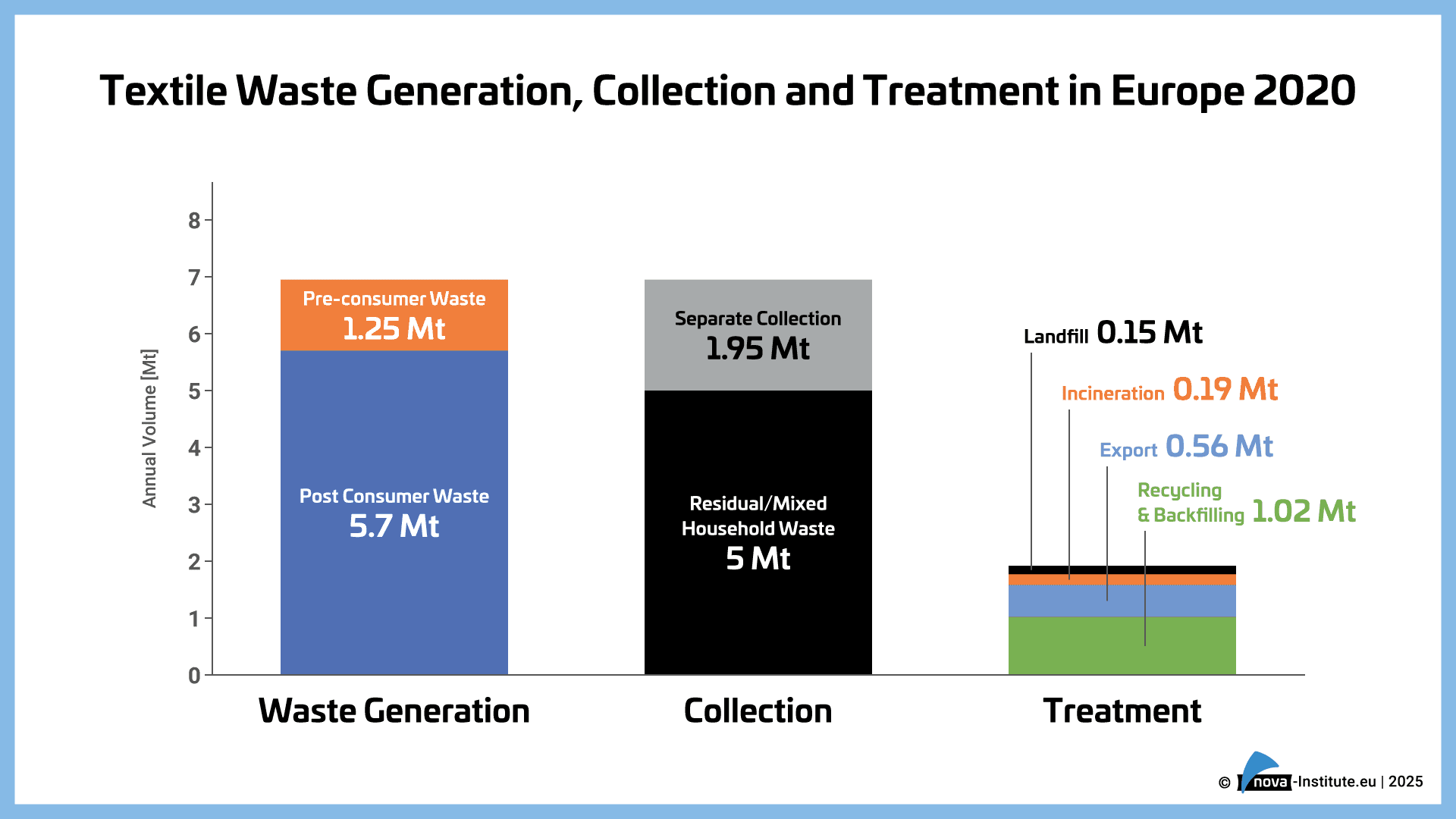
That matters because the scale is staggering. The United Nations Environment Programme says the world generates about 92 million tonnes of textile waste each year, a volume UN coverage compares to a garbage truck full of clothing being burned or dumped every second. In the United States, the Environmental Protection Agency says discarded clothing is the main source of textiles in municipal solid waste, while the Ellen MacArthur Foundation says U.S. textile waste grew 80% by weight between 2000 and 2018. Returns sit inside that larger crisis, but they are especially awkward because they are built by logistics, not design.
Why returns are such a hard waste problem
The modern return is not just a customer-service issue. WWD reported in 2017 that the retail industry handles 3.5 billion returned products each year, a number that hints at the scale of the sorting, repacking, and triage happening behind the scenes. Some garments come back pristine, but many arrive with broken packaging, scent transfer, makeup marks, missing tags, or other small signs of handling that make them difficult to send straight back to primary shelves.
That is where the secondary market becomes less of a trendy resale story and more of an infrastructure fix. Returned and excess merchandise can be sold in bulk, routed through B2B platforms, or moved into resale channels that specialize in recovery rather than presentation. The point is not romance. It is circulation. If a garment cannot re-enter the full-price retail floor, there may still be a useful life for it in a different channel, at a different margin, with a different buyer.
What can actually be recovered
Not every returned item is salvageable, and that distinction is the whole story. Garments with minimal wear, intact labels, and clean condition can often be recovered into secondary-market inventory. Overstocks, canceled orders, and obsolete styles can also be rerouted more easily than damaged merchandise, especially when they are moved in bulk rather than handled one by one.
The limits arrive fast. Low-value items, heavily worn pieces, products with visible damage, or apparel that fails quality checks often have no viable resale path and may still end up downcycled, recycled, or discarded. Even in the best-case scenario, resale is selective by nature. It works best on goods that still have enough commercial life left to justify the labor of inspection, grading, storage, and re-listing.
How the secondary market makes the math work
B2B resale operators have turned this into a more disciplined kind of commerce. Instead of treating returns as a disposal problem, they treat them as inventory that can be recaptured, sorted, and sold into a different market. B-Stock and Optoro are among the names attached to that mechanism, and the logic is simple: once an item loses value in one channel, it may still have value in another.
Optoro-based reporting gives that logic its starkest numbers. Returned inventory creates about 9.5 billion pounds of landfill waste annually and more than 27 million metric tons of carbon dioxide each year. Those figures make clear why retailers are paying attention. Every return that can be resold in bulk, diverted to a secondary outlet, or otherwise recovered is one less unit of waste burdening a system already swollen beyond capacity.
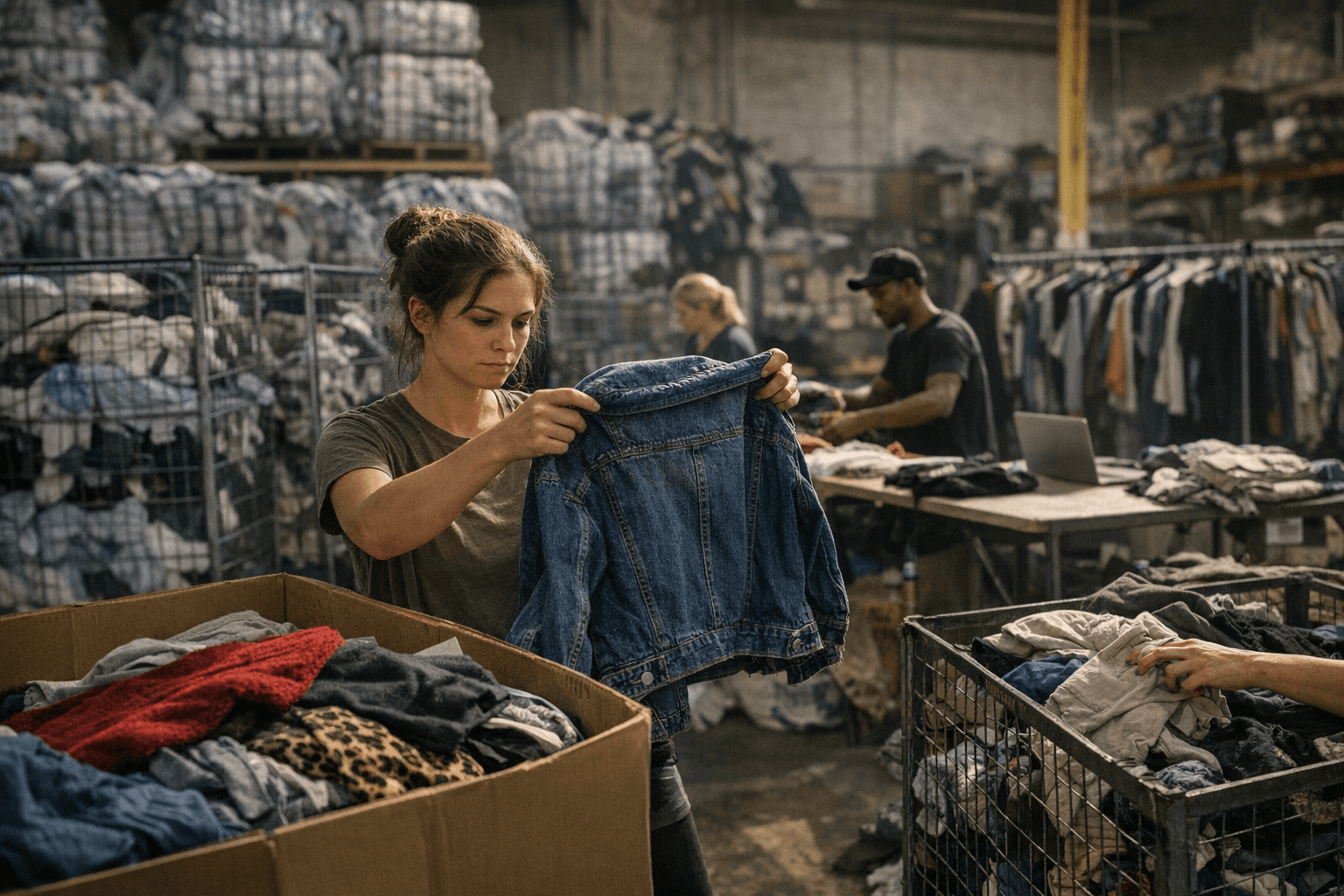
For retailers, the appeal is financial as much as environmental. Disposal costs money, storage costs money, and unsold stock ties up space that could be used for fresher inventory. A secondary-market sale can turn a liability into partial recovery, even if the margin is thinner than a traditional retail sale. That is why resale is becoming embedded in returns management rather than treated as a philanthropic afterthought.
Who benefits along the chain
The retailer benefits first, because diversion reduces disposal costs and recovers some value from inventory that might otherwise become dead weight. The resale platform benefits by earning a fee or spread for moving product through its network. Buyers in the secondary market benefit by accessing branded goods at lower prices, often in bulk or through channels that would be invisible to traditional shoppers.
There is also a quieter beneficiary: the logistics layer itself. Sorting centers, grading operations, transport providers, and fulfillment networks all become part of the recovery chain. This is why secondary markets are best understood as infrastructure, not simply as a consumer-facing resale trend. They create a system in which goods can move laterally instead of linearly from shelf to bin.
The policy pressure is building
The push to divert returns from landfill is happening alongside a broader policy shift toward extended producer responsibility for textiles. The Ellen MacArthur Foundation says textile waste in the U.S. rose sharply between 2000 and 2018, and it notes that California’s SB 707 Responsible Textile Recovery Act of 2024 was chaptered on September 28, 2024. New York has also proposed textile EPR legislation in Senate Bill S6654.
That matters because resale alone cannot solve textile waste. It can recover value, reduce disposal, and keep some garments in use longer, but it cannot absorb every damaged sweatshirt, every low-value tee, or every product that never belonged in an overproduced system in the first place. Regulation is beginning to push the industry toward deeper responsibility, which is where returns diversion starts to look less like a clever workaround and more like one piece of a larger obligation.
The real promise, and the real ceiling
The promise of resale platforms is practical, not sentimental. They help retailers make use of returned, excess, and obsolete inventory that still has commercial life left in it, and they do it in a way that is more efficient than disposal. In a sector where waste is often hidden by glamour, this is unglamorous work: inspection, sorting, pricing, and rerouting.
But the ceiling remains visible. Secondary markets can recover value only where condition, brand, and demand still align. The rest still falls back into the hard realities of textile waste, where the best outcome may be material recovery and the worst is landfill. Fashion’s circular future will not be built on resale alone, but returns diversion is proving that the industry already has one of its most useful tools hiding in plain sight.
This article was produced by Prism’s automated news system from verified source data, official records, and press releases, then run through automated quality and moderation checks before publishing. The system is built and supervised by the people who set the standards it runs under. Read our full AI policy.
Did this article answer your question?