Researchers turn wood waste into nylon ingredient with bacteria
A Nature study turned poplar lignin into adipic acid at 26 wt% yield, a step toward bio-based nylon from wood waste.
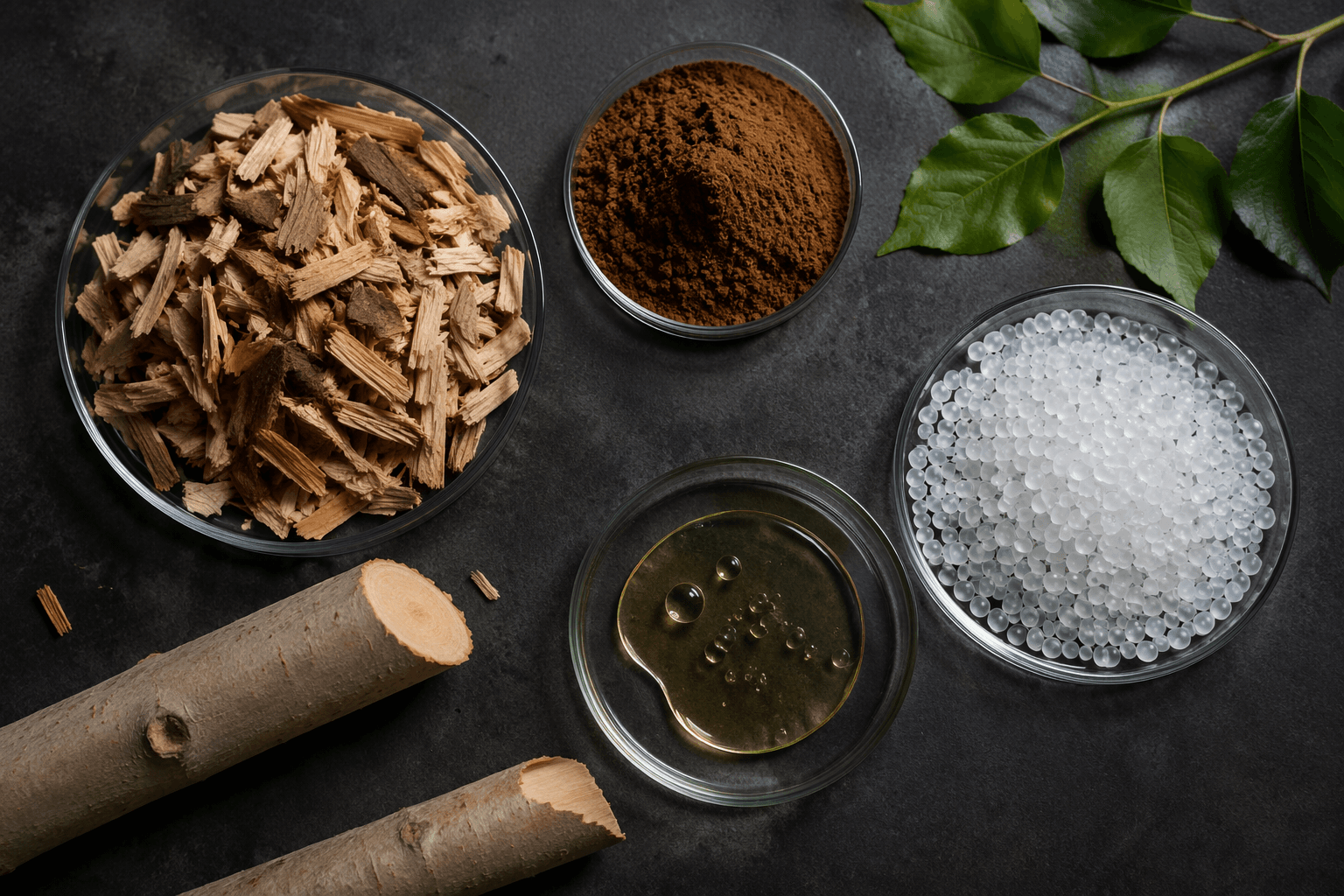
Wood waste may be ready for a much fancier second life: as the feedstock for nylon. In a Nature study published in June 2026, researchers reported a chemical-and-biological process that turned lignin from poplar into adipic acid at a 26 wt% yield, a level that pushes well past earlier biological routes that had stalled at around 20 wt%.
That matters because adipic acid is not some niche lab molecule. It is a core ingredient in nylon, polyurethanes and plasticisers, and global production capacity sits at about 2.7 million tonnes a year. Today, that supply still comes almost entirely from fossil raw materials such as crude oil. If wood-waste chemistry can scale, mills and brands that rely on virgin adipic acid could gain a lower-carbon alternative with a cleaner sourcing story attached.
The process looks less like a petri dish experiment and more like a stripped-down refinery. Researchers used a Co/Mn/Br catalyst to break lignin into aromatic carboxylic acids, with monomer yields reaching up to 73 wt%, then fed that mixture to engineered Pseudomonas putida KT2440. The soil bacterium was built to convert those aromatics into muconolactone, a precursor to bio-based nylons, and the full sequence pushed final adipic acid yields to 26 wt% with a maximum theoretical yield of 57 wt%.
The feedstock is part of the appeal. Lignin is abundant in plant cell walls, does not compete with food production and is produced worldwide at roughly 50 to 70 million tonnes a year as a waste product. In a sector that still leans heavily on crude oil, that is a compelling supply shift: forestry and paper residues stop being disposal headaches and start looking like industrial raw material.
The catch is scale, and scale is where the fashion and materials industries live or die. A 26 wt% yield is a real advance, but it is not yet a commercial guarantee, especially when the current petrochemical system is built for volume and low cost. Earlier work from the National Renewable Energy Laboratory in 2023 took lignin from corn leaves, stalks and cobs and engineered Pseudomonas putida to make -ketoadipic acid, with analysis pointing to a cost of around $2 per kilogram. That was close to the historical selling price of petroleum-based adipic acid, roughly $1.10 to $1.80 per kilogram, but not yet a clean win.
Still, the direction is unmistakable. Wood waste is no longer just a sustainability talking point. It is beginning to look like a plausible feedstock for the nylon supply chain, if researchers can keep improving yield, cost and fiber-grade reliability.
This article was produced by Prism’s automated news system from verified source data, official records, and press releases, then run through automated quality and moderation checks before publishing. The system is built and supervised by the people who set the standards it runs under. Read our full AI policy.
Did this article answer your question?


