Roubaix school trains repair skills to cut textile waste
Roubaix is teaching repair as fashion’s next essential skill, not a sentimental craft. The school is training workers for the resale and aftercare economy just as France makes repair cheaper and easier to buy.
A repair school built for fashion’s next job market
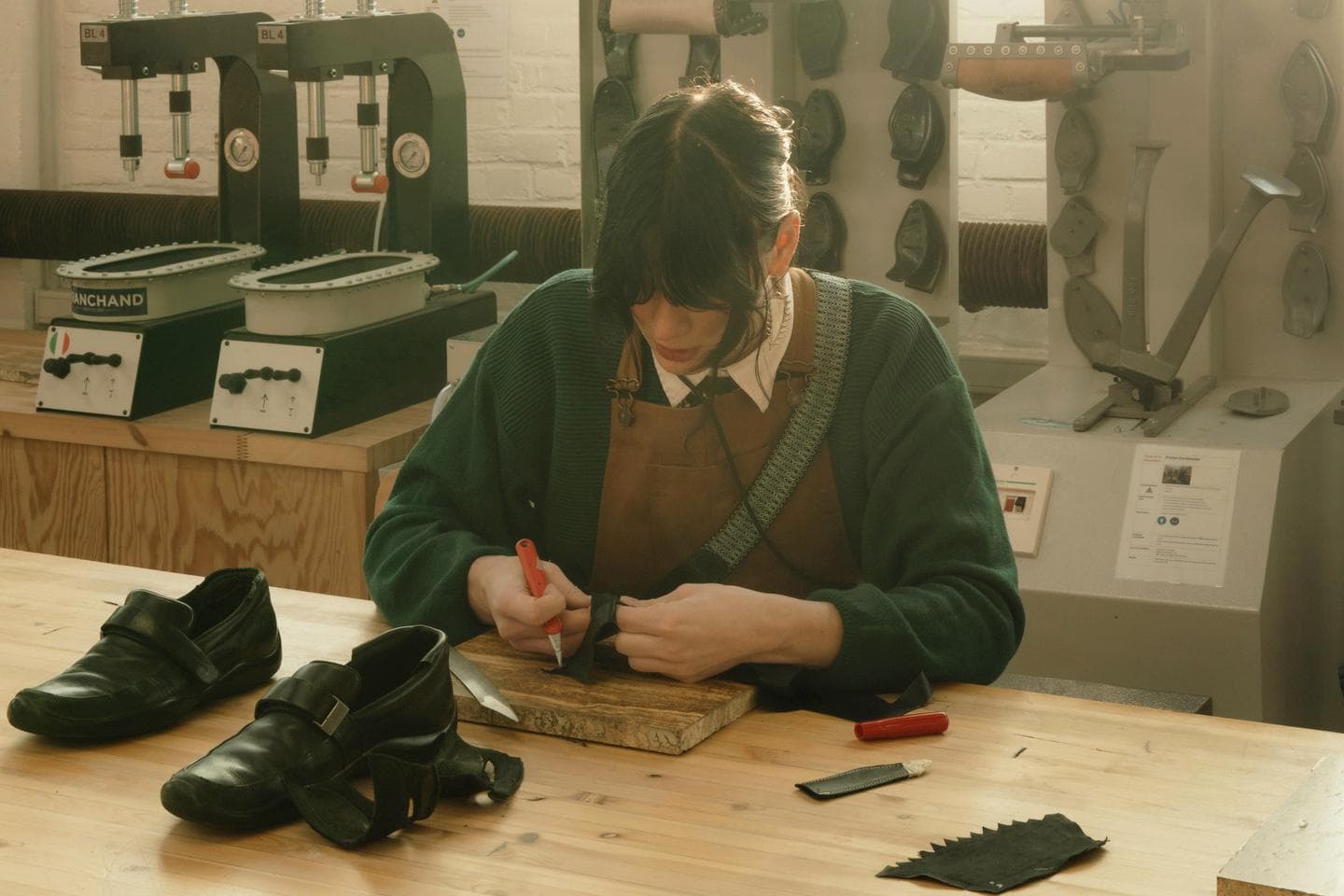
Roubaix’s new repair school is training students in sewing, alteration, restoration, and shoe repair, and that matters because fashion is finally learning that keeping clothes in circulation takes people, not just promises. In a city once powered by textiles, the school is turning repair into infrastructure, building the workforce that resale, aftercare, and longer product lifecycles will depend on.
The logic is simple and overdue. If a brand wants to sell fewer replacements, support repair services, or stand behind garments for longer, it needs trained hands who can unpick a seam cleanly, rebuild a hem without distorting the silhouette, and restore shoes well enough to keep them out of the bin. Roubaix’s school is teaching exactly those unglamorous, essential skills.
Why Roubaix is the right place
Roubaix was once a major textile center, then suffered massive deindustrialization over the last 50 years. The school says the city has also been the poorest in mainland France since 2024, with 46 percent of residents below the poverty line, which gives the project a sharper edge than a simple sustainability experiment. Here, repair is both an environmental answer and a local jobs strategy.
Le Monde reported that the school opened in September with an inaugural class of 20 students, and that the first cohort is being trained in sewing and shoe repair. That mix is telling: repair is not just about mending holes, it is about reviving the full maintenance chain that fashion has neglected for decades.
The school targets people from Roubaix’s priority neighborhoods and others in serious difficulty in the labor market. In other words, it is designed for people who need a route back into work just as much as fashion needs the skilled labor they can provide.
What the program teaches, and how it works
This is not a loose workshop or a feel-good community project. The program runs for 11 months, from September to July, and the school’s 2026-2027 materials say 30 candidates will be selected. Registration steps are scheduled for July 2026, and the year ends with a professional certificate after a jury defense.
That structure matters because repair needs credibility. Fashion can only scale aftercare if customers trust the workmanship, and brands can only outsource repair if the technicians are trained to a recognizable standard. A certificate gives the training value in the labor market, not just in the classroom.
- garment repair for rips, worn seams, and broken closures
- alteration for fit changes and resale preparation
- restoration work for pieces with longer product lives
- shoe repair, which is still one of the clearest signs that fashion is serious about durability
The curriculum already points to the jobs that are likely to grow around circular fashion:
The prize here is not nostalgia. It is a practical pipeline for the services that make circular fashion function at street level.
France is making repair cheaper, which makes the labor more valuable
The market side is moving too. France’s bonus réparation was launched for electronics in December 2022, then extended to textiles, household linens, and shoes in November 2023. By 2025, the Ministry of Ecological Transition described it as a direct deduction on the customer’s bill at certified repairers, which is exactly the kind of policy that makes repair easier to choose in the real world.
That incentive changes behavior in two ways. First, it nudges customers toward repair instead of replacement by lowering the friction at checkout. Second, it creates a reason for repairers to professionalize, because being certified becomes part of the business model.
For brands and retailers, the message is even clearer. If governments are subsidizing repair and consumers are being conditioned to use it, then aftercare stops being a nice extra and starts looking like operational necessity. The companies that win will be the ones that can connect design, warranty, repair, and resale into one clean system.
Why VEJA is watching this closely
The project is tied to VEJA, a brand that has built its reputation on organic cotton, Amazon rubber, recycled materials, and production in Brazil. On its project page, VEJA says 23.9 billion shoes were made worldwide in 2024, and that traditional cobblers in France have nearly disappeared. Those numbers explain why this school feels less like a side project and more like an attempt to rebuild a missing trade.
Shoes are the perfect example of where fashion’s rhetoric meets reality. A sneaker can be marketed as durable, but if no one near the customer can resole, stitch, clean, or restore it, durability remains theoretical. The same is true of clothing: a sharp wool jacket with a broken lining or a silk skirt with a split seam is only as sustainable as the service network around it.
That is why Roubaix’s school reads like a business story, not a nostalgia story. The real breakthrough is not just that students are learning to repair garments, but that fashion is beginning to treat repair as labor that can be trained, certified, hired, and scaled. If the industry wants resale, aftercare, and longer product lifecycles to become normal rather than exceptional, it will need far more places like this one.
This article was produced by Prism’s automated news system from verified source data, official records, and press releases, then run through automated quality and moderation checks before publishing. The system is built and supervised by the people who set the standards it runs under. Read our full AI policy.
Did this article answer your question?


