Samsara Eco expands nylon collective to speed recycled material adoption
Samsara Eco is turning recycled nylon into a shared buying club, pulling OIA and 100-plus brands into one system to make supply less of a guessing game.

Samsara Eco is treating recycled nylon like an infrastructure problem, not a feel-good materials story. The Nylon Materials Collective has expanded beyond its original European outdoor circle to add the Outdoor Industry Association and names like Burton, Black Diamond Equipment, Red Wing Shoe Company, Big Agnes and W. L. Gore & Associates, a move that gives the project real North American muscle and a lot more buying power.
That matters because the bottleneck has never just been chemistry. It has been scale, coordination and the grind of getting a material that behaves like virgin nylon into enough hands fast enough for brands to trust it. Samsara Eco launched the collective with the European Outdoor Group in November 2025 to make high-performance, virgin-identical recycled nylon easier for outdoor labels of every size to source. Inside the collective, brands can share material requirements and existing supply-chain partners under confidentiality agreements, while Samsara Eco handles technical support plus materials and supply-chain validation. In other words, this is less about a headline and more about making procurement behave like a system.

The expansion now reaches another 100-plus brands across OIA’s Climate Action Corps and Clean Chemistry and Materials Coalition programs, which is the kind of scale that can actually change commercialization odds. OIA’s coalition exists to help members eliminate and replace harmful chemicals and materials, innovate on sustainability and build consumer trust, so its alignment with a recycled-nylon push makes sense. If the association can help normalize shared demand, the collective stops looking like a niche experiment and starts looking like a template for performance apparel.
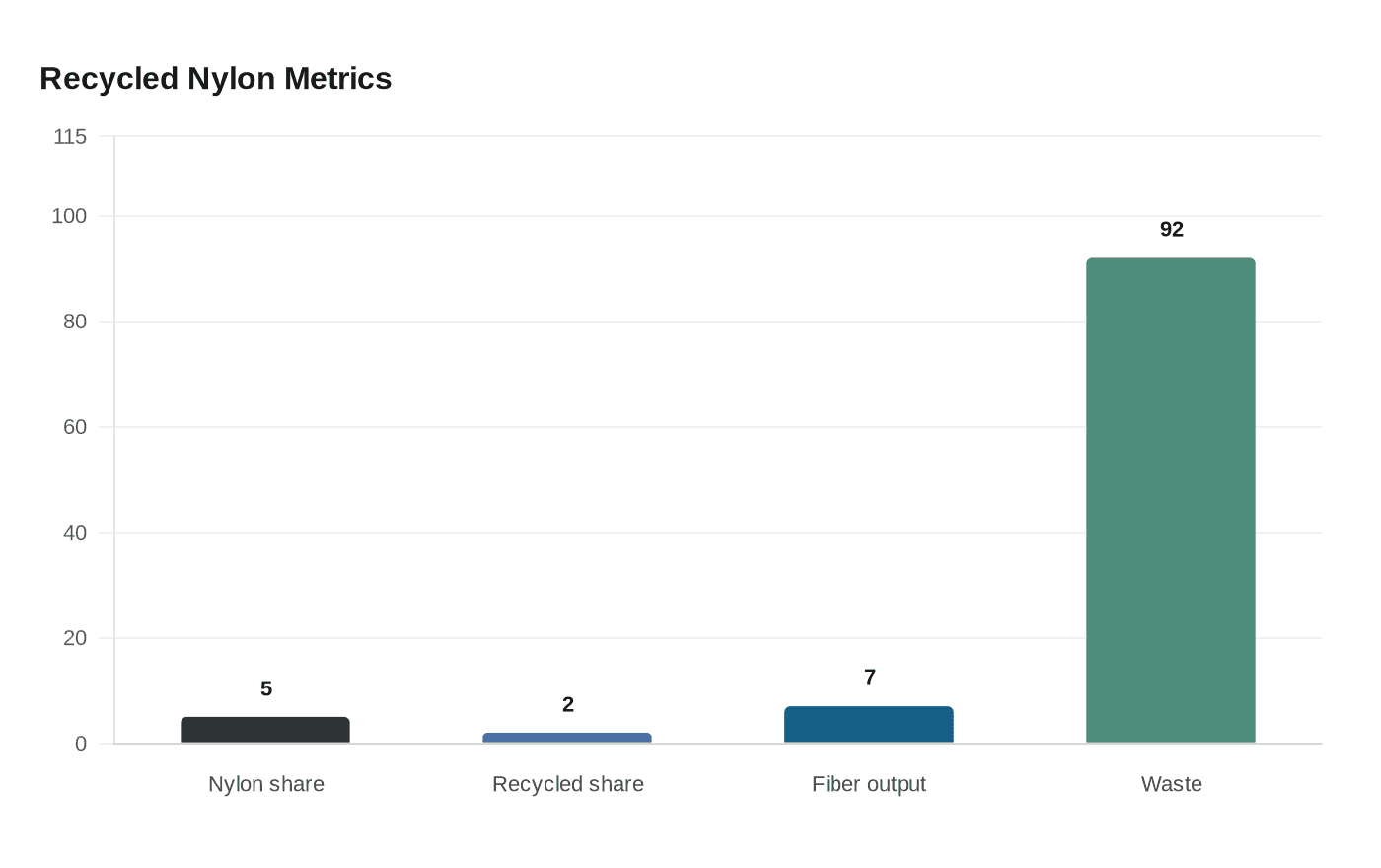
The market backdrop is still brutally lopsided. Textile Exchange’s 2025 Materials Market Report says polyamide, better known as nylon, made up 5% of the global fiber market in 2024, with about 7 million tonnes produced worldwide. Recycled polyamide accounted for only 2% of the total polyamide market share, which is a tiny slice for a fiber that shows up everywhere from shell jackets to hiking packs and mountaineering hardware. Samsara Eco has also said the wider textile sector sends about 92 million tonnes of waste to landfills each year, a number that makes pilot projects feel painfully small.
Paul Riley, Samsara Eco’s CEO and founder, has framed the push as building the infrastructure needed to make circular materials the default without asking brands to give up performance. The company’s Jerrabomberra, New South Wales innovation campus opened in September 2025, and its separate nylon 6,6 recycling facility with NILIT is expected to be operational by late 2026. That is the real tell here: Samsara Eco is not just pitching recycled nylon, it is building the pipes, the partners and the proof points to make it a standard material instead of a sustainability talking point.
This article was produced by Prism’s automated news system from verified source data, official records, and press releases, then run through automated quality and moderation checks before publishing. The system is built and supervised by the people who set the standards it runs under. Read our full AI policy.
Did this article answer your question?


