Soorty and Jeanologia unveil AI-led denim that cuts water use
Fast Fade pairs Soorty’s recycled cotton with Jeanologia’s digital finishing to test whether cleaner denim can still deliver rich fade, contrast and scale.
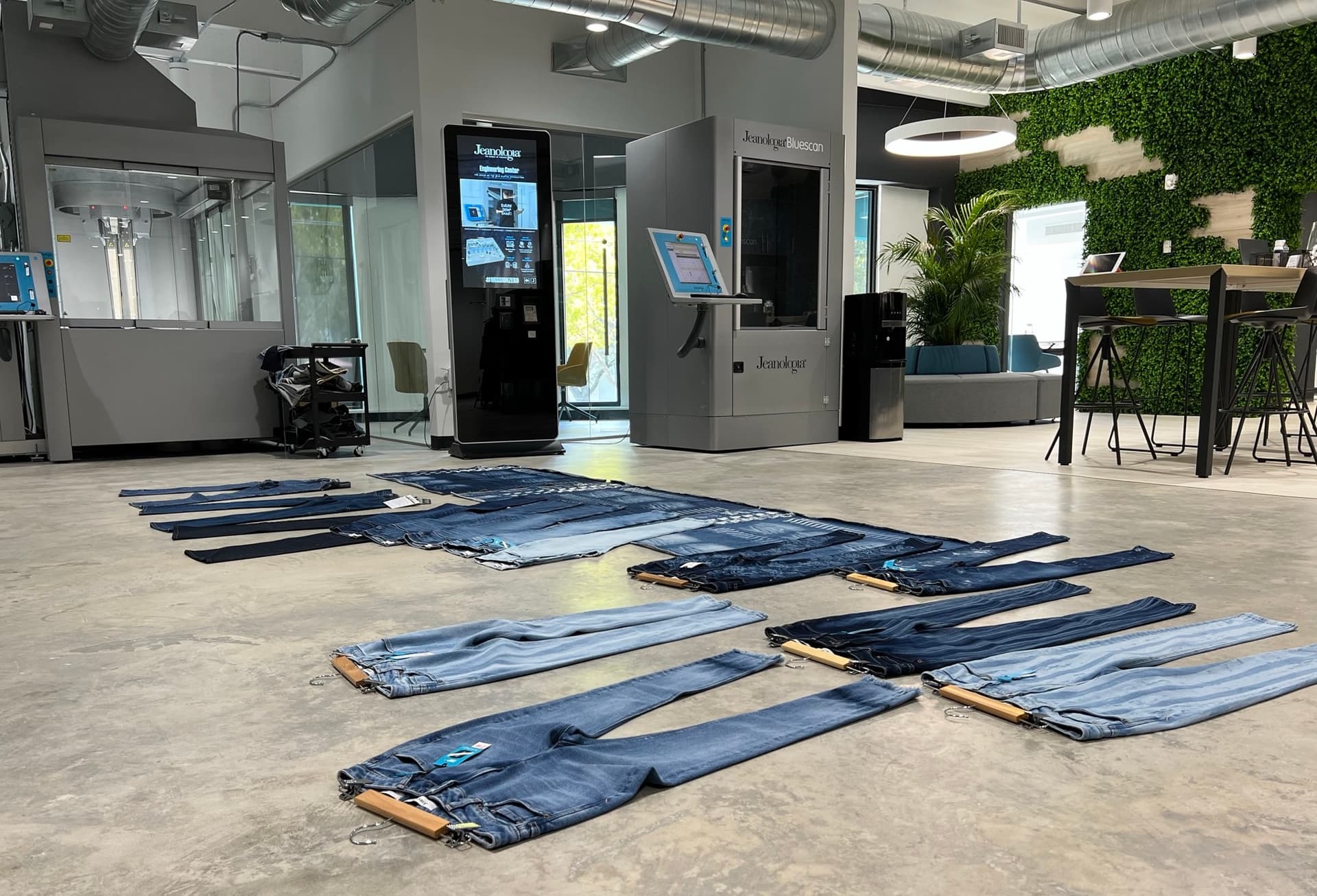
Fast Fade is denim with a very specific ambition: to look sharply broken-in while skipping the wet, chemistry-heavy finishing that usually gives jeans their lived-in edge. The new collaboration between Soorty and Jeanologia was shaped in Karachi and Valencia as a collection of fabrics engineered to react optimally to digital finishing, and it reads like a technical reset for a category built on abrasion, water, and waste.
The line includes five rigid fabrics, two in indigo and three in black, all designed to work with Jeanologia’s laser and dry-process technologies. Rather than relying on traditional wash-downs to coax out depth and contrast, the fabrics were developed to open up, brighten and sharpen under finishing. Their makeup is equally telling: conventional cotton sits alongside Tencel and Soorty’s Second Life recycled cotton, giving the collection a sustainability story that is structural, not decorative. In denim terms, this is the difference between a surface treatment and a fabric engineered from the start to take on a clean, high-contrast fade.
What gives Fast Fade its real industry weight is the way it was built. Jeanologia experts traveled to Soorty’s facilities in Pakistan for on-site development, then the teams continued with reciprocal workshops at Jeanologia’s headquarters in Spain. Soorty fabrics vice president of product development Alper Cataloglu called it a “two-way conversation,” and that is the right phrase for a project that depends on trust between mill, technology provider and finishing floor. If the collaboration works as intended, it could reduce the endless trial-and-error that slows down product development and clogs sourcing calendars.

Jeanologia, founded in 1994, has spent decades pushing laser, ozone, e-Flow, SmartBoxes and H2 Zero as alternatives to the water-intensive, chemical-heavy methods that still dominate denim finishing. Its EIM software tracks water consumption, energy consumption, chemical impact and worker health, which makes the Fast Fade concept more than a visual exercise. It is a test of whether the numbers behind cleaner finishing can be made visible to sourcing teams, compliance officers and buyers who still need a jean that performs on shelf and in audit.
Soorty brings scale to that argument. The company says its Second Life recycling facility can process half a million old, worn or discarded jeans a month, and that roughly every 20th jean imported into the EU, UK or US was either made in Soorty or made using Soorty fabrics. That reach matters because sustainability in denim is only useful when it can move beyond showcase collaboration and into bulk production. Fast Fade will mean something if its cleaner inputs, tighter digital finishing and lower-impact processing can be repeated season after season in Karachi, Valencia and beyond.
This article was produced by Prism’s automated news system from verified source data, official records, and press releases, then run through automated quality and moderation checks before publishing. The system is built and supervised by the people who set the standards it runs under. Read our full AI policy.
Did this article answer your question?