Sweden tests algae pigments to dye textiles without fossil fuels
Sweden's LOCALITY project has already dyed a first pair of jeans with microalgae pigments, a test for cutting fossil fuels, wastewater and chemicals from denim.

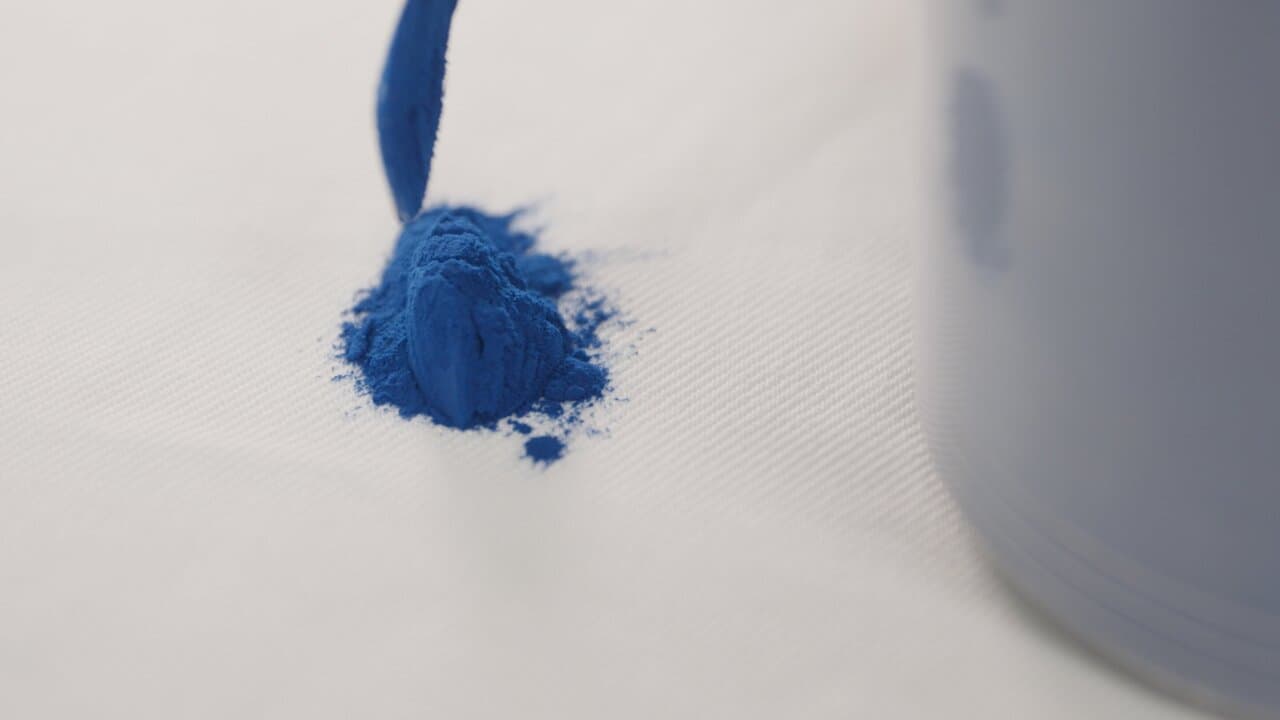
The most consequential innovation in sustainable fashion right now is not happening on a runway but in a dye bath. In Sweden, researchers working through the EU-funded LOCALITY project are testing whether algae pigments can replace fossil-fuel-based textile dyes, with the first pair of jeans already dyed using microalgae pigments.
That matters because dyeing is one of fashion’s dirtiest intersections of chemistry and scale. KTH Royal Institute of Technology says the fashion and textile industry is responsible for around 10% of global carbon dioxide emissions, while the UN Environment Programme puts the sector at 2% to 8% of global greenhouse-gas emissions and notes its enormous water use and chemical footprint. LOCALITY is trying to answer a harder question than “can it be done?” It is asking whether algae can work inside the industrial machinery fashion already uses, at the consistency, cost and performance levels factories demand.

The project began on June 1, 2023 and runs through May 31, 2027, with a budget of €9.8 million and 27 partners from 14 countries across the Baltic Sea and North Sea regions. At the University of Borås, the Smart Textiles and Swedish School of Textile teams are working with Swedish company MOUNID AB to replace fossil-based chemistry with algae-based ingredients and develop sustainable functionalization processes for textile applications. Anna Björkquist, a research engineer at the university, says the goal is to move from algae already being used in textile fibers to using pigments from algae for dyeing, and to build a waste-free production process.
So far, several dye formulations have been tested, and the project’s first jeans are a tangible proof point rather than a mood board. But the next test is the one fashion has seen before with every promising material: whether the color holds, whether batches match, whether existing equipment can take it, and whether the economics work outside the lab. Microalgae pigments look attractive in part because a recent review found they can be highly productive, made in more sustainable systems and produced without seasonal dependence, yet the same literature also points to limits and the need for further development.
LOCALITY is also part of a broader shift toward circularity that the UN and the Ellen MacArthur Foundation have both made central to textile reform. That puts algae pigments in a field that already includes waterless, closed-loop CO2 dyeing from DyeCoo, which reports zero water use in dyeing and uses carbon dioxide as a solvent in a closed-loop process. The competition is no longer between green ideas and dirty habits. It is between technologies that can prove they work in mills, on deadlines, at scale.
This article was produced by Prism’s automated news system from verified source data, official records, and press releases, then run through automated quality and moderation checks before publishing. The system is built and supervised by the people who set the standards it runs under. Read our full AI policy.
Did this article answer your question?


