U.S. circular fashion goes mainstream, but regulation slows resale growth
Ninety percent of Americans warm to circular fashion once it is explained, but taxes and seller rules still keep resale from scaling.
Most Americans already have a circular closet, whether they realize it or not. The new bottleneck is the rulebook: 77% of Americans own clothes they no longer want or need, and those pieces hold about $400 in potential resale value per closet, yet resale still runs into sales tax, reporting rules and compliance traps that make simple secondhand feel weirdly bureaucratic.
That tension sits at the center of Building Policy Pathways for a Circular Economy, a report commissioned by Etsy and Depop and published in June 2026 using late-2025 research. Once the circular economy is explained, 90% of Americans say they favor it. And this is not abstract virtue-signaling. Depop says 92% of Americans who take part in circular practices say it helps them save money, 80% say it helps them earn extra income or cover expenses, and 86% say it helps them feel more connected to their community.
The real drag is policy. In some states, resold goods still get hit with sales tax, and reporting rules can treat a person clearing out a closet like a full-scale business. That matters because 36% of Americans sold personal items or handmade goods for extra money last year, while only 13% identify as a business. The mismatch is obvious: the economy has already gone recommerce-native, but the paperwork has not caught up.
What has to change next is not consumer behavior, but enforcement and infrastructure. Depop has said people are already finding practical ways to get more value from what they own, and the platform wants secondhand to become easier and more accessible. Its community has given more than 136 million items a second life since the company was founded, and the company says it helped support the launch of the bipartisan Recommerce Caucus in the U.S. House of Representatives, a sign that resale is moving from niche habit to legislative subject.
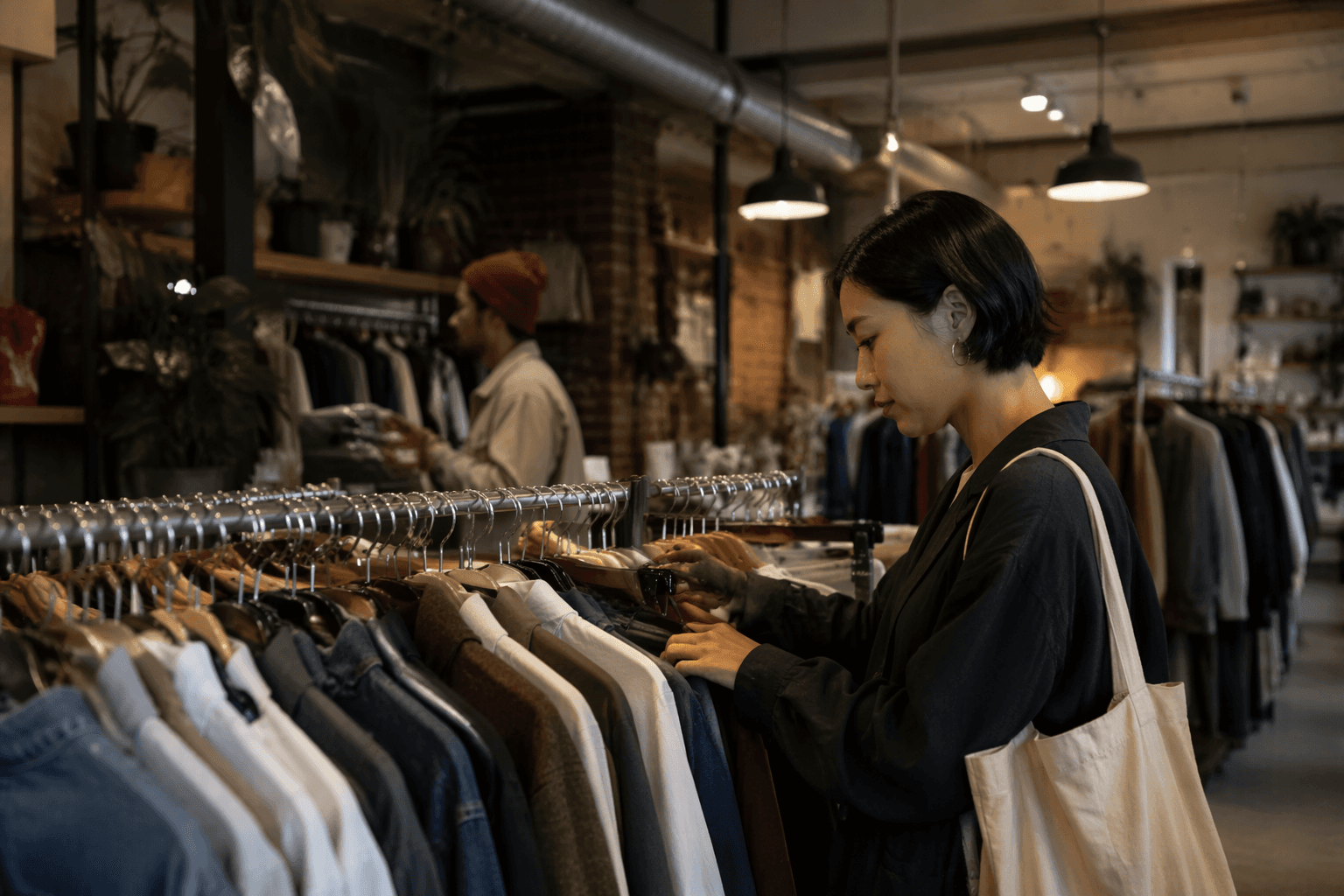
The pressure is widening beyond one platform. In May 2026, the Ellen MacArthur Foundation said 69 organizations, including Etsy, Arc’teryx, H&M Group, Primark, Vinted and Zalando, were urging governments in the EU, U.S. and Canada to fix the economics of resale and repair. Their ask was blunt: eliminate sales tax on resold products and repair services in North America, use tax credits to support resale and repair jobs, and expand extended producer responsibility so brands help fund collection and sorting infrastructure.
The U.S. Environmental Protection Agency defines a circular economy as reducing material use, redesigning products to be less resource intensive and recovering materials or energy from waste. That is the direction fashion is already moving in. The only question now is whether U.S. policy finally decides to stop taxing the repair job, the resale listing and the last useful life out of a garment.
This article was produced by Prism’s automated news system from verified source data, official records, and press releases, then run through automated quality and moderation checks before publishing. The system is built and supervised by the people who set the standards it runs under. Read our full AI policy.
Did this article answer your question?


