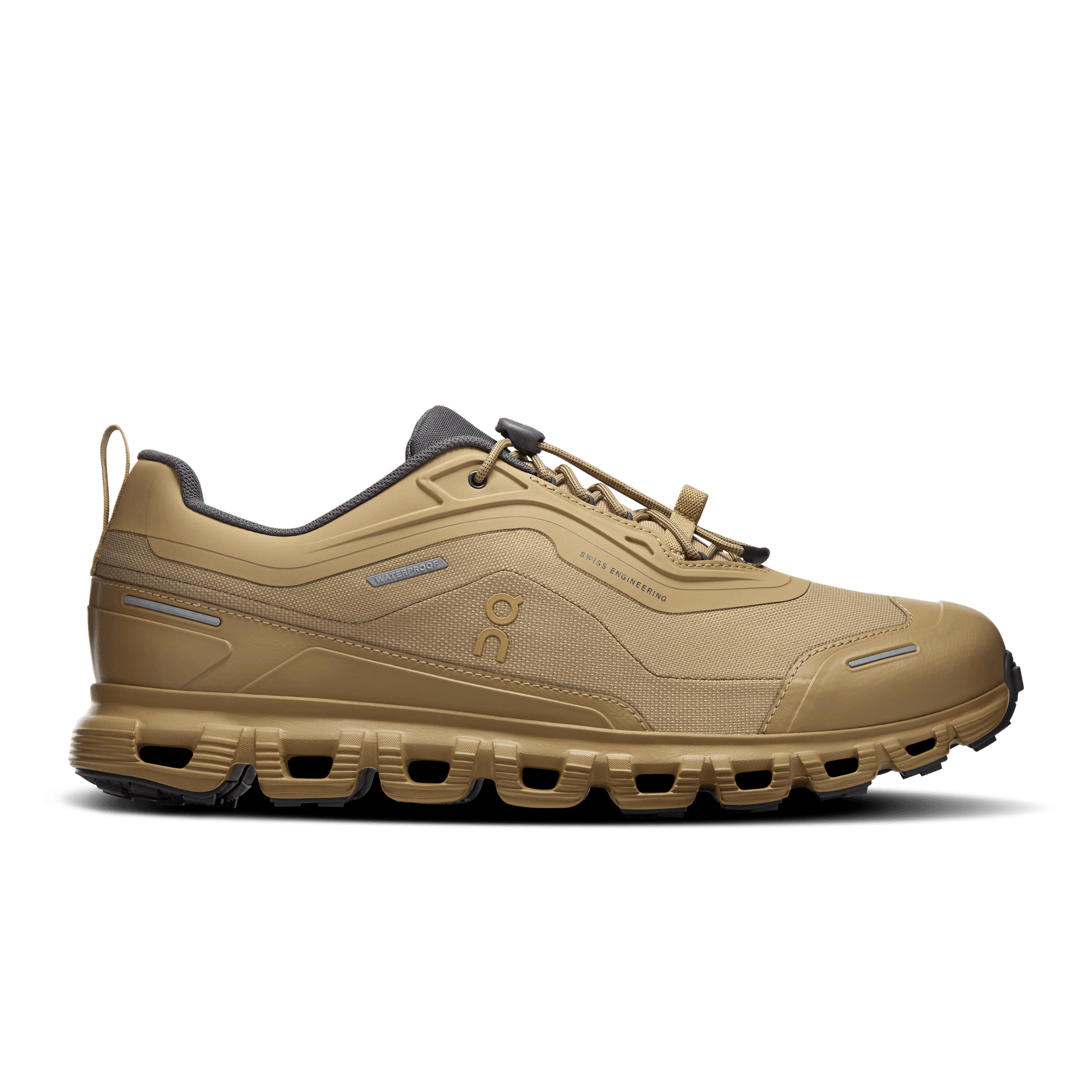
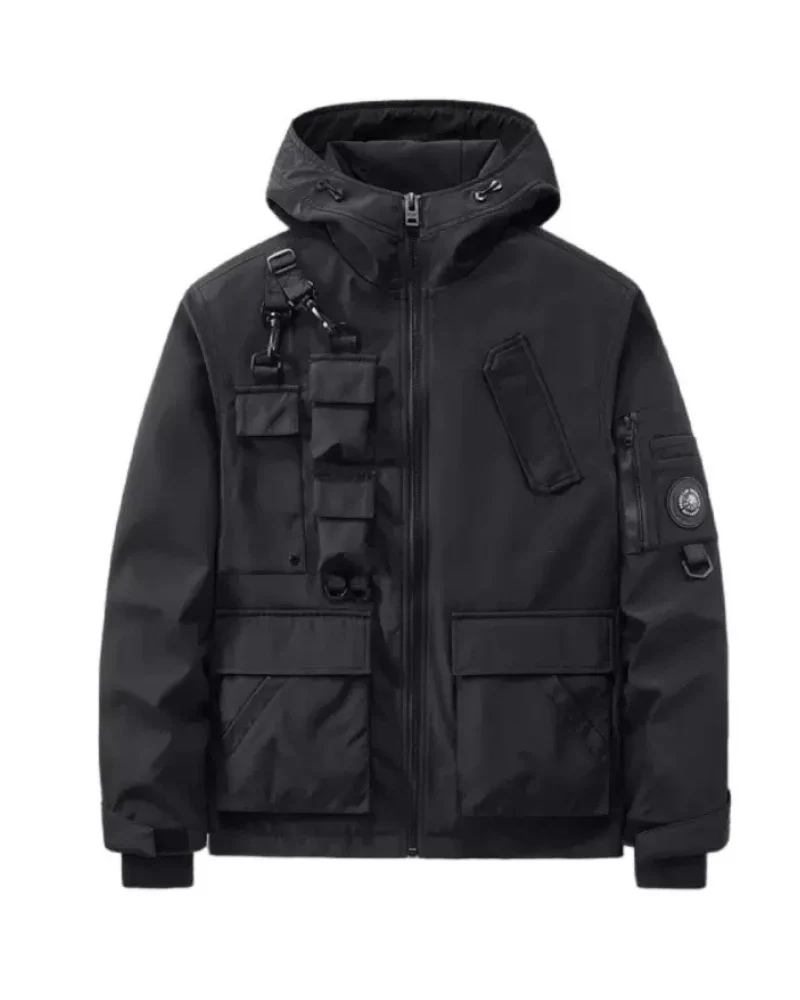
Dyneema gives techwear its sharp, futuristic silhouette
Dyneema is why techwear looks armored and sharp: lighter than it looks, tougher than standard nylon, and expensive enough to spot on sight.
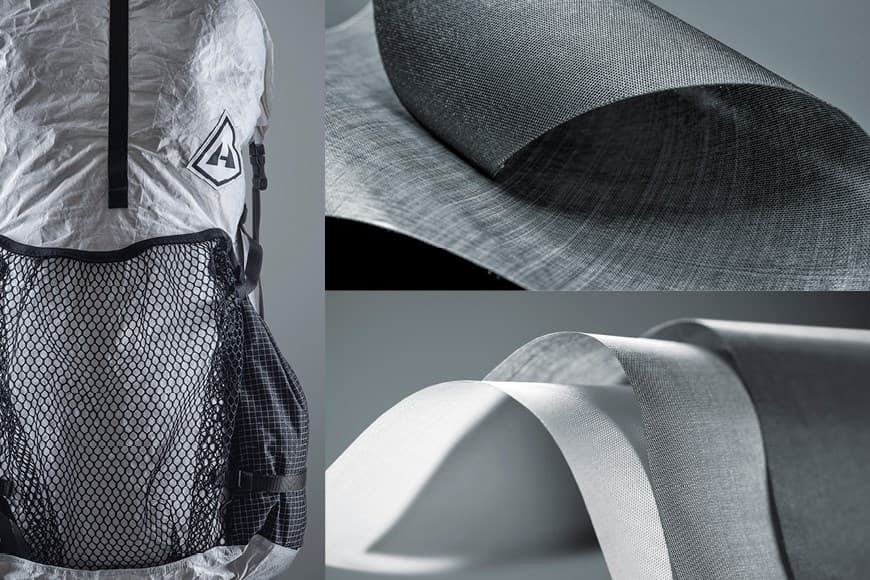
Those crisp shells, self-standing bags, and unnaturally clean silhouettes that look engineered instead of merely sewn are often Dyneema. Dyneema markets it as the “world’s strongest fiber,” 15 times stronger than steel and light enough to float on water. That combination changes the way a garment sits on the body: lighter where you want mobility, stiffer where you want shape, and visibly more technical than ordinary streetwear.
What Dyneema actually changes on the body
The first thing Dyneema changes is weight. In a techwear wardrobe, the whole point is to get performance without the clunky, overbuilt look of old-school outdoor gear. A jacket reinforced with Dyneema can feel more substantial than thin nylon, but it should not wear like a burden, and a pack made with it can deliver structure without sagging into a limp rectangle by noon.
It also changes abrasion resistance and silhouette at the same time. Dyneema panels can make a bag stand upright, give a shell jacket a sharper outline, and keep an accessory looking molded instead of floppy. That crispness reads as protection, not decoration. If a piece claims Dyneema but still collapses like a cheap polyester layer, something is off.
From DSM in 1968 to Geleen in 1979
The 2015 presentation “Romancing the Thread: the Story of Dyneema®” traces the material to Dr. Albert Pennings, who first pulled wispy, unusually strong threads from a beaker in 1968 while working at DSM, then developed the gel-spinning breakthrough with Pieter Lemstra at DSM Research in Geleen, the Netherlands, in 1979.
Dyneema is the branded form of ultra-high-molecular-weight polyethylene, or UHMWPE, which is another clue that this is a performance material first. It is an advanced gel-spun fiber, not a conventional woven textile pretending to be futuristic.
How the construction gives techwear its architecture
The most useful thing to know when shopping is that Dyneema is not one single fabric. Dyneema composite fabrics use layers of Dyneema fiber bonded at 0° and 90° orientation. That layered structure is the reason these materials behave so differently from standard cotton, nylon, or polyester weaves.
In practice, that construction gives techwear its hard edges. It helps shells keep a pronounced shape, keeps packs from folding in on themselves, and creates that expensive-looking surface that seems to hold its own geometry. The newer woven-composite direction pushes Dyneema beyond the old ultralight, slightly crinkly reputation and into pieces that can work in daily wear without looking like they were borrowed from a thru-hiker’s kit.
How to spot when Dyneema is doing real work
If you are buying with a techwear eye, look for the visual and spec cues that prove the material is earning its keep.
- A jacket or bag that holds a sharp line when empty, rather than collapsing into a soft heap, is usually doing more than just borrowing the Dyneema name.
- Panels, overlays, and reinforcement zones matter. If the brand only mentions Dyneema in a vague materials list but never shows where it is used, that can be more marketing than function.
- The feel should be light but assertive. Dyneema is about lowering weight without losing the sense of armor, so a piece should feel engineered, not padded.
- For carry goods, the big tell is structure. A Dyneema pack that stands upright, resists scuffing, and protects contents from weather has a real job. A glossy finish with no obvious gain in shape or protection is just premium gloss.
- In apparel, look for shells, overshirts, or modular layers where the fabric’s stiffness creates a cleaner line through the torso and sleeves. That is where the silhouette payoff shows up fastest.
Comfort, drape, and price are the tradeoffs
Dyneema does not come free, and it does not always feel soft. The same construction that gives you a crisp, armored look can reduce drape and make a garment feel less relaxed than a standard nylon or polyester piece. That is not a flaw so much as the cost of the silhouette: the sharper the structure, the less likely the garment is to puddle naturally on the body.
Price is the other obvious tradeoff. Advanced composite materials are expensive to develop and difficult to manufacture consistently, which is why Dyneema shows up in pieces that sit above the basic techwear bracket. If the price is high but the item looks and behaves like any other shell, ask what you are paying for. Real Dyneema should justify itself with lighter weight, better abrasion resistance, stronger structure, or better weather performance, not just a cleaner product page.
Why the material moved from expedition gear into fashion
By 2015, Dyneema was entering the world of apparel, a shift from its roots in hard-use gear. DSM Protective Materials’ 2020 factbook placed related products across law enforcement, the military, private security, first responders, outdoor, apparel, footwear, inflatables, and composite materials, showing how wide the ecosystem already was.
Hyperlite Mountain Gear in 2025 pitched Dyneema on weight savings, durability, and water protection, and that is exactly the kind of practical performance techwear borrowed from outdoor culture. Carryology has treated Dyneema as a core material for premium bags and utility gear.
The sustainability pitch and the fine print
DSM also sold Dyneema as a cleaner-performance material. In a July 11, 2016 press release, DSM called it “the greenest strength” and pitched Dyneema products as delivering the lowest carbon footprint for the performance specified from cradle to grave.
Brands in the performance and fashion space like to use that argument because shoppers want materials that feel forward-looking in more than one way. Even so, the real buying question stays the same: does the piece deliver on weight, durability, weather resistance, and shape, or is the sustainability language doing the heavy lifting?
Dyneema’s 2025 composite push
Dyneema’s 2025 materials page lists ongoing development of new composite technology.
This article was produced by Prism’s automated news system from verified source data, official records, and press releases, then run through automated quality and moderation checks before publishing. The system is built and supervised by the people who set the standards it runs under. Read our full AI policy.
Did this article answer your question?