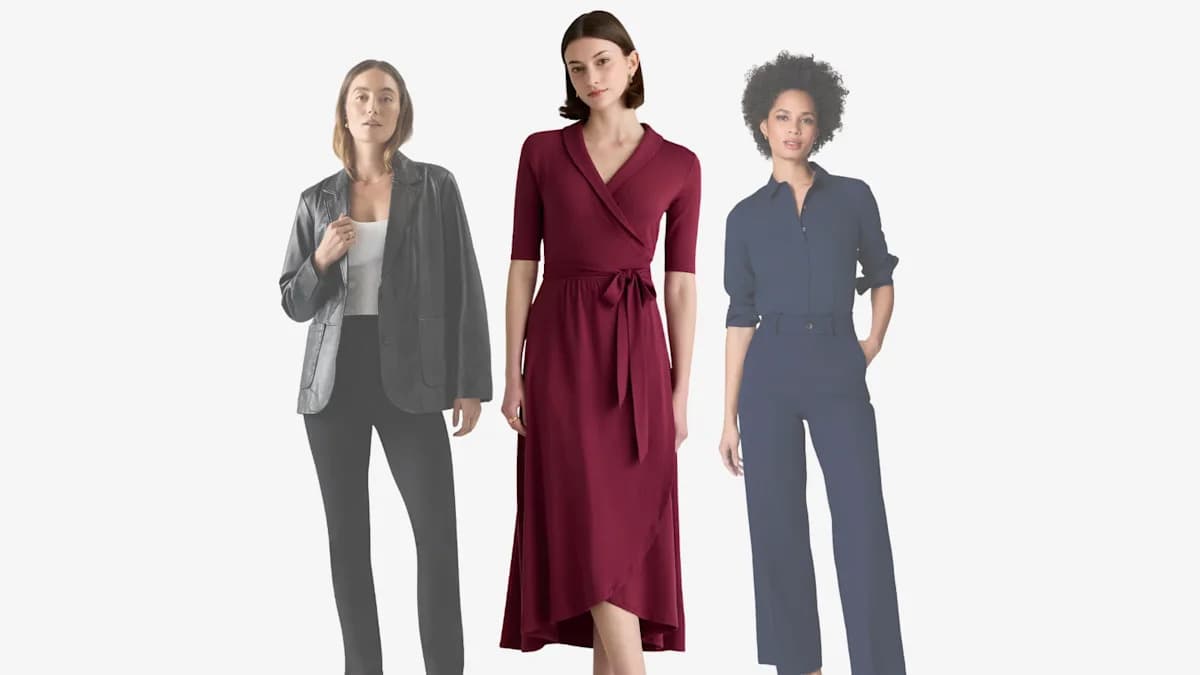
Business casual in 2026: pencil skirts, shirts, and good jeans
Pencil skirts, crisp shirts, and dark jeans are the new office shorthand for polish. The trick is looking intentional without dressing like the job still runs on 1990s rules.
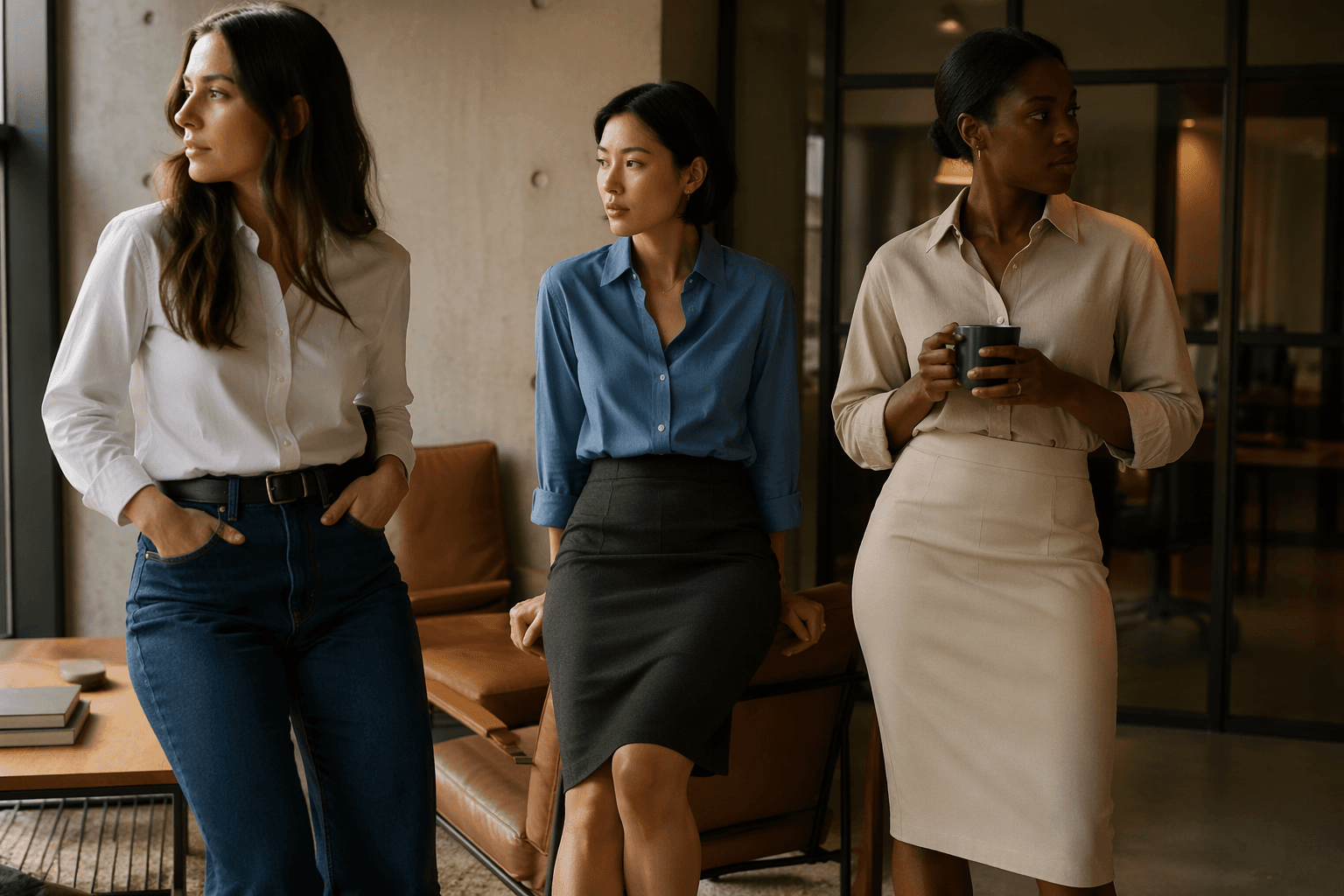
Pencil skirts, crisp shirts, and good jeans are doing the heavy lifting in the new business-casual uniform: sharp enough for a meeting, relaxed enough to survive a hybrid week, and polished without the frozen stiffness of old-office dressing. The look is less about permission to dress down than about finding a cleaner way to look deliberate.
The new business-casual code
Business casual took hold in U.S. offices in the 1990s, and it rewired the American workplace faster than people like to admit. Society for Human Resource Management data showed that 95 percent of U.S. companies had some kind of casual day policy in 1999, up from 24 percent in 1992. Casual Fridays helped normalize the shift, Silicon Valley tech companies pushed it further, and the pandemic took away a lot of the remaining appetite for hardline office uniforms.
After two years of “hastily throwing a business jacket over a T-shirt and sweatpants,” as Harvard Business Publishing put it, people stopped romanticizing discomfort. The 2026 version of business casual is the result, a look shaped as much by hybrid work as by style taste.
Why pencil skirts work now
The pencil skirt is back because it solves a problem the old office uniform never fixed: how to look composed without looking trapped. A good one skims the body, cleans up the line, and gives you a sharper silhouette than pants without reading as corporate armor. That is why it works with a crisp shirt at a law office, a knit at a creative agency, or a blazer when the meeting is serious enough to need structure.
Fit is everything here. If your shape is curvier, a pencil skirt with a little stretch or a back vent keeps the skirt moving instead of fighting your stride. If you are petite, keep the hem clean and the waist placement precise so the look lengthens the body instead of cutting it in half. On taller frames, a longer hem and a stronger fabric keep the silhouette sleek instead of severe.
The smartest pencil skirts do not cling, they hold.
The shirt is doing more than the blazer
A crisp button-down is the easiest way to make business casual feel finished. White poplin is still the cleanest read, but pale blue, fine stripes, and lightly structured cotton all work when the office wants effort without ceremony. A shirt tucked neatly into trousers or a skirt reads differently from the same shirt thrown over denim, and that flexibility is exactly why it has become the new office currency.
The key is understanding how much structure your workplace expects. Harvard University career guidance splits it this way: tech startups often lean toward T-shirts, while corporate finance can still expect business formal. In the middle of that spectrum, the shirt becomes the compromise piece. It can sit under a blazer in a conservative office, stand alone in a more relaxed one, or soften the severity of a pencil skirt if you want polish without looking locked into a uniform.
Body type plays into this too. A roomier shirt can skim the torso without grabbing at the midsection, while a more tailored version keeps the line neat on smaller builds. Rolled sleeves, a slightly open collar, or a half tuck can change the whole mood.
Good jeans, not lazy jeans
Dark jeans are the other reason business casual feels modern instead of dusty. The color does a lot of the work: deep indigo reads cleaner than faded blue, and a straight or slim shape keeps denim from drifting into weekend territory. At some workplaces, dark denim now sits comfortably beside tailored shirts and blazers.
Good jeans need clean hems, minimal distressing, and enough structure to look chosen on purpose. Pair them with a crisp shirt and a sharp shoe, and they look intentional. Pair them with a sloppy tee and beat-up sneakers, and the whole thing collapses into casual.
Read the room, then build the outfit
The best office wardrobes are built around context, not fantasy. Brightmine found just 4.3 percent of employers enforced strict dress codes in 2024, which means the old one-size-fits-all office uniform has almost disappeared. But that does not mean every workplace has the same standard. Harvard’s guidance on industry dress norms draws the same split: tech startups often skew casual, while corporate finance expects something closer to formal tailoring.
Modern dress codes are increasingly framed around fairness, inclusion, and company culture. SHRM treats business professional and business casual as policies a company customizes to its own environment. Clarity lets people know when a pencil skirt and crisp shirt is enough, when dark jeans are acceptable, and when the suit still has to come out.
This article was produced by Prism’s automated news system from verified source data, official records, and press releases, then run through automated quality and moderation checks before publishing. The system is built and supervised by the people who set the standards it runs under. Read our full AI policy.
Did this article answer your question?