Five workwear staples that still define casual style
These five workwear staples still earn space in a real wardrobe because they layer easily, wear hard, and age into better style.
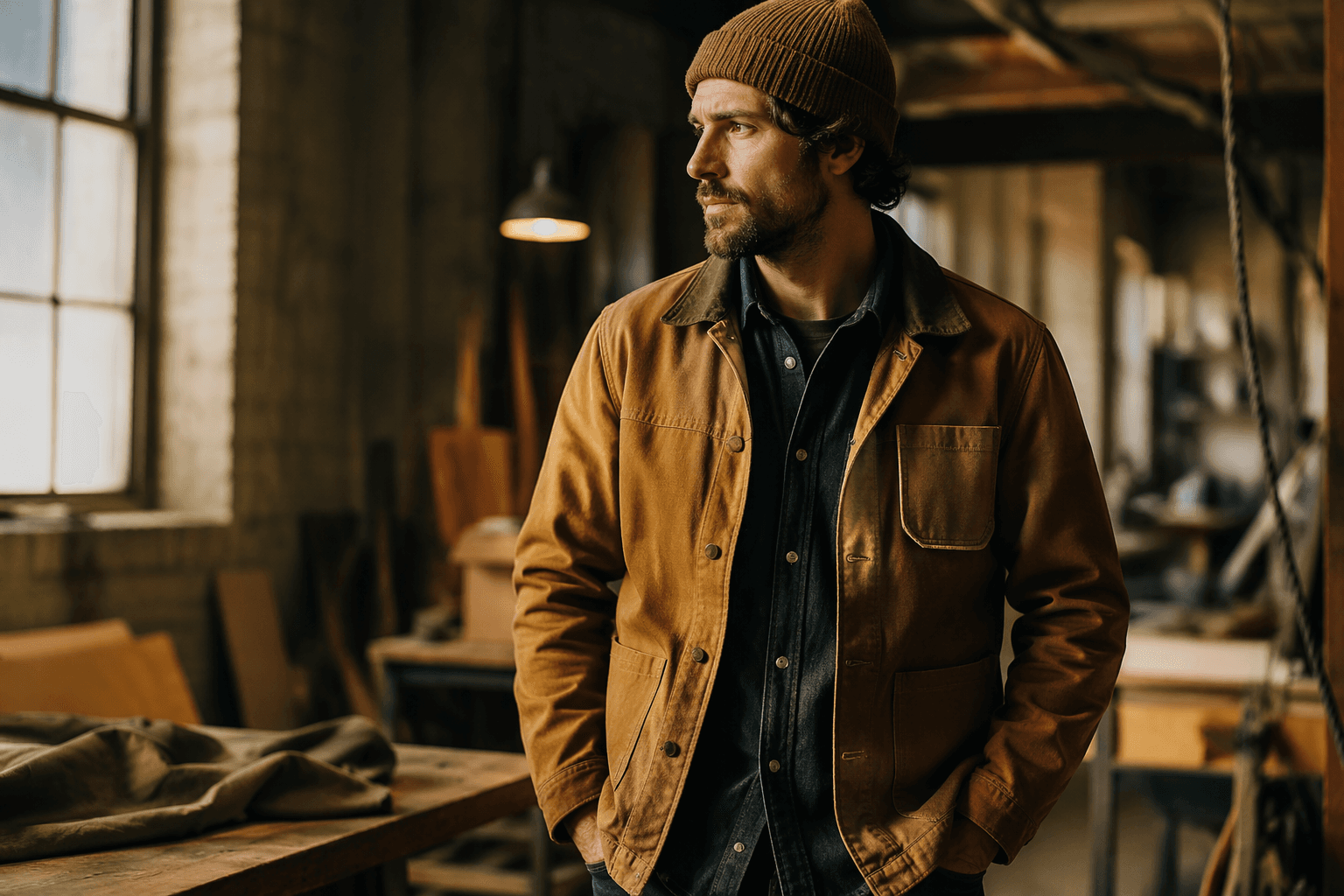
Workwear lasts because it solves the oldest style problem in menswear: what looks good when life is not polished. These pieces were built for labor, but they now anchor casual dressing because they bring structure, comfort, and a kind of quiet confidence that trend pieces rarely keep for long. The smartest way to wear them is as a capsule, with each garment doing real work in more than one season and more than one outfit.
The chore jacket
The chore jacket is the piece that makes the whole category click. Its roots run back to 19th-century French rail workers, where it appeared in deep indigo bleu de travail, and that origin still explains why it feels so useful today: it is cut to move, layer, and take abuse without looking fussy. In its classic form, it was a loose cotton coat in hard-wearing drill or moleskin, with large breast pockets, roomy hip pockets, a point collar, and button cuffs that made rolled sleeves look natural rather than styled.
That utility is exactly why the chore jacket works now as the navy blazer of casual dressing. Choose one in cotton canvas, and the shape instantly gains more presence, especially if it is finished with silver-tone buttons or a ticket pocket. Thrown over a T-shirt and selvedge jeans, it reads easy and unfussy; layered over a plaid overshirt, it becomes the top layer that gives the whole outfit a little more authority without losing its off-duty ease.
Worker trousers
Worker trousers bring a tougher line to the capsule, and the best versions show their heritage in details that were meant to survive real trade. Front-leg canvas reinforcement speaks directly to roofers and carpenters, the kind of practical construction that makes these trousers feel credible rather than decorative. That reinforcement also changes how they drape, giving the leg a bit more structure and turning a simple straight silhouette into something that looks considered from the ankle up.
They earn their keep because they shift the tone of an outfit immediately. Worn with the chore jacket, they create a full utility set that still feels city-ready if the palette stays tight and the fit stays clean. Paired with work boots, the result is tougher and more grounded, while a plaid overshirt softens the whole look enough to keep it from reading as costume. The trick is to let the trousers be the strong shape in the outfit, then keep everything else relaxed and precise.
Work boots
Work boots are the anchor at ground level, and a pair like the Red Wing Iron Ranger shows why the category has such staying power. Its 1930s miner heritage gives it weight, but the construction details are what make it useful in a modern wardrobe: triple stitching and a Goodyear welt build in durability that pays off over years of wear. That kind of boot changes the mood of denim, trousers, and even an overshirt by giving every outfit a sturdier finish.
They work best when you let them look purposeful, not overly polished. With selvedge jeans, the boot-to-denim line feels natural and honest, especially if the hem breaks just enough to sit on the shaft. With worker trousers, the silhouette becomes more substantial, which is useful when you want a more protective, utility-first feel that still belongs in everyday wear. A work boot is not just the finishing touch here, it is the piece that keeps the rest of the capsule from floating away into softness.
Selvedge jeans
Selvedge jeans remain the most democratic piece in the group because they carry history without asking for ceremony. The line traces back to riveted denim worn by frontiersmen in 19th-century America, and many modern versions are woven on vintage shuttle looms in Japan, a detail that gives the cloth its character and its edge. The appeal is not nostalgia for its own sake. It is the way the fabric breaks in slowly, developing a shape and texture that belongs to the wearer.
That slow transformation is why selvedge denim is the cost-per-wear hero of the capsule. Wear it with the chore jacket for the simplest weekend uniform, and the whole outfit feels settled from the start. Wear it with work boots, and the proportions sharpen into something more utilitarian, especially when the denim is dark enough to keep the look clean. Selvedge jeans also give the plaid overshirt a better foundation, since the denim’s heft balances flannel, cotton, or brushed wool without making the outfit feel heavy.
The plaid overshirt
The plaid overshirt is the quiet utility piece that makes the capsule practical across shifting weather. It sits between shirt and jacket, which is precisely why it is so useful: it can be worn on its own, tucked under the chore jacket, or thrown over a tee when the day starts warm and turns cool by evening. Plaid keeps it from looking too plain, while the overshirt cut gives it enough room to layer without pulling at the body.
Its value is in how easily it changes the rhythm of the other four pieces. Under the chore jacket, it adds pattern and a little insulation, turning the outer layer into something more seasonless. Over selvedge jeans, it lends that relaxed, slightly rugged balance that workwear does so well, and with worker trousers and boots it rounds out the capsule into a full look that can move from practical utility dressing to everyday city style without any forced styling tricks.
This article was produced by Prism’s automated news system from verified source data, official records, and press releases, then run through automated quality and moderation checks before publishing. The system is built and supervised by the people who set the standards it runs under. Read our full AI policy.
Did this article answer your question?