Cate Blanchett turns to Maison Margiela for a tailored sheer look
Cate Blanchett chose a Maison Margiela suit-dress with sheer panels at the BFI Chair’s Dinner, turning Edwardian tailoring into something sharpened for evening.
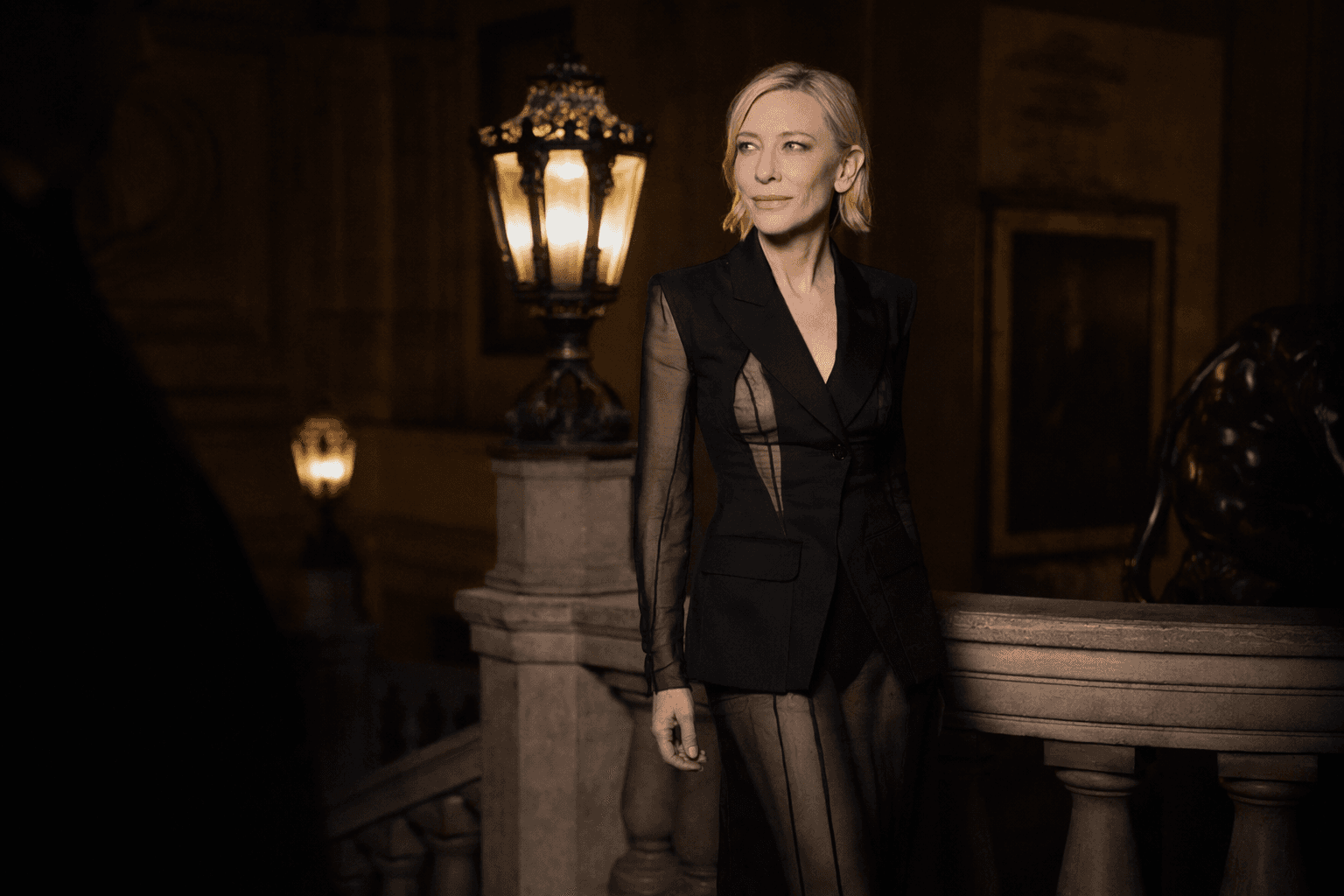
Maison Margiela’s Fall/Winter 2026 collection found its tension point in a precise collision of discipline and fragility: ready-to-wear and Artisanal, Edwardian tailoring and translucent texture. Cate Blanchett wore that idea to the BFI Chair’s Dinner at Rosewood London, where she presented Guillermo del Toro with the British Film Institute’s highest honor, the BFI Fellowship.
Blanchett, a BFI Fellow since 2015, chose from Glenn Martens’s hybrid Fall/Winter 2026 presentation, staged in Shanghai in April. The look carried the authority of a tailored suit but refused to settle into corporate polish. Its structure was sharp enough to command a red carpet, while the sheer elements pulled it into something more charged and modern, the kind of evening dressing that reads as considered rather than conventional.
That balance has become one of Blanchett’s most persuasive signatures. She has long been a master of inventive tailoring, but this Margiela look pushed her further into a more experimental register, especially as her public style has grown less predictable since she stopped working with longtime stylist Elizabeth Stewart. The result was not just a dramatic outfit for one dinner at the Rosewood London on May 6. It was a clean argument for where tailoring is headed next.
The lesson is in the cut. Defined shoulders still do the heavy lifting, giving the silhouette presence and authority from across a room. A strong waist shape, whether built through seaming, cinching, or a cleverly placed panel, keeps the line from collapsing into boxiness. Then comes the Margiela move: strategic transparency. A sheer sleeve, yoke, or layered overlay changes the mood instantly, keeping tailoring sharp but allowing light, movement, and skin to interrupt the severity.
That is why Blanchett’s appearance landed with such force. Maison Margiela’s collection was already built around the house’s push to fuse structured menswear codes with delicate, gothic detailing. On Blanchett, that concept became wearable proof that the modern suit does not have to look office-bound. It can be directional, elegant, and slightly disobedient, especially when the tailoring is this exacting and the transparency this controlled.
This article was produced by Prism’s automated news system from verified source data, official records, and press releases, then run through automated quality and moderation checks before publishing. The system is built and supervised by the people who set the standards it runs under. Read our full AI policy.
Did this article answer your question?