Denim Industry Progress Gains Ground as Low-Impact Production Expands
Low-impact denim is now the majority, but the chemistry behind those soft fades still lags behind the rest of the washhouse.

The new standard for denim finish
EIM’s latest denim report makes a quietly important claim: the industry is learning how to keep denim looking broken-in without making the process feel as rough on the planet. That matters because the washed, faded, whiskered surfaces that define workwear style are not decorative afterthoughts. They are the point, and the challenge has always been delivering that patina with less water, less energy and fewer hazardous chemicals.
The report, titled *Denim Industry Progress and Insights 2025*, tracks 100,200 real denim finishing processes from 359 manufacturers, with denim accounting for 90 percent of the dataset. That scale gives the findings weight. EIM, Jeanologia’s measurement platform, has positioned itself as a worldwide standard for garment finishing, and its appeal is obvious to any brand trying to make the case that sustainability can be measured rather than merely marketed.
Where the progress is real
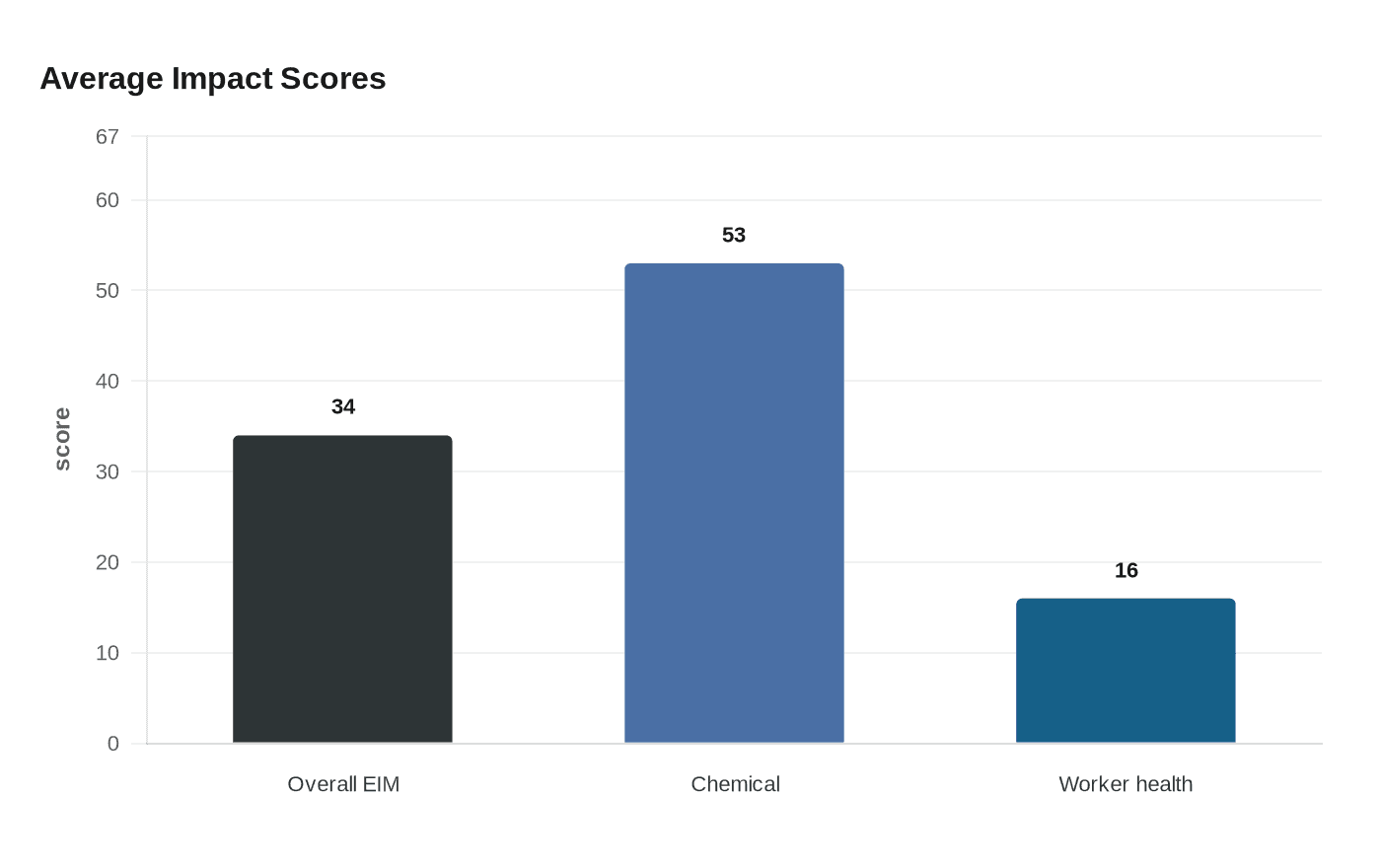
The headline number is encouraging: 66 percent of the processes analyzed are now classified as low impact. That is a meaningful jump in confidence for an industry that relies on abrasion, fading, tinting and surface effect to sell the fantasy of denim as already lived in. The average EIM score is 34, which still sits in the medium-impact band, but the direction of travel is clear.
Energy is the strongest proof point. Average energy use is 1.90 kWh per garment, which EIM classifies as low impact. Water, meanwhile, is holding steady rather than racing ahead. Average consumption remains 30 liters per garment, a number that is not glamorous but is important: it shows the industry has stabilized a historically brutal input, even if it has not yet pushed far enough below it.
That is where EIM’s value becomes practical for workwear readers. A good pair of jeans needs to feel broken in, not broken down. The data suggest the sector is getting better at producing those softened finishes with less waste in some parts of the process, especially energy, while still preserving the tactile depth that makes denim desirable in the first place.
The stubborn problem is chemistry
If water and energy are moving in the right direction, chemical management remains the industry’s most resistant flaw. Average chemical impact sits at 53, which EIM classifies as medium impact, but the distribution underneath that number is revealing. Half of processes are classified as high impact for chemical impact because of pumice stone use, even though pumice stone use is down 2 percent year over year. Another 46 percent of chemical processes land in the medium-impact range, while 27 percent remain high impact.
That is the uncomfortable truth buried inside the overall improvement story. The industry can trim energy use, optimize wash cycles and still leave a lot of damage sitting in the chemistry. Pumice has long been a blunt tool for achieving abrasion and a worn hand, but it is also a reminder that some of the oldest finishing habits are the hardest to dislodge.
Potassium permanganate is another problem that refuses to disappear. Its use has fallen, yet it still appears in 15 percent of the analyzed processes, and it has recently been added to the ZDHC Chemical Watch List. For a sector that trades in visual softness, this is the sharp edge of the story: the look consumers want can still depend on finishing agents with outsized environmental and health concerns.
Worker health is the bright spot
Not every part of the report is a warning siren. Worker health is one of the clearest areas of improvement, with 68 percent of processes classified as low impact. The average worker impact score is 16, which EIM also places in the medium band, but the proportion of low-impact outcomes suggests the industry is making genuine gains in the day-to-day conditions of the people who finish the garments.

That matters because denim finishing has always been as much labor as aesthetics. The fades, sprays and abrasions that read as casual cool on the hanger are produced in production rooms where process discipline makes a direct difference to safety. Cleaner chemistry and better equipment are not abstract virtues; they are what determine whether a finish looks effortless because it is well made, not because the cost is hidden elsewhere.
Why the water story may have hit a ceiling
EIM’s most sobering warning is that the industry may be approaching an efficiency plateau on water. In plain terms, the easy wins may already be behind it. Future gains are likely to come less from tinkering with individual wash recipes and more from system-level changes, including upgraded facilities and better water treatment infrastructure.
That is a crucial shift in how the workwear world should read progress. If the goal is to keep supplying denim that feels convincingly worn, then the next gains will not come only from the washroom floor. They will require capital, infrastructure and coordination across manufacturers, laundries and brands. The dirty secret of clean-looking denim is that the next step is bigger than a better machine setting.
What changed since the last report
The comparison with EIM’s 2024 denim report shows both momentum and stubbornness. The earlier report analyzed more than 115,000 denim finishing processes and found 63 percent already in the low environmental-impact category, so the new 66 percent figure confirms steady advancement rather than a leap. It also recorded average water use at 30 liters per garment, compared with EIM’s recommended benchmark of 22.5 liters, which means the sector has still not closed the gap between average practice and best practice.
The older report also highlighted hazardous chemicals in 24 percent of processes, including potassium permanganate at 9 percent and pumice stones at 16 percent. Its proposed fixes were pragmatic: safer chemical selection, plus automation and digitalization of manual processes. The new report suggests those ideas were not a one-off wishlist. They are still the route forward, especially now that the low-hanging fruit on efficiency appears to be thinning out.
Why EIM matters to denim brands right now
EIM is already used by more than 100 brands and over 500 laundries and production centers worldwide, including Levi’s, Tommy Hilfiger, Guess, H&M and American Eagle. That reach matters because it turns the report from a sustainability exercise into a common language for production. When a brand, a laundry and a finisher are all reading from the same impact score, the conversation gets less decorative and more operational.
Begoña García, who created EIM, has built the platform around a simple but overdue idea: the industry cannot improve what it does not measure well. That is the real significance of this report. It does not claim denim finishing has been solved. It shows that the sector is finally moving from vague virtue to standardized accountability, and that shift is what will decide whether low-impact production becomes the new normal or just a cleaner-sounding exception.
For workwear denim, that distinction matters. The next generation of jeans still needs to fade beautifully, age honestly and hold up in the real world. The best news in this report is that the industry is beginning to prove it can do exactly that with less collateral damage.
This article was produced by Prism’s automated news system from verified source data, official records, and press releases, then run through automated quality and moderation checks before publishing. The system is built and supervised by the people who set the standards it runs under. Read our full AI policy.
Did this article answer your question?