Dr. Martens 1461 Made in England leans into rugged heritage workwear
Dr. Martens’ 1461 Made in England is all about the stuff you can feel: C.F. Stead leather, Northamptonshire craft, and a sole built to take abuse.
The 1461 still earns its place by being built like a tool
The new 1461 Made in England is not trying to be clever. That is exactly why it works. In Green Buckingham and Burgundy, Dr. Martens leans into the parts that actually matter to a workwear rotation: the leather, the factory, the sole, and the sort of hard-wearing identity that made the 1461 more than just a pretty oxford.
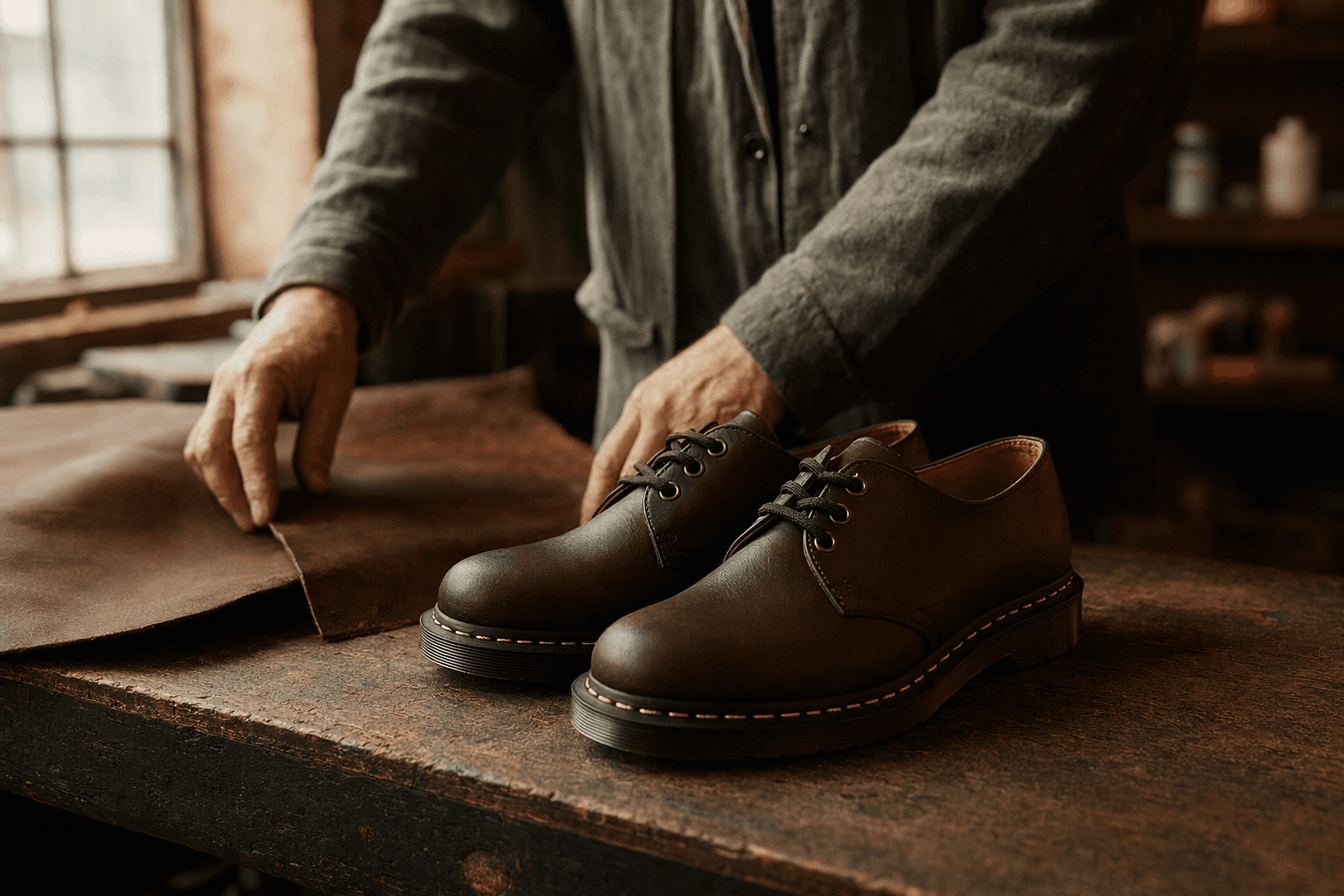
This is the shoe for people who care about provenance because provenance changes how a shoe wears, how it breaks in, and how long it stays in rotation. At $280, it is not cheap, but it is also not being sold as a fashion trick. You are paying for a Made in England build, C.F. Stead leather from Leeds, and a silhouette with real workwear history behind it.
Why the 1461 matters in the first place
The 1461 is Dr. Martens’ original 3-eye shoe, first produced in 1961 and named after its creation date, April 1, 1961. It was the second style the brand ever made, which gives it a clean kind of authority most heritage revivals can only fake. This is not a borrowed archive hit. It is one of the core shapes that helped define the brand from the start.
Dr. Martens originally sold the 1461 as a durable working man’s shoe, and that matters more than the fashion gloss people like to attach to it now. By the 1970s and 1980s, it had crossed into political protest and university style across Britain. That shift tells you why the shoe still lands: it has always lived close to real life, not just the runway.
What you are paying for in the Made in England line
The Made in England line is handcrafted in Dr. Martens’ original Wollaston, Northamptonshire factory using original techniques. The brand says that factory is the home of the first DM’s boot, and that the same production line has continued for more than 60 years. That kind of continuity is the whole point here. It is not nostalgia as decoration. It is a working production story that still shapes the shoe in your hand.
That also gives the 1461 a different kind of value than the standard pairs most people know. The Made in England version is for buyers who want the leather to age properly, the stitching to look intentional instead of mass-produced, and the shape to feel substantial underfoot. If the regular 1461 is a reliable uniform shoe, this version is the one that wants to be kept, worn hard, and repaired into the ground.
The leather is the real headline
The green pair uses naturally tumbled Buckingham leather sourced from C.F. Stead tannery in Leeds, UK. That matters because the surface tells you immediately that this shoe is meant to look and feel broken in from the start, not polished to death. It has that slightly rugged, utilitarian energy that works with denim, fatigues, carpenter pants, and anything else that benefits from a little texture.
The Burgundy pair uses Classic Calf leather from C.F. Stead, also sourced in Leeds. Compared with the Green Buckingham version, it reads more refined, but not precious. Classic Calf gives the shoe a cleaner, smoother finish, which makes the 1461 feel a little sharper without losing the hardwearing backbone that defines the style. This is the version for someone who wants a workwear shoe that can still look disciplined.
C.F. Stead is not a random material callout. The tannery describes itself as one of the world’s most respected makers of suede leather and says it specializes in high-grade suedes and speciality leathers with distinctive grain. That reputation is part of the premium story here. When a brand uses a respected tannery with a known hand, the leather is not just a surface treatment. It is the whole argument for the shoe.
The soles make the two colorways feel genuinely different
The Green Buckingham version sits on a smoke BEN sole with deeper cleats and a rugged undersole tread pattern. That is the pair that leans most obviously into workwear. The sole looks ready for pavement, shop floors, and whatever else you throw at it. The deeper tread gives the shoe a more aggressive, practical stance, which makes the green pair the easiest one to read as utilitarian.
The Burgundy version uses a smoke DMS sole with a black welt. It keeps the Dr. Martens identity intact, but it feels a touch cleaner and more understated than the Green Buckingham pair. The black welt helps tighten the look, so the shoe lands as something you can wear with heavy work pants or cleaner tailoring without it shouting for attention. If the green pair is the rougher one, the burgundy pair is the more composed one.
Both versions keep the 3-eye oxford shape intact, which is key. The 1461 works because its profile is low enough to be practical, but substantial enough to register as a real piece of footwear. It does not collapse into sneaker territory, and it does not go so formal that it loses its edge.
The details are doing the heavy lifting
The Green Buckingham shoe comes with black hardware and flat waxy laces, and the Burgundy version uses thin round cord laces with blind eyelets. These are not random styling flourishes. They change the mood of each pair in subtle ways. The black hardware and waxy laces on the green shoe reinforce that tougher, almost industrial read, while the blind eyelets and cord laces on the burgundy pair make it feel a little cleaner and more tailored.
That is the kind of detail that justifies a premium provenance story. A shoe like this should not only look good in a product shot. It should have the kind of components that age well, wear in unevenly, and tell on the foot that it was made with intent. The 1461 Made in England gets closer to that than most heritage reissues do.
The verdict on value and rotation
At $280, the 1461 Made in England has to earn its price through material and build, not logo nostalgia. It does that by pairing a genuine heritage silhouette with C.F. Stead leather, a still-active English factory, and two sole treatments that push the shoe toward actual daily use. The Green Buckingham style, SKU 42467300, is the rougher, more obviously workwear-minded choice. The Burgundy version, SKU 43075600, brings the same pedigree in a slightly sharper frame.
If you want a shoe that only borrows the look of workwear, this is more product than you need. If you want one that was built from the ground up to handle wear, flex into different outfits, and hold onto its character as it ages, this 1461 makes a serious case. That is what premium provenance is supposed to buy you: not hype, but a pair that still makes sense after the first scuff.
This article was produced by Prism’s automated news system from verified source data, official records, and press releases, then run through automated quality and moderation checks before publishing. The system is built and supervised by the people who set the standards it runs under. Read our full AI policy.
Did this article answer your question?