Engineered Garments SS27 blends workwear, tailoring in airy layers
Engineered Garments turns workwear into hot-weather tailoring, using airy fabrics, soft structure, and layered utility pieces that feel lived-in, not stiff.

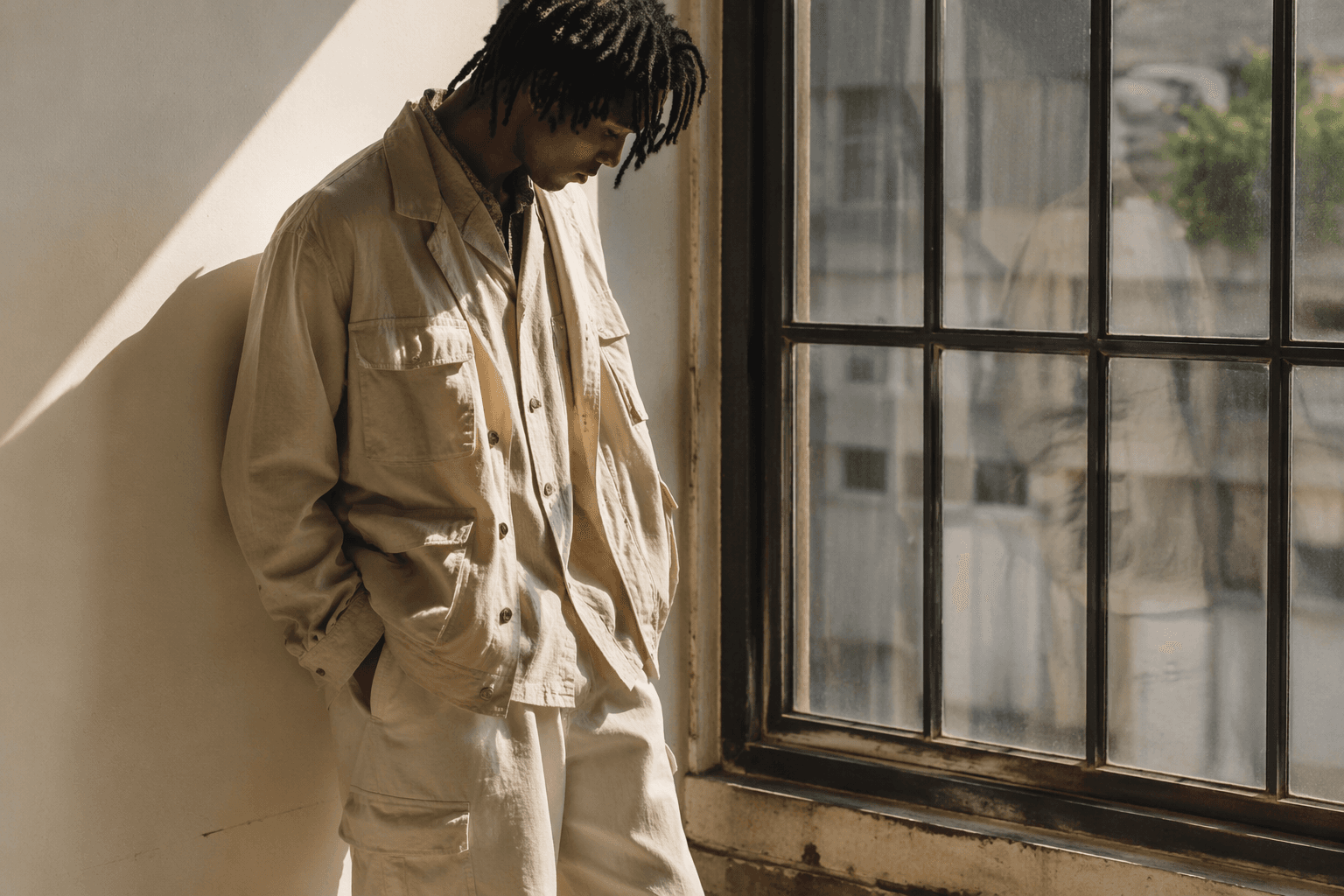
The sharp move in Engineered Garments SS27 is not that it uses workwear codes, it is that it loosens them just enough to make them feel good in heat. Work shirts, unstructured blazers, and field jackets come through in loose-weave textiles and washed canvas, so the utilitarian vocabulary stays intact while the clothes breathe, drape, and move like they were already broken in.
Utility, made lighter
This is not workwear dressed up for the runway. It is workwear translated into a softer register, with layered silhouettes and earthy tones doing the heavy lifting instead of flash. The 39-image lookbook keeps cycling through that idea from different angles, and the repetition is the point: Engineered Garments is showing how a field jacket can stop reading as stiff outerwear the moment the fabric gets airier and the structure relaxes.
The collection’s best pieces lean into familiar codes without letting them harden into costume. A work shirt sits less like a uniform and more like a fluid layer. An unstructured blazer keeps the tailoring signal, but drops the armor. A field jacket still carries that practical, outside-ready energy, yet the washed canvas and loose weave make it feel lived-in rather than rugged for its own sake. That is where the label is headed, toward utility that looks smarter because it is easier to wear.
Why Engineered Garments keeps hitting this note
Engineered Garments has always had this lane mapped out. The brand was founded in New York in 1999 by Daiki Suzuki, and its own identity has long revolved around classic tailoring, sportswear, workwear, outdoor gear, and military uniforms. That mix explains why the clothes never feel trapped inside one category. They borrow from the shop floor, the trail, and the suit rack, then land somewhere more interesting than any one of those places.
Suzuki’s philosophy was never about just making garments. The point was engineering, through detail, construction, and wear experience. That matters here because SS27 does not present utility as a theme to be pasted on top. It treats utility as a design language, one that becomes more persuasive when the fabrics soften and the silhouette stops fighting the body. The result is less about dressing like labor and more about carrying the intelligence of labor into clothes you can actually live in.
The new hand on the wheel
From Fall/Winter 2025, creative direction moves to Kenta Miyamoto and Kunimasa Odagi, and SS27 reads like a careful continuation rather than a hard reset. That is the right move for a label with this kind of archive and atmosphere. If they had yanked the brand into something glossy or aggressively new, it would have killed the thing people come to Engineered Garments for in the first place: that sense of accumulated use, odd charm, and controlled imperfection.
Their own working process backs that up. The team uses roughly 70 to 90 types of fabric per collection, which tells you everything about how much of the brand lives in material choice before you even get to shape. That kind of range is why SS27 can feel so textural without looking chaotic. The collection is built from fabric nuance, not logo noise. It is a very specific kind of luxury, the kind that hides in weave, wash, and the way a jacket sits away from the body.
What to read from the silhouettes
The key silhouette lesson here is balance. The clothes are layered, but not bulky. They are structured, but not rigid. That makes the collection especially relevant for hot-weather dressing, where the goal is not to strip utility away but to make it workable when the temperature climbs. Engineered Garments understands that the smartest summer tailoring is the kind that lets air move through the outfit instead of sealing it inside.
Look closely at how the collection handles proportion. The blazer does not need a sharp chest to feel put together. The field jacket does not need weight to feel substantial. The work shirt does not need to be boxy to carry its lineage. By easing those shapes, the brand turns familiar workwear into something more livable, which is exactly where utility design feels most current right now.
How to wear the idea without losing the point
If you want the SS27 logic in your own rotation, keep the formula simple and tactile.
- Start with a work shirt in a breathable weave, then let it stand in for the crisp button-down.
- Swap a rigid blazer for an unstructured one, especially in a fabric that reads washed or dry rather than polished.
- Use a field jacket as the top layer when you want utility without heaviness.
- Keep the palette in earthy tones, because the color story matters as much as the cut.
- Let fabric do the talking. Loose weave, washed canvas, and softened tailoring carry the whole mood.
The broader takeaway is that utility is no longer moving toward hardness. At Engineered Garments, it is moving toward comfort, tactility, and a kind of easy precision that makes workwear feel more modern than any overbuilt statement piece ever could. SS27 does not abandon the uniform. It makes the uniform breathable, and that is the smarter future.
This article was produced by Prism’s automated news system from verified source data, official records, and press releases, then run through automated quality and moderation checks before publishing. The system is built and supervised by the people who set the standards it runs under. Read our full AI policy.
Did this article answer your question?

