Gabriela Hearst to Design Uruguay’s Tailored Uniforms for 2026 World Cup
Gabriela Hearst will dress Uruguay in tailored uniforms cut from Uruguayan merino wool, folding ranch heritage into World Cup workwear with four stars on the crest.

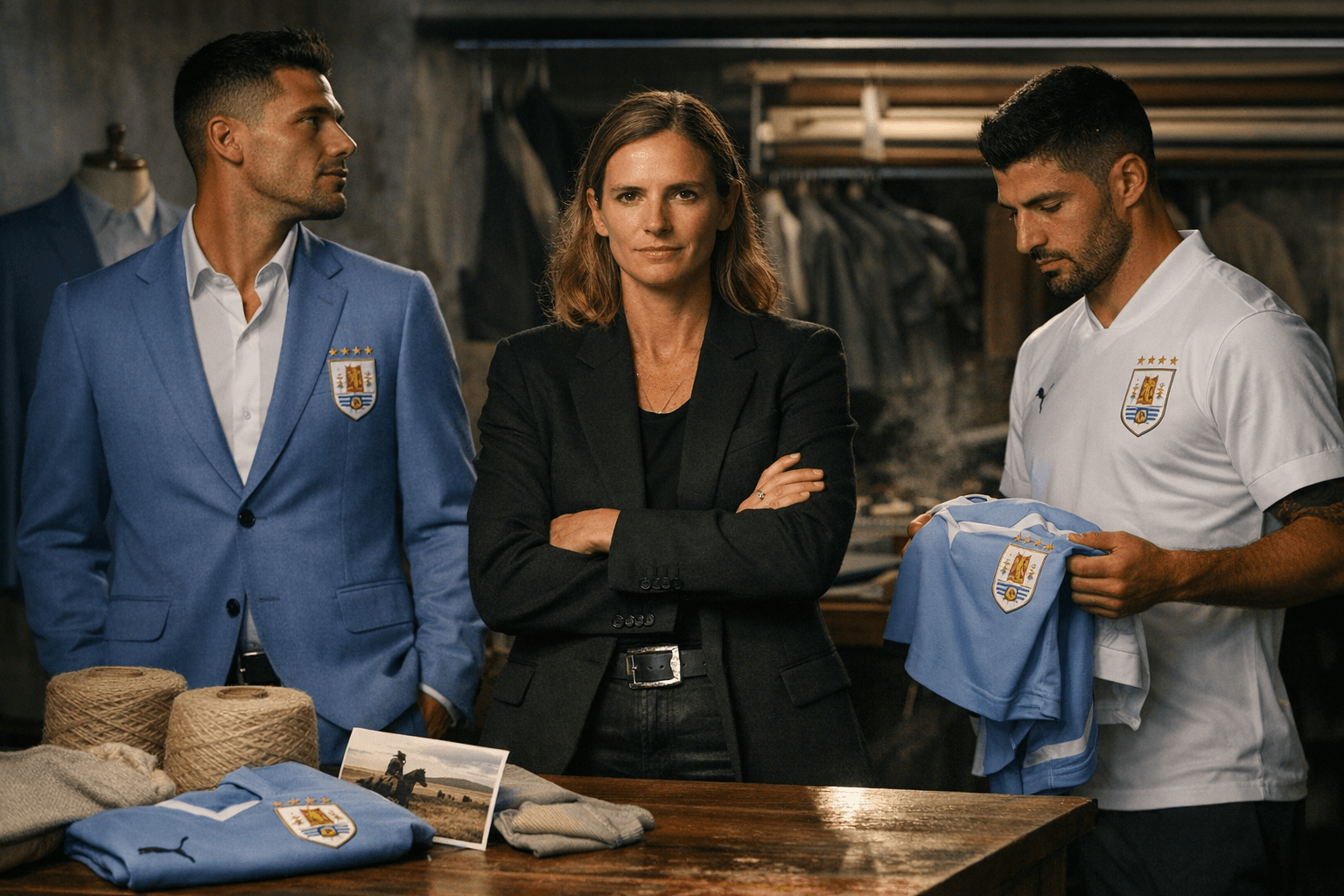
Gabriela Hearst is turning Uruguay’s World Cup wardrobe into a question of real utility: what does a uniform look like when it has to read as tailoring, move like workwear and still carry a nation’s pride on the world stage? The answer, in this case, is Uruguayan merino wool, cut into official tailored uniforms for a team that wears four stars on its crest and arrives with two World Cup titles already in hand.
The Uruguayan Football Association announced Hearst’s appointment on April 10, 2026, framing the collaboration as a homecoming as much as a design commission. Hearst was born in Uruguay, raised on her family’s cattle and merino sheep ranch in Paysandú and described by the federation as a seventh-generation rancher. That background matters here. This is not a designer borrowing the language of heritage; it is a designer dressing a national side with material drawn from the same landscape that shaped her.
The uniform project also puts Uruguay’s wool sector in the frame, giving the garments a commercial and cultural purpose beyond the match-day tunnel. Merino is an especially fitting choice for this sort of high-visibility team wardrobe because it carries polish without losing practicality, the kind of cloth that can hold a sharp shoulder, travel well and still feel credible outside ceremonial moments. Hearst has already worked this territory before. Her brand timeline notes that for Spring/Summer 2019 she introduced piqué and twill suits made from wool from her family’s merino sheep farm in Uruguay, an early signal that her tailoring has long been tied to the same raw materials and the same geography.
The assignment lands at a moment when the World Cup itself is expanding in scale. The 2026 tournament will be the first with 48 teams, co-hosted by Canada, Mexico and the United States across 16 host cities, with the final scheduled for July 19, 2026, in New York/New Jersey. Against that backdrop, Uruguay’s wardrobe has to do more than look ceremonial. It has to project identity fast, and do it on a stage where every detail becomes part of the national image.
For Uruguay, the symbolism is unusually strong. The men’s team is one of the most storied in World Cup history, with titles in 1930 and 1950, and Hearst’s appointment ties that legacy to a material economy rooted in Paysandú. In a tournament built on spectacle, the most persuasive statement may be the quietest one: a tailored suit, cut in homegrown wool, that looks like it belongs both to the airport and to the anthem.
Know something we missed? Have a correction or additional information?
Submit a Tip