Istituto Marangoni and Filson Recast Heritage Workwear for City Dressing
Filson’s archive-backed workwear is winning again because it lasts, repairs well and looks sharp in the city.
Why heritage workwear feels fresh again
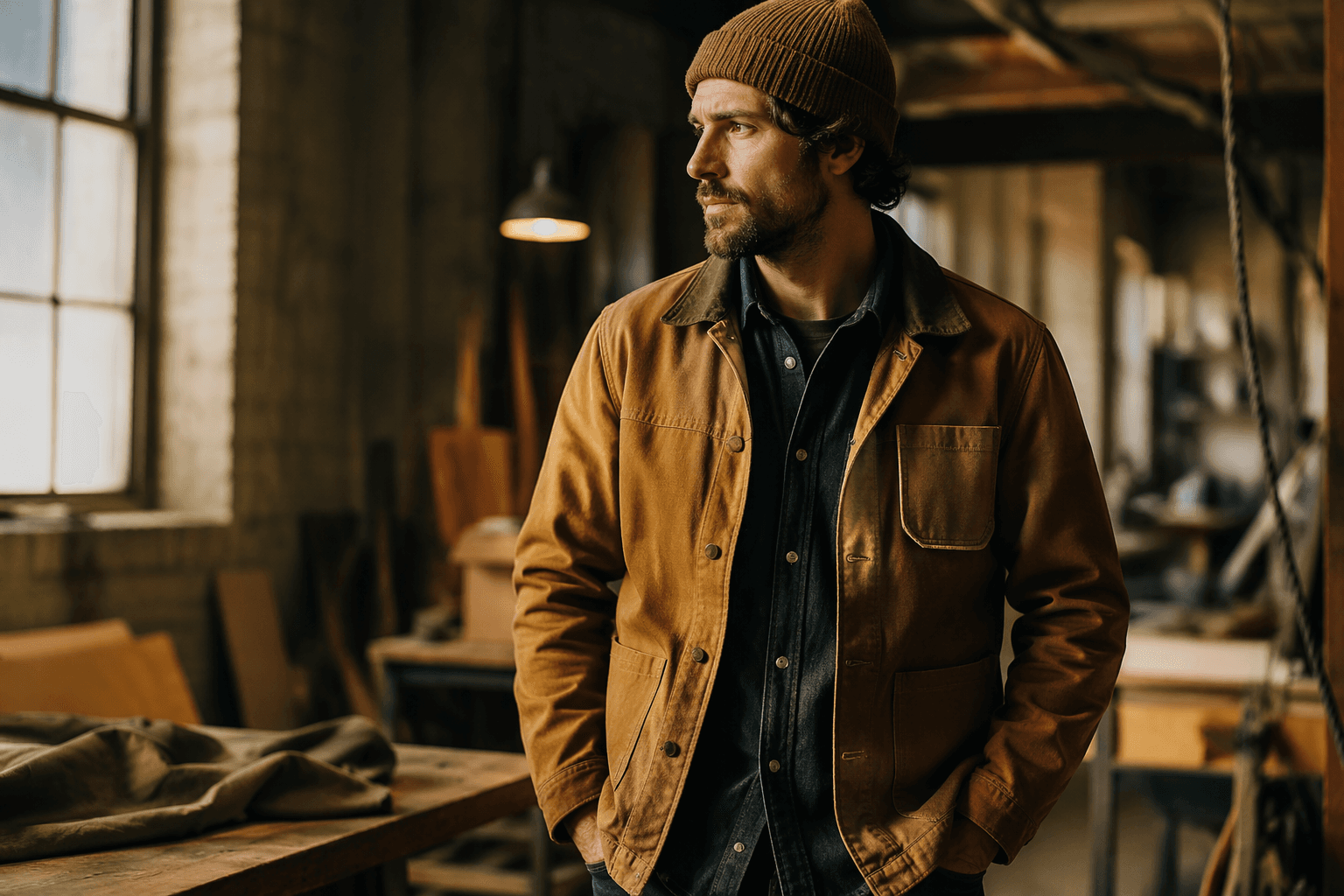
Heritage workwear is back because shoppers are exhausted by clothes that age badly and wear out fast. Istituto Marangoni is using Filson to make that point with force: the brand’s rugged field pieces are being recast as city clothing with real utility, real provenance and enough visual authority to feel current.
That is the formula now. Not faux-vintage styling, not costume roughness, but garments that can handle weather, carry weight and still look sharp against a cleaner urban wardrobe. The appeal is practical first, aesthetic second, which is exactly why it has momentum.
Why Filson still leads the category
Filson has the kind of origin story labels spend years trying to manufacture. Clinton C. Filson founded the company in Seattle in 1897, during the Klondike Gold Rush business boom, when the Pacific Northwest outfitting trade was built around people who needed their clothes to survive hard conditions.
That history matters because Filson did not arrive at workwear as a mood board. It grew out of actual demand from gold prospectors and outdoor workers, and the brand still describes itself as an “Original Alaska Outfitter Since 1897.” Its mission has remained simple and useful: make products that outsmart the elements, outperform expectations and outlast the wearer.
For readers shopping this trend, that is the difference between real heritage and borrowed heritage. A label can print a vintage-looking patch on a jacket, but it cannot fake 127 years of practical credibility.
What the Istituto Marangoni project is really doing
The collaboration is more than a classroom exercise. Istituto Marangoni says students will work on an industry-led project with Filson archive pieces, supported by the Filson x Istituto Marangoni London Scholarship, and they are being asked to reinterpret Filson’s heritage through a contemporary lens.
That brief is telling. It acknowledges that archive clothing only stays relevant when it can be translated into how people dress now, especially in cities where mobility, weather and polish all matter at once. The smartest fashion schools understand that heritage is not just something to preserve behind glass, but a vocabulary to edit and wear.
The partnership also had a public-facing dimension in Florence, where WP Store and Istituto Marangoni Firenze staged “Pocket Memories: An Exploration of Filson’s Archive” during Pitti Uomo from January 14 to 16, 2025. Put simply, Filson’s archive was presented not as nostalgia, but as a working blueprint for modern style.
The business case behind the nostalgia
Filson’s resurgence is not just cultural, it is commercial. Bedrock Manufacturing Company acquired the brand in 2012, and in January 2025 Tim Bantle, a VF Corp. and Eddie Bauer veteran, was named president to lead the next phase of growth and global expansion.
That matters because heritage only becomes commercially durable when a brand knows how to widen its audience without flattening its identity. Filson has already shown that it is doing exactly that by launching its first full women’s collection in fall 2024, a 32-piece range and the first complete women’s line in its 127-year history.
That launch is one of the clearest signs that workwear is no longer being sold only as rugged menswear with a nostalgic gloss. It is being positioned as a broader wardrobe category, one that can move from the trail to the train platform, from the workshop to the office and still hold its shape.
What to look for when a brand says “authentic workwear”
If you are buying into the trend, do not stop at the label story. Real workwear earns its keep through construction, and the details should make the garment feel tougher, more useful and easier to live with over time.
- Dense, substantial fabric that resists abrasion and gets better with age, not thin cloth that collapses after a season.
Look for:
- Reinforced stress points at the elbows, shoulders, pocket mouths and side seams, because those are the places real wear shows first.
- Functional pockets that actually carry things, with enough depth and structure to keep a phone, notebook or gloves in place.
- Seams and stitching that suggest repairability, not disposable design, especially when the garment is meant to last beyond one trend cycle.
- A cut that allows layering without bulk, since the best workwear should move easily over knitwear and under outerwear.
- Weather-minded finishing, whether that means waxed texture, tightly woven cloth or construction that blocks wind without turning the piece stiff.
The point is not to look like you have come from a site visit. The point is to wear clothes that understand function so well they make city dressing easier.
How to wear heritage workwear in the city
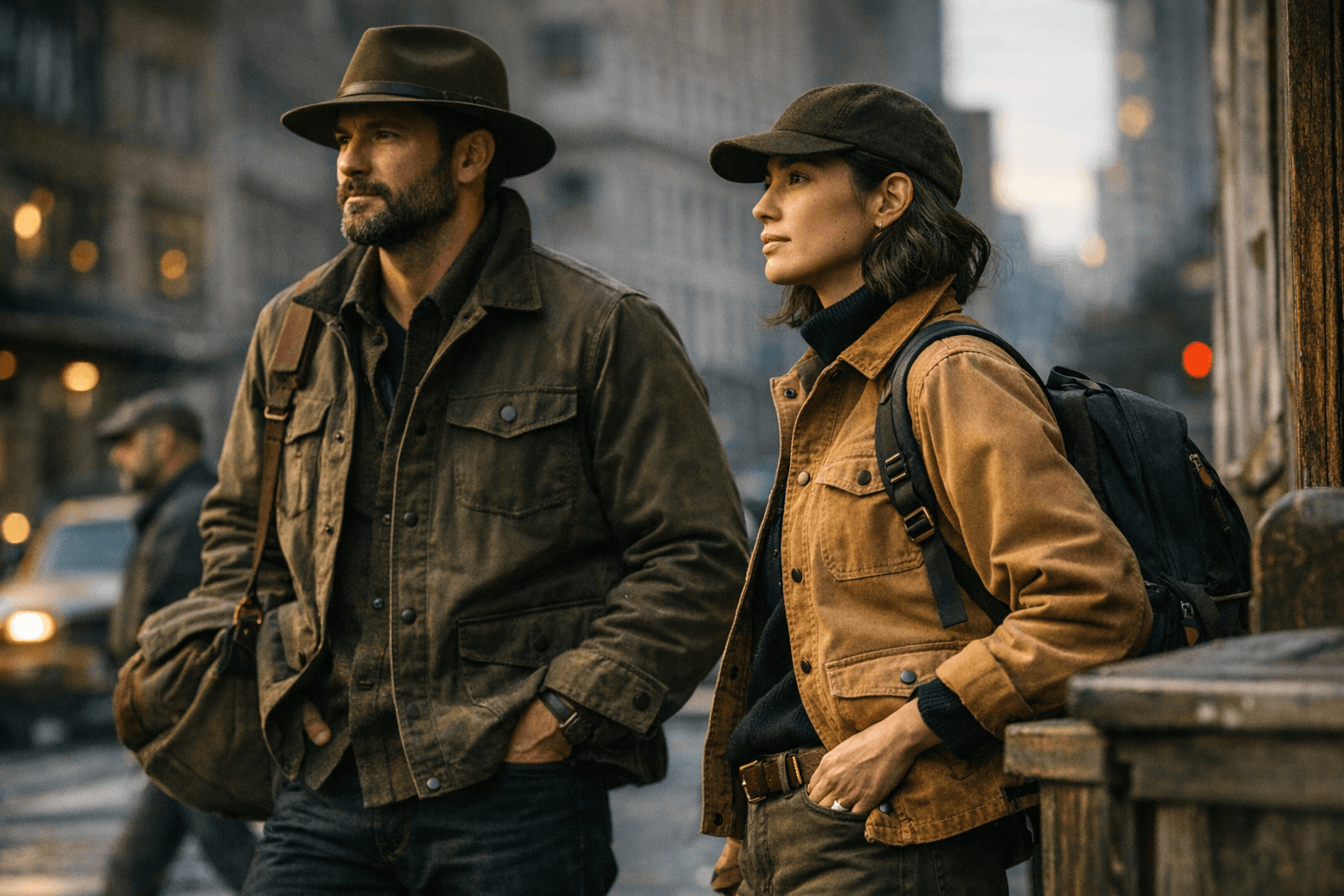
The cleanest way to style heritage workwear is to let one strong piece do the heavy lifting. A Filson-style field jacket or chore coat looks best with straight-leg trousers, polished boots or loafers and a restrained shirt or knit underneath. The contrast between utilitarian texture and refined tailoring is what makes the outfit feel deliberate.
Color matters too. Deep olive, navy, tobacco, charcoal and canvas tan read more sophisticated than distressed washes or gimmicky fades. Keep the silhouette firm and the styling spare, and the garment will look intentional rather than theme-driven.
What to skip is just as important. Avoid overdone distressing, exaggerated patches and anything that feels like it was designed to look old instead of built to age well. The best heritage workwear does not perform hardship; it is engineered to handle it.
Why this trend has staying power
Heritage workwear is thriving because it answers a simple modern problem: people want clothes that justify their cost. In a market tired of disposable buys, durability is no longer a niche virtue, and repair value has become part of the luxury conversation whether brands admit it or not.
Filson’s archive gives that argument weight, but the real lesson is broader. Clothing that was designed to survive weather, labor and repetition now fits a city wardrobe that values ease, texture and proof of quality. That is why this resurgence feels bigger than nostalgia: it is a return to clothes that can actually do something.
This article was produced by Prism’s automated news system from verified source data, official records, and press releases, then run through automated quality and moderation checks before publishing. The system is built and supervised by the people who set the standards it runs under. Read our full AI policy.
Did this article answer your question?