Kingpins Amsterdam Maps Denim’s Borderless Future Across Workwear and Luxury
Denim is slipping its old hierarchies. At Kingpins Amsterdam, workwear utility and luxury polish are colliding into one borderless market.

Ana Paula Alves put the new denim mood in a single sentence: “The tiers are gone.” That was the force behind her 2026 forecast at Kingpins Amsterdam, where the category stopped behaving like a niche fabric story and started reading like a full market reset, with workwear, luxury and performance all pulling at the same hem.
Kingpins staged the April 15 to 16, 2026 edition at SugarFactory in Halfweg, Amsterdam, and the show was sold out. It also introduced the Jeanius Hub for the first time, alongside workshops and trend seminars built to give brands something concrete to take home, not just another mood board. That practicality matters because the trend program draws standing-room-only crowds from Acne, Gucci, Marc Jacobs, Rag & Bone, Carhartt, Tommy Hilfiger and H&M, which tells you how far denim has moved beyond its old lane.
The borderless denim shift is already happening
Alves, founder of the forecasting firm Be Disobedient, framed the market as visibly tier-blurred. WWD pointed to COS ranking No. 3 on the Lyst Index as a useful sign of how the old hierarchy between mass and luxury is dissolving, while Alves cited Nigo’s collaboration with FamilyMart and H&M’s luxury-inspired store concept in Shanghai as proof that brands now move fluidly across levels without losing their identities.
That is the real workwear story here. When a brand can borrow from the language of luxury and still speak to utility, the denim brief changes: carpenter fits become sharper, softer tailoring becomes more common, and performance blends start to feel less technical and more everyday. The new opportunity is not just in making jeans look elevated, but in making them work harder, whether they are headed to the office, the studio or the weekend.
Denim archeology gives workwear its most honest vocabulary
Of the four themes Alves outlined, Denim Archeology is the one most clearly tied to the emotional appeal of real workwear. It leans into the collector, the researcher and the vintage obsessive, with fabrics scraped, scratched, patched, bleached, ripped and painted to show time as a visible design element. Felting, brown and yellow tints, deep creasing, loose threads, doubled taping and layered construction all push denim toward the feeling of something well-worn, repaired and lived in.
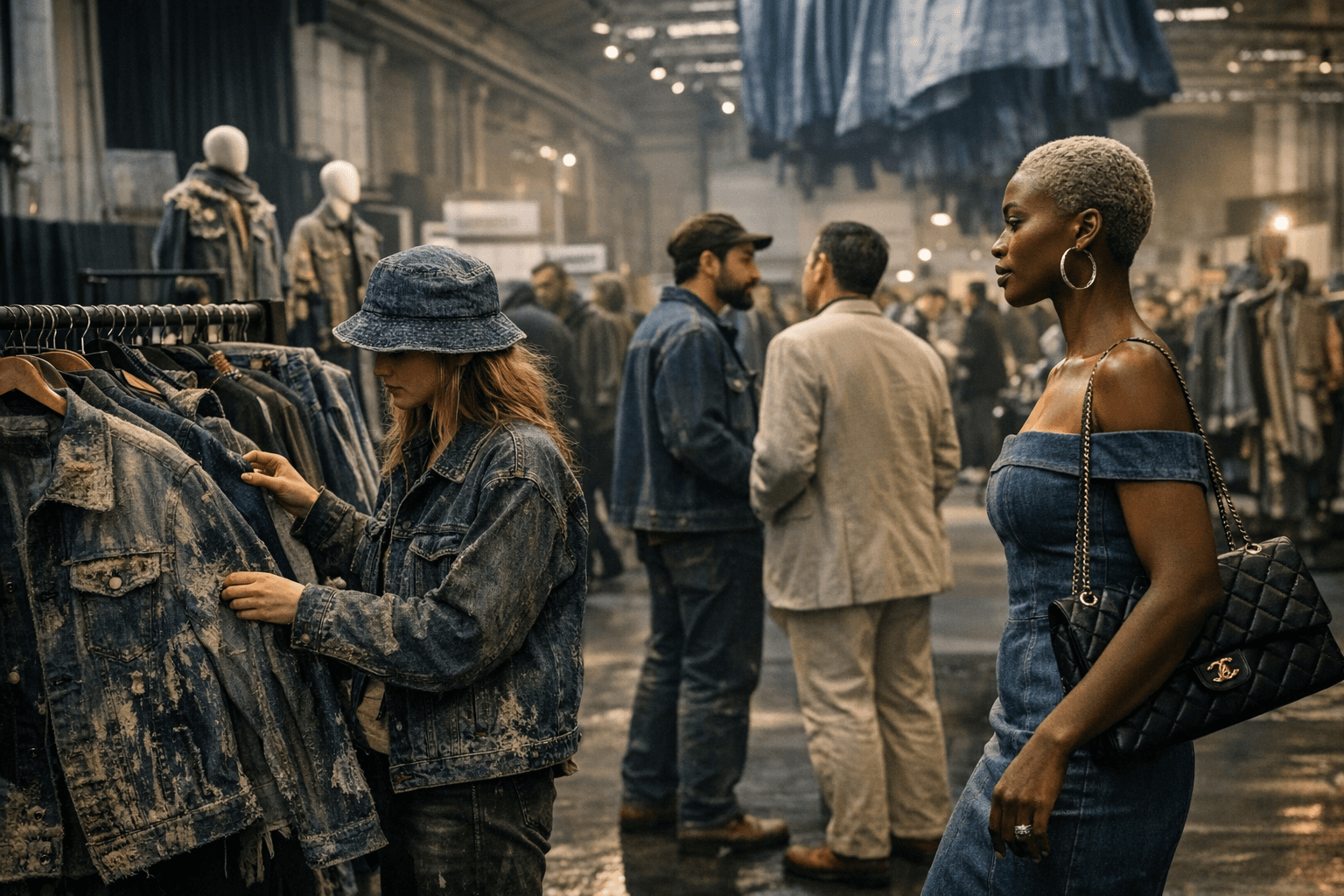
That matters commercially because this is the easiest of the four directions for workwear brands to translate without losing credibility. The detail set already echoes the language of utility garments, the kind of reinforcement and repair logic people expect from pieces that have to endure. The risk is obvious too: if the distressing is purely decorative, it becomes runway noise; if it suggests abrasion, repair or actual longevity, it becomes product development.
Denim abundance is luxury’s answer to utility volume
If Denim Archeology is about evidence of use, Denim Abundance is about treating jeans like precious objects. Alves described embroidery, embellishment, velvet, lace, sculptural volume and elevated closures, a vocabulary that pushes denim into evening-adjacent territory without pretending it is still pure workwear. The most striking commercial detail is the wide-leg silhouette, which can use up to 60 percent more fabric than a standard fit.
That extra fabric is not just a design flourish, it changes how the garment moves, hangs and feels in daily life. Wide legs can read as softer tailoring when cut cleanly, and they can make denim look more deliberate on a commute or in a creative workplace, where ease matters as much as polish. For brands, this is the lane where denim stops being a basic and starts behaving like a full silhouette category, with drape, proportion and finish doing as much of the talking as the wash.
What Denim Everyday and Denim Virals mean for the shop floor
The other two themes, Denim Everyday and Denim Virals, fill in the middle of the picture. Denim Everyday is the most commercially useful place for workwear crossover, because it is where carpenter fits, cleaner lines and performance blends can be made to feel normal rather than niche. This is the zone where comfort, mobility and commuter practicality do the heavy lifting, and where denim can become the trouser people reach for because it solves more problems than it creates.
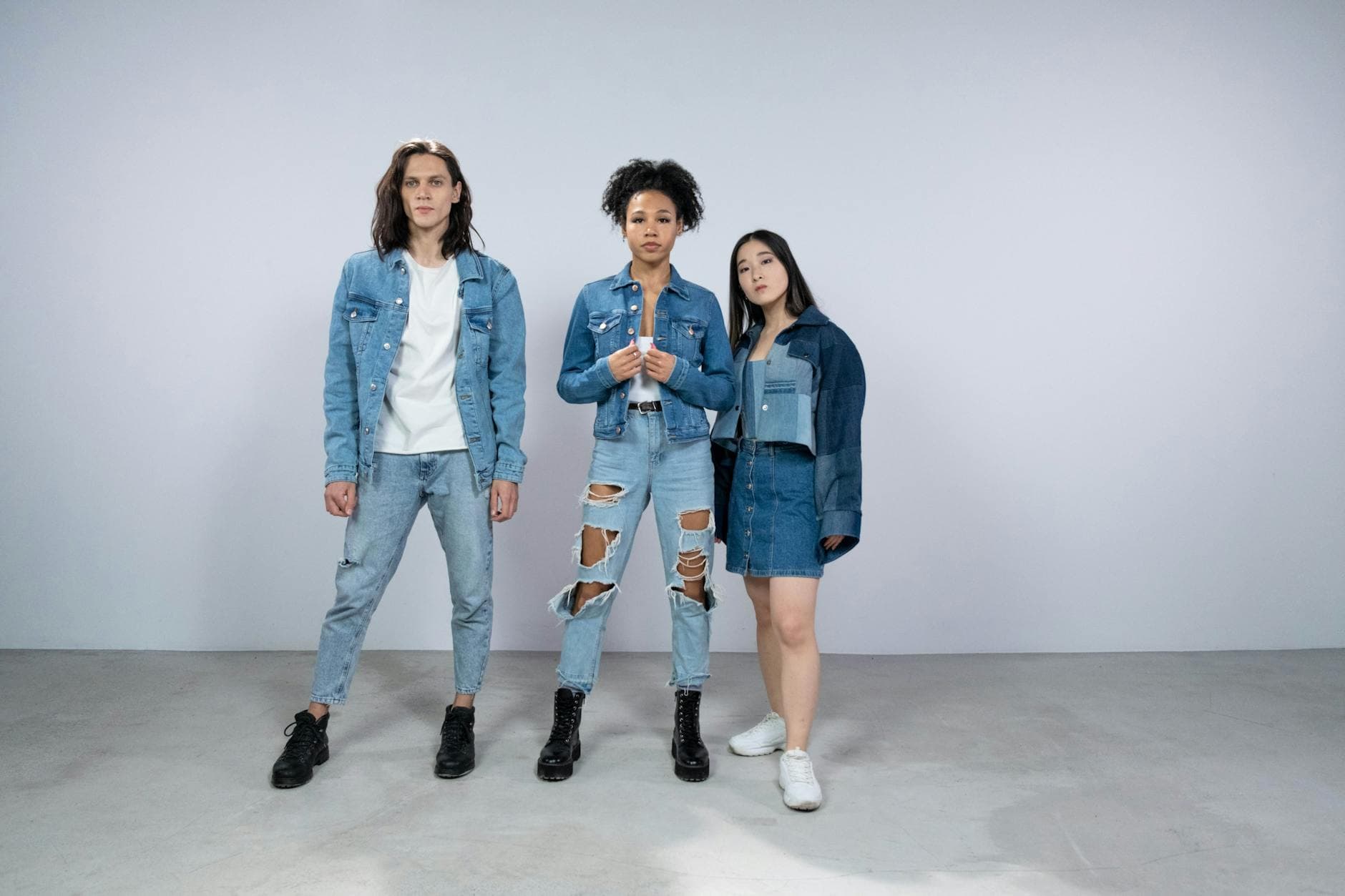
Denim Virals is the faster, more internet-shaped end of the forecast, the kind of direction that can push a silhouette into circulation quickly. But virality only matters when the shape is wearable enough to survive real life, and that is where the borderless idea becomes strongest: a piece can be visually sharp enough for luxury, practical enough for work and simple enough to keep its place in a wardrobe after the algorithm moves on.
The material science behind the mood
The forecast also sits on top of a broader supply-side shift that was already visible in Kingpins’ Spring-Summer 2026 coverage. Mills were emphasizing comfort, sustainability, recycled cotton, collagen fibers, Coolmax EcoMade, graphene, cottonized hemp and other performance and circular innovations, which means the borderless turn is being powered as much by textile engineering as by styling. The future of denim is not only about how a jean looks on a hanger; it is about how it breathes, stretches, recovers and lasts.
That is why the Kingpins audience matters. The conversation is not limited to designers chasing a look, but extends to mills, suppliers and brands such as Advance Denim, The Lycra Company, Lenzing, Soorty, Isko, Rudolf Chemicals and Naveena Denim Mills, all of whom help turn trend language into finished fabric. When that ecosystem leans into softer tailoring, resilient performance blends and more circular content, the workwear crossover stops feeling like a mood and starts becoming the next product category to hit the floor.
The takeaway for workwear brands
Alves’s forecast makes one thing clear: denim is no longer being sorted by rank, but by function, finish and attitude. The brands most likely to win are the ones that can translate the rawness of Denim Archeology, the volume of Denim Abundance and the everyday utility of the middle ground into garments that feel useful first and fashionable second. That is how denim becomes borderless in the only way that matters, by moving cleanly from the jobsite, to the commute, to the luxury rack without losing its nerve.
This article was produced by Prism’s automated news system from verified source data, official records, and press releases, then run through automated quality and moderation checks before publishing. The system is built and supervised by the people who set the standards it runs under. Read our full AI policy.
Did this article answer your question?