Meta Lab's First East Coast Flagship Arrives on Fifth Avenue in New York
Meta committed to a 10-year, 15,000-square-foot lease at 697 Fifth Avenue, arriving just as a privacy lawsuit reshapes how offices think about wearable tech.
Meta took a 15,000-square-foot, five-story townhouse at 697 Fifth Avenue on a 10-year lease and called it Meta Lab. The flagship, which anchors the corner of 55th Street and was announced by landlord Vornado Realty Trust, opened its doors in March as the company's first permanent East Coast retail presence. The deal is a real estate commitment with cultural ambitions attached: Meta wants the Fifth Avenue address to position its wearables alongside the brands that define the corridor, not the ones that fill the back of a big-box electronics aisle. Whether New Yorkers wearing that hardware to work will be welcomed or asked to leave it at reception is a more complicated question.
That tension is not incidental to what Meta Lab is selling. Weeks before the flagship opened, a lawsuit was filed alleging that overseas contractors had been reviewing footage captured through Meta's Ray-Ban smart glasses, raising questions about consent and data handling that the company's own privacy marketing had not prepared users to expect. Over seven million people bought Meta's smart glasses in 2025. That kind of scale doesn't stay in the consumer lane for long; it forces employers, lawyers, and anyone who books a conference room to start making decisions about what hardware is welcome at the table.
Meta Lab is designed to make that hardware feel inevitable. Matt Jacobson, Meta's VP and Creative Director, Wearables, was unambiguous about the retail strategy: "Placing our flagship store alongside the brands that help define culture, will distinguish Meta Lab from traditional consumer electronics retail. There's no better home than NYC to innovate on retail, and we'll continue to celebrate the community while making our products easy to see, try, and understand." The store is engineered to lower the psychological distance between the tech and the buyer, to get the product on someone's face before a spec sheet can overcomplicate the decision.
The product at the center of that pitch is the Meta Ray-Ban Display, which launched in fall 2025 and retails from $799, a price that includes the companion Meta Neural Band. The Neural Band is an EMG wristband that allows wearers to navigate the in-lens display through subtle finger gestures without touching anything. The glasses themselves surface notifications, provide real-time translation, offer turn-by-turn navigation, and give wearers access to a Meta AI assistant, all without breaking eye contact or reaching for a phone. A teleprompter function added with the CES 2026 update makes these glasses explicitly useful for anyone standing in front of a room. For the urban professional who already wears a smartwatch and carries wireless earbuds, the glasses are the logical next add-on; the question is whether the camera on the frame changes the calculus.
It changes it significantly in certain settings. AI-enabled smart glasses equipped with cameras and microphones have created a growing category of workplace legal questions around consent, trade secrets, and recording law. California, a two-party consent state, presents particular compliance friction for any employee who shows up to work in a pair. Legal analysts have documented a range of circumstances in which the capabilities of AI smart glasses could violate legal requirements or societal norms even inadvertently, and employer guidance has been slow to keep pace with how quickly the product category is moving. Whether to ban them from sensitive meetings or treat them as productivity tools is a policy decision that most HR departments haven't yet made.
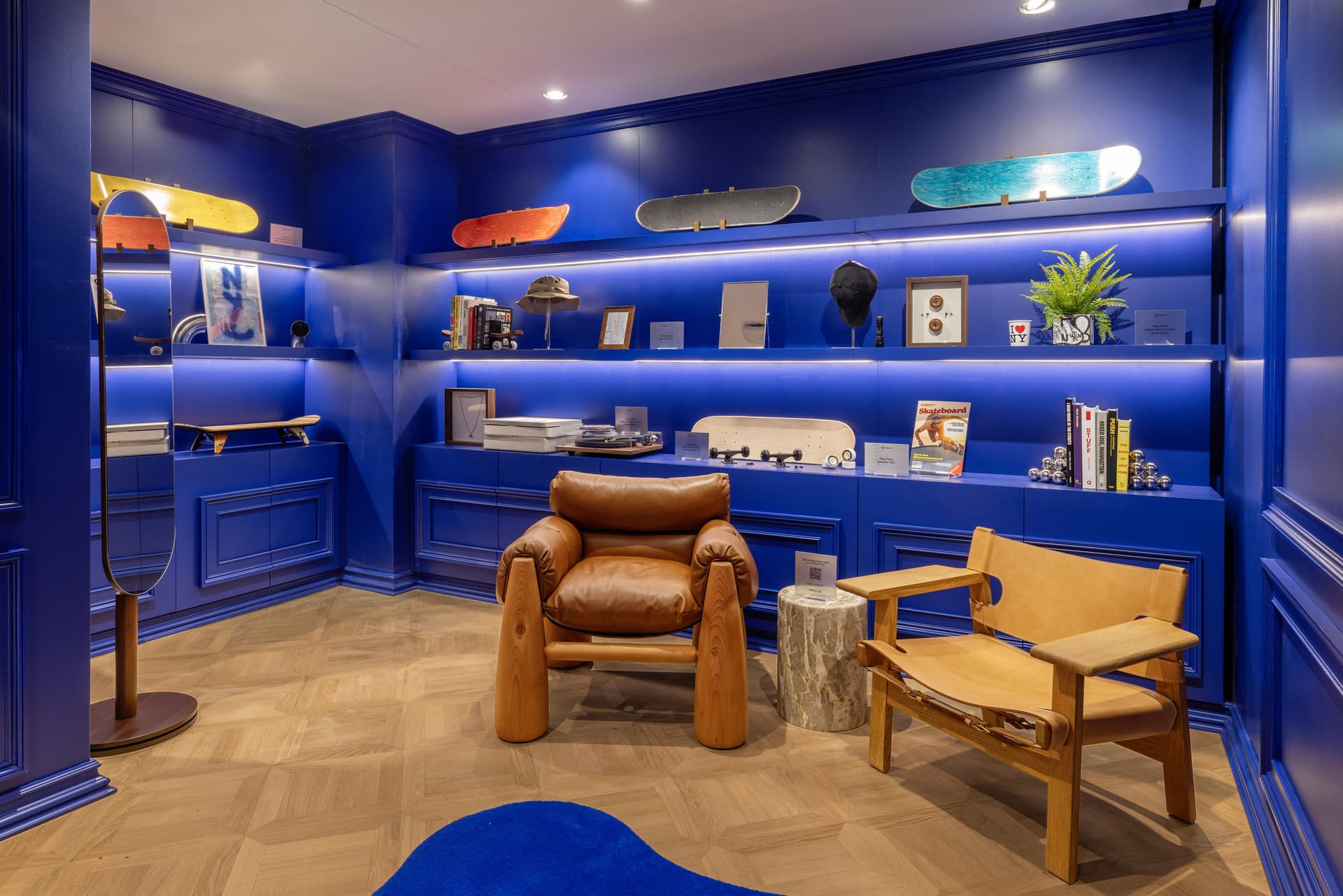
The Meta Lab store, to its credit, is not pretending these are neutral objects. The NYC flagship leans into a specific downtown New York sensibility that places wearables within a lifestyle narrative rather than a technology one. A Zoo York skate culture archival wall anchors the store in the brand's New York history, treating the archive as curatorial material rather than decoration. An interactive gallery by artist and skateboarder Evan Mock adds another register of cultural credibility, and Buddies Coffee Roasters operates on site, which means you can spend an hour in the space without ever feeling like you walked into a product demo. The environment is built to create the kind of organic, unhurried context that makes people actually try things on.
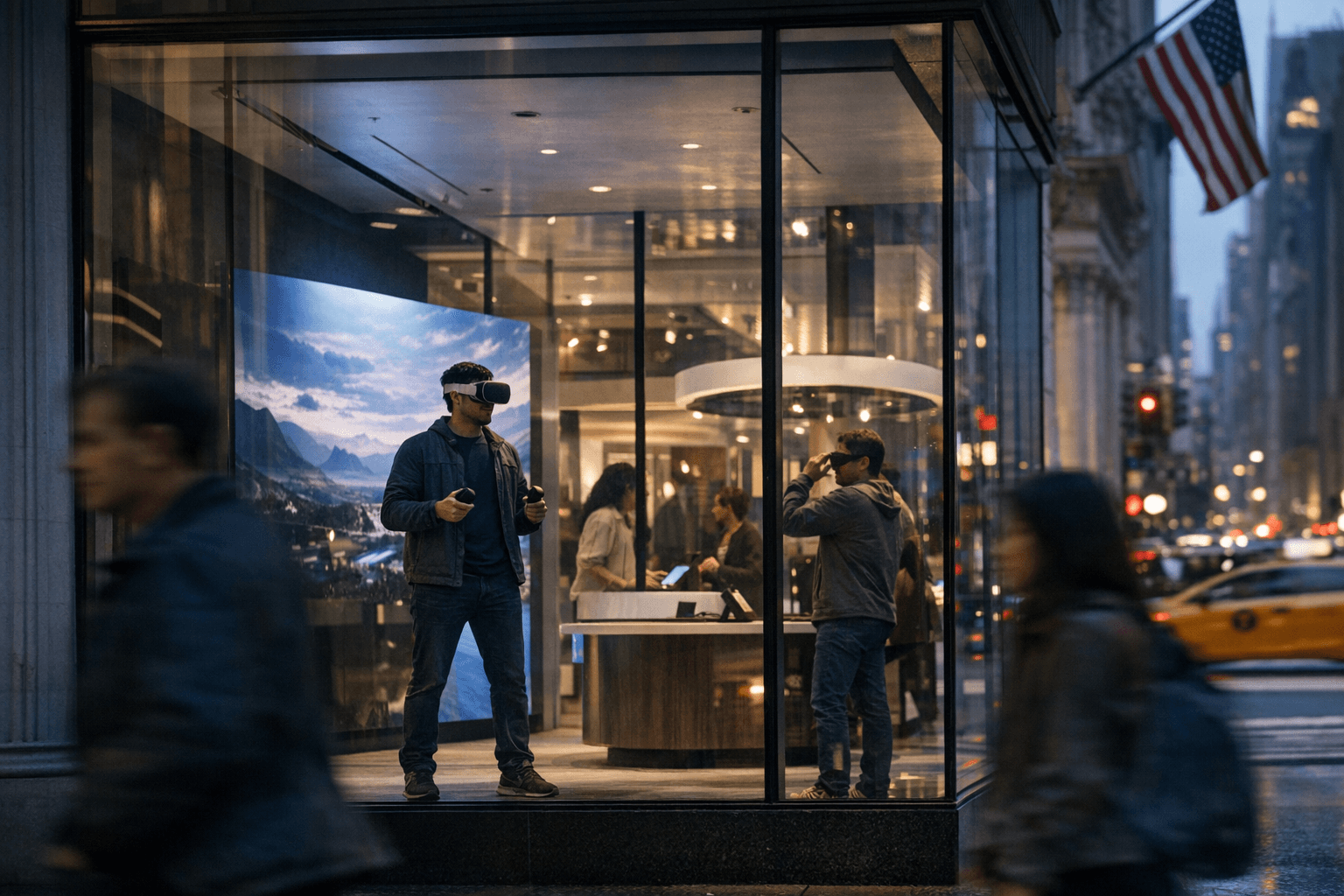
That experiential model is what Jacobson cited when explaining the chain of cause and effect Meta is banking on. "Our people-first approach to experiential retail is rooted in culture, creativity, and self-expression and it's driving meaningful sales and awareness of our products," he said. The approach is not new for Meta. A flagship opened in Los Angeles in 2025, and a pop-up version of Meta Lab occupied the same 697 Fifth Avenue address before the permanent lease was signed, reportedly drawing strong crowds. The 10-year commitment converts what was a test into a durable retail infrastructure play.
"We're proud to make a long-term commitment to Fifth Avenue, the heart of U.S. retail," Jacobson said. Fifth Avenue is nothing if not competitive, and a 15,000-square-foot, five-story townhouse on that block carries weight that a pop-up or a mall kiosk never could. Meta is staking out territory where luxury fashion houses, heritage sportswear brands, and aspirational lifestyle retailers all compete for the same consumer attention. The message is that wearable tech belongs in that company, not cordoned off in a dedicated tech district.
Whether the professional world follows that logic is the unresolved part of this story. Smart glasses sold at a scale in 2025 that suggests early-adopter enthusiasm has already crossed into mainstream consumer interest. Offices have not yet decided what to do about that. The privacy questions are real, the legal exposure is documented, and the social friction of not knowing whether the person across from you in a meeting is recording remains entirely unresolved. Meta Lab is betting that once people actually hold the hardware and test the translation feature and walk out of the store wearing a pair of frames that look like something they would have bought anyway, the anxiety will fade.
The store is open. The product is on the shelf, priced and styled and surrounded by culture. The boardroom question is one that five stories of townhouse real estate on Fifth Avenue cannot resolve, but it's the one every employer and every style-minded professional is quietly asking anyway.
Know something we missed? Have a correction or additional information?
Submit a Tip