Oversized Blazers Redefine Power Dressing for the Modern Office
The oversized blazer has become the office uniform of confidence, offering authority, movement, and polish for hybrid weeks that never sit still.
The new shape of authority
The power blazer in 2026 is less about armor than precision. Its authority comes from volume that is controlled, not sloppy, with boxy shoulders, sharp lapels, and enough ease to move through a day that might include a desk, a commute, a client meeting, and dinner. That is the real appeal: the blazer reads polished in the office, but never traps you in the stiffness of old-school suiting.
This shift makes sense in a workplace that has loosened its dress codes without abandoning professionalism. CBRE’s midyear 2024 review of 343 companies found that organizations are now expecting people in the office two to four days per week, while a 2024 workplace survey cited by Bizwomen showed 54% of employers in business-casual dress codes and 43% in casual ones. Power dressing now has to operate inside that wider spectrum, where style is judged on adaptability as much as authority.
Why oversized feels powerful now
The classic power suit of the late 1970s and 1980s relied on rigidity, sharpness, and a visible sense of protection. Today’s oversized blazer keeps the signal of confidence but softens the delivery. It looks current because it feels like clothing for a hybrid life, not a uniform for a single office tower.
That psychological charge is not imaginary. The concept of enclothed cognition, introduced by Hajo Adam and Adam D. Galinsky in a 2012 paper in the Journal of Experimental Social Psychology, argues that clothing influences how people think and perform through both symbolism and the physical act of wearing it. Their experiments showed improved selective attention when participants wore a lab coat, which helps explain why a blazer can feel like a switch for presence, focus, and composure.
The silhouette that does the work
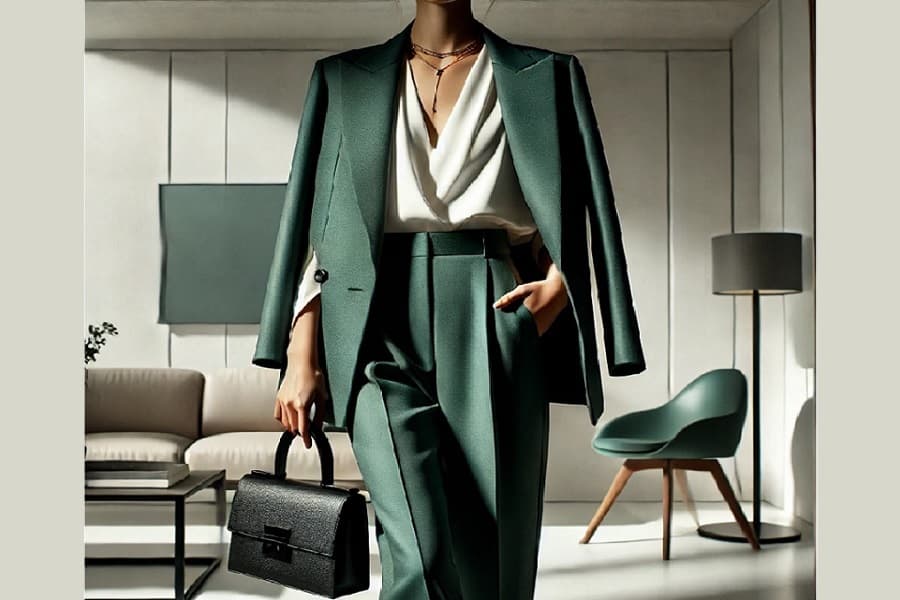
The most convincing blazers are the ones that look intentional from the shoulder out. Aim for a shoulder line that extends a little past your natural frame but does not swallow it, and make sure the sleeve length allows a clean stack at the wrist rather than pooling over the hand. If the jacket is especially wide through the body, the hem should still feel deliberate, landing around the hip or upper thigh so the proportions stay controlled.
Double-breasted shapes with strong lapels are especially effective because they create structure without requiring a cinched waist. In neutrals like charcoal, beige, and ivory, they become a useful capsule piece rather than a novelty. The best versions feel architectural, but never heavy, which is why lightweight fabrics matter so much for year-round wear.
Fabric is what keeps volume elegant
Oversized tailoring succeeds or fails on cloth. An unlined blazer in a linen blend has a different energy from a fully padded wool style: one breathes and drapes, the other holds a sharper line. Neither is wrong, but each changes the message. If you want ease and motion, look for softer construction; if you want a sharper read, choose more internal structure and a fabric with enough body to keep the shape crisp.
Texture matters just as much as cut. Linen blends, wool, and satin all bring different depth to a wardrobe that risks looking flat if every piece is matte and similar in weight. A blazer with some natural drape can soften tailored trousers, while a stiffer cloth can steady silk, satin, or a fluid skirt beneath it. That mix of hold and fall is what keeps the oversized silhouette from reading careless.
How to wear it to the office
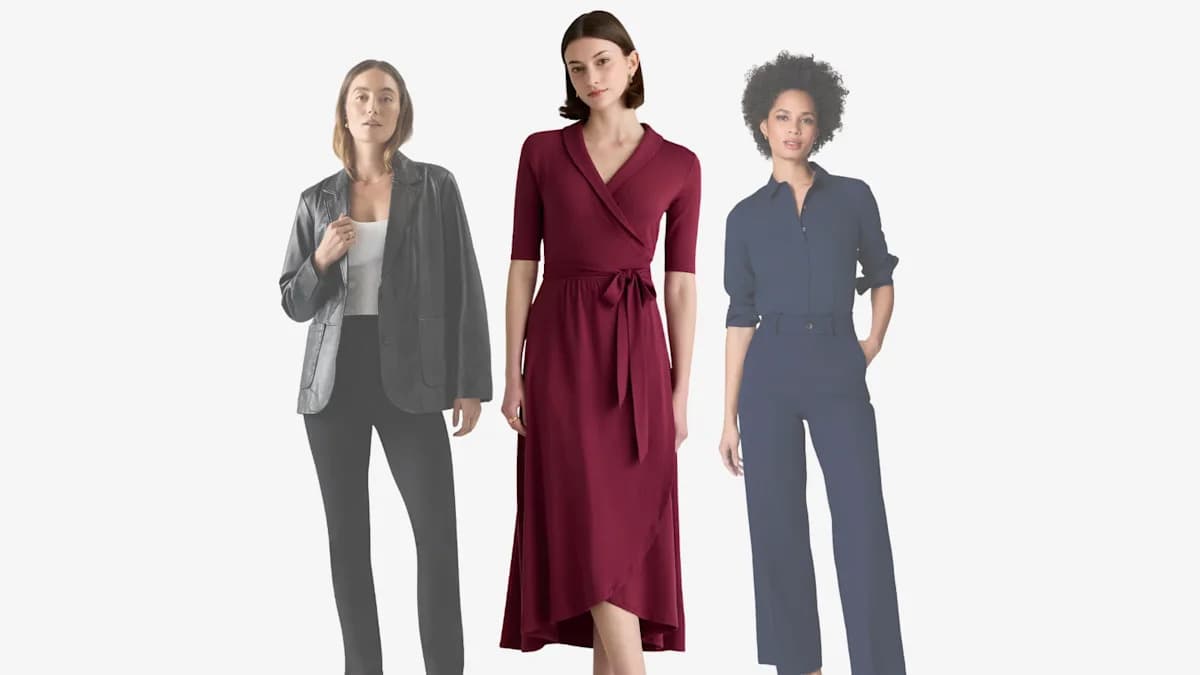
The cleanest formula is still the most convincing: oversized blazer, tailored trousers, silk blouse, and loafers or block heels. Straight trousers keep the line long and prevent the jacket from looking too top-heavy, while a silk blouse adds a little sheen under all that structure. Lug loafers sharpen the look without sacrificing comfort, which matters on days when you are in and out of meetings.

If you want the outfit to feel less conventional, try the blazer with a slip dress. The contrast between masculine tailoring and liquid fabric is the point, and it works especially well in neutral shades that let the silhouette lead. A fitted bottom is the anchor here, whether that means close-cut trousers or a skirt that narrows the shape below the jacket.
For the desk to dinner shift
This is where the oversized blazer really earns its keep. Over a bralette and wide-leg trousers, it becomes evening-ready without looking overworked. With straight denim and a sharp shoe, it reads off-duty but still deliberate, which is useful for workplaces where the dress code is relaxed but polish still matters.
Gender-neutral tailoring is part of the appeal too. The blazer does not need to announce femininity in a traditional way to feel elegant, and that openness is exactly what makes it contemporary. It can be borrowed from men’s codes and still feel entirely personal on a woman’s body, just as Yves Saint Laurent made clear when he introduced Le Smoking in his Autumn-Winter 1966 collection.
A long line from Le Smoking to today
Saint Laurent’s tuxedo for women was one of the clearest early statements that menswear codes could be translated rather than merely copied. Musée Yves Saint Laurent Paris notes that Le Smoking adapted men’s tuxedo language for women, and that idea still echoes through the best oversized blazers now. The modern version is less about evening rebellion and more about everyday authority, but the underlying gesture is similar: tailoring can change the social meaning of a body in motion.
That lineage is visible on runways too. Anthony Vaccarello’s Winter and Fall 2025 Saint Laurent collection in Paris was widely read through the lens of big, powerful shoulders, a direct nod to 1980s silhouette drama. What feels fresh in 2026 is not the shoulder itself, but how it is softened by mobility, lighter fabrics, and styling that fits the speed of contemporary life.
Why it belongs in a modern wardrobe
There is a practical reason oversized blazers are taking over: employers have relaxed the rules, but the need to look credible has not disappeared. In fact, Gartner reported on January 30, 2024, that rigid return-to-office mandates can increase quit intent, especially among high-performers, women, and millennials, which helps explain why many people want workwear that gives them confidence without feeling punitive. The blazer becomes a translation garment, moving cleanly between commute, office, client lunch, and evening plans.
That is also why sustainability enters the conversation here in a meaningful way. A blazer made from durable material with strong construction will outlast trend cycles better than a flimsy novelty shape. If the jacket has enough structure to hold its line after repeated wear, it becomes part of a working wardrobe rather than an occasional statement.
The final proportion check
Before you buy or style one, look at the whole frame. If the blazer is oversized, keep the trousers straight or the skirt narrow, let the sleeve stack intentionally, and choose fabrics that either drape beautifully or hold their shape with conviction. Pairing volume with discipline is what makes the look feel modern rather than accidental.
The oversized blazer works because it reflects the office as it really exists now: fluid, hybrid, and less interested in stiffness than in presence. In that sense, it is not a trend chasing power. It is power, recalibrated for a life that keeps moving.
This article was produced by Prism’s automated news system from verified source data, official records, and press releases, then run through automated quality and moderation checks before publishing. The system is built and supervised by the people who set the standards it runs under. Read our full AI policy.
Did this article answer your question?