Palantir’s Chore Coats Sell Out, Tech Brand Embraces Workwear Heritage
Palantir’s chore coats sold out in hours, turning a defense-tech merch drop into a fashion signal. The jacket’s French workwear roots now meet Silicon Valley branding.

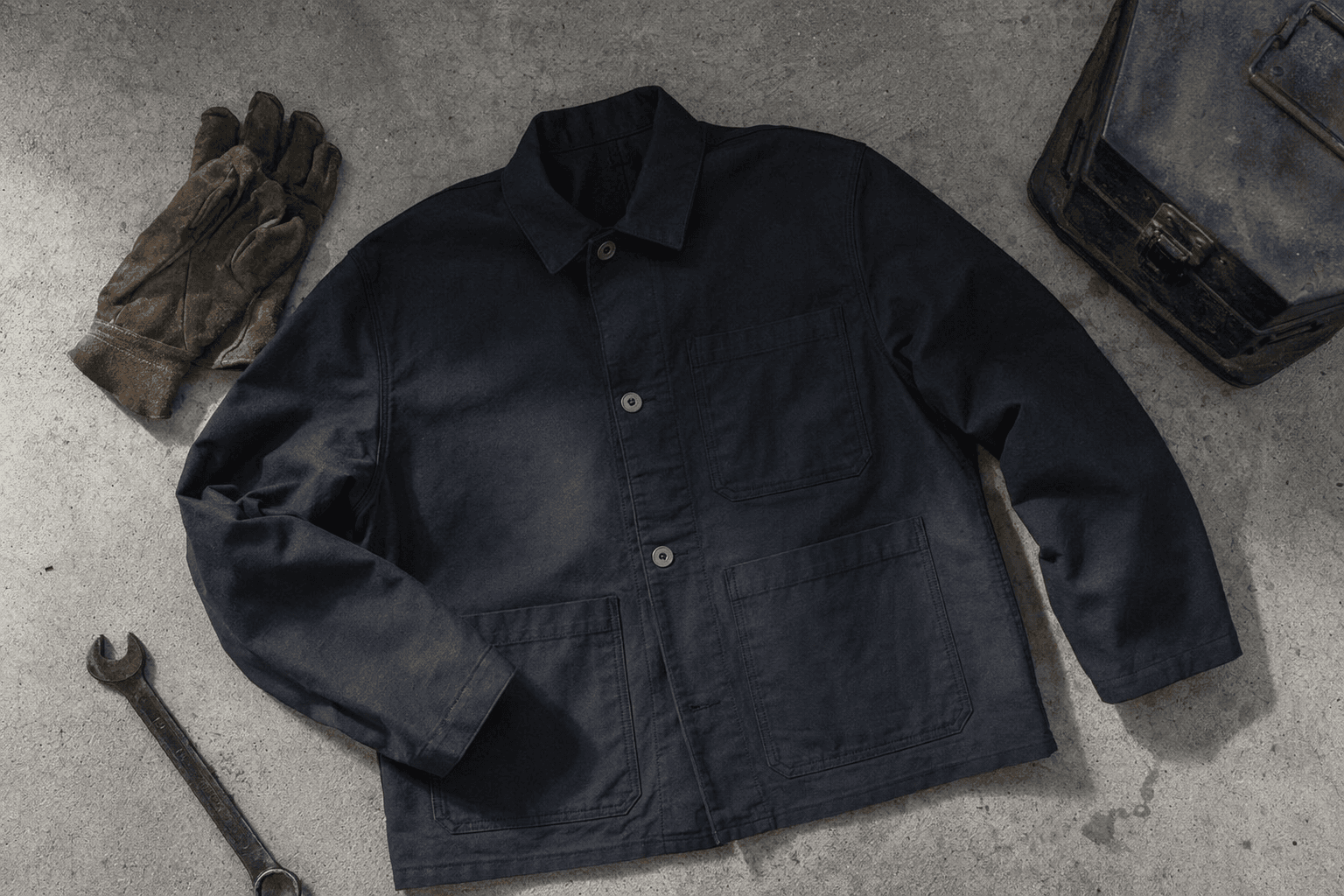
Palantir’s Lightweight Chore Coat disappeared fast. The blue and black versions were both marked sold out on the company’s shop within hours, turning a niche merch drop into an unlikely workwear moment for one of Silicon Valley’s most polarizing defense-tech brands.
The coat was not presented as a novelty. Palantir Shop described it as being “grounded in the rugged reliability of classic workwear” and “influenced by Palantir’s forward deployed culture,” and said it was cut from 10oz American grown Bull Denim. The storefront labeled the release as Drop 013 S.2026 under a /forward deployed banner, with a $30 book, $65 caps and $14 woven patches sitting alongside the jackets. That mix matters: this was not a one-off logo play, but part of an ongoing merch program, as the archive page shows a sequence of earlier releases.
The choreography of the sellout says as much about the brand as the garment. Palantir has spent the past year leaning harder into “forward deployed” language across its engineering and product vocabulary, including a December 16, 2024 blog post about its Forward-Deployed Infrastructure Engineering team, known internally as the Baseline team. In 2026, the company went back to the same lexicon with PFCS Forward and its “Authorize Once, Deploy Everywhere” framing. Its newsroom also ties Shyam Sankar to First Breakfast, a newsletter about the history of American defense procurement and the mobilization of the industrial base. Put together, the chore coat reads less like casual outerwear than a corporate uniform for a company eager to dress its ideology.
That is why the silhouette still lands. The chore jacket began in 19th-century France as a laborer’s jacket, built for railroad workers and farmers, with durable cloth and roomy pockets for tools. Over time, its utilitarian lines moved out of the field and into fashion, where the shape became a code for authenticity, durability and plainspoken taste. Palantir is clearly banking on that freight. The company’s version uses Bull Denim, a fabric that nods toward heritage workwear without fully committing to the heavier canvas and indigo tradition of classic American brands.
The reaction has been split. Fast Company reported backlash online over Palantir’s move deeper into fashion, and one critique argued that if the company wanted to invoke American workwear seriously, it should have reached for denim or duck canvas and a four-pocket construction instead of three, closer to the language of Sears, Lee and Carhartt. That tension is the point. Palantir is not just selling a jacket; it is trying to buy into heritage, legitimacy and a new kind of corporate uniform all at once.
This article was produced by Prism’s automated news system from verified source data, official records, and press releases, then run through automated quality and moderation checks before publishing. The system is built and supervised by the people who set the standards it runs under. Read our full AI policy.
Did this article answer your question?