Soft Tailoring, Florals and Fringing Define Spring-Summer 2026 Workwear
SS26 workwear gets softer, not slouchier, with tailoring loosening up, florals turning sculptural, and fringe landing as the one embellishment that still knows how to behave.
The new office uniform is less armor, more motion
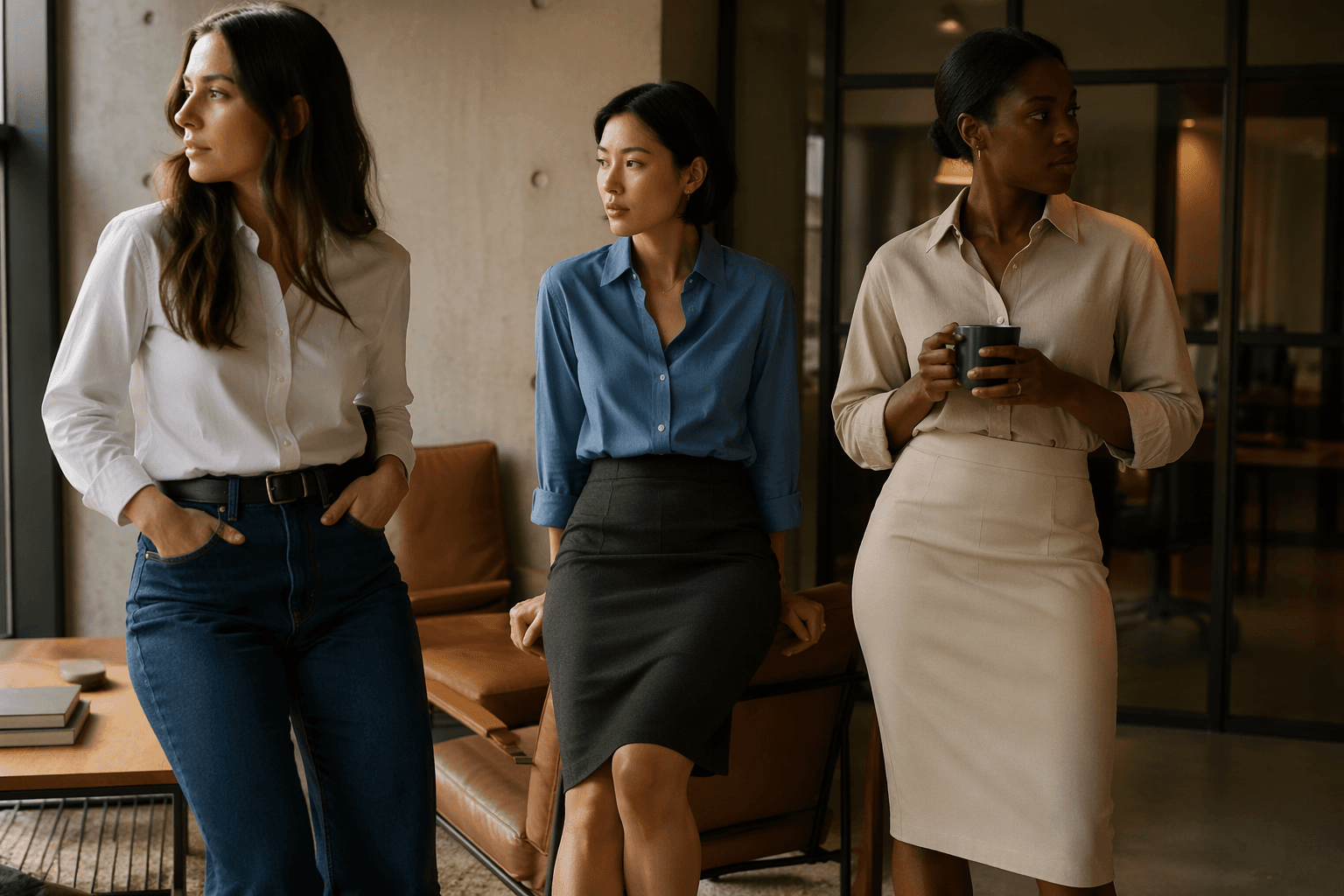
The sharpest thing on the SS26 runways was how unsharp everything became. Across New York, London, Milan and Paris, the womenswear season unfolded from September 11 to October 7, 2025, and the whole circuit felt infused with fresh energy and a breath of optimism. That mood matters for workwear because it points straight at the clothes people actually wear Monday through Friday: tailoring is no longer meant to box the body in, but to let it breathe, layer, and move.
FashionNetwork put it bluntly: the “working girl silhouette is softening.” That is the real story here. The blazer is still in the game, but it is being relaxed through generous volume, fluid lines, sheerness, shine and layering, which makes the office look feel less severe and a lot more expensive-looking. This is not about abandoning polish. It is about making polish less rigid, so a suit can survive a desk, a dinner, and a late train home without looking like it is fighting you.
Why new tailoring is the season’s most useful shift
The season was unusually heavy on creative-director debuts, and that first-collection energy gave tailoring a jolt. Paris, in particular, was defined by new leadership at Dior, Chanel, Maison Margiela and Balenciaga, with Jonathan Anderson, Matthieu Blazy, Glenn Martens and Pierpaolo Piccioli all stepping into major houses. That kind of turnover does more than create headlines. It resets the silhouette conversation, and right now the conversation is clearly about tailoring that feels lighter, more fluid, and less corporate-cage than what came before.
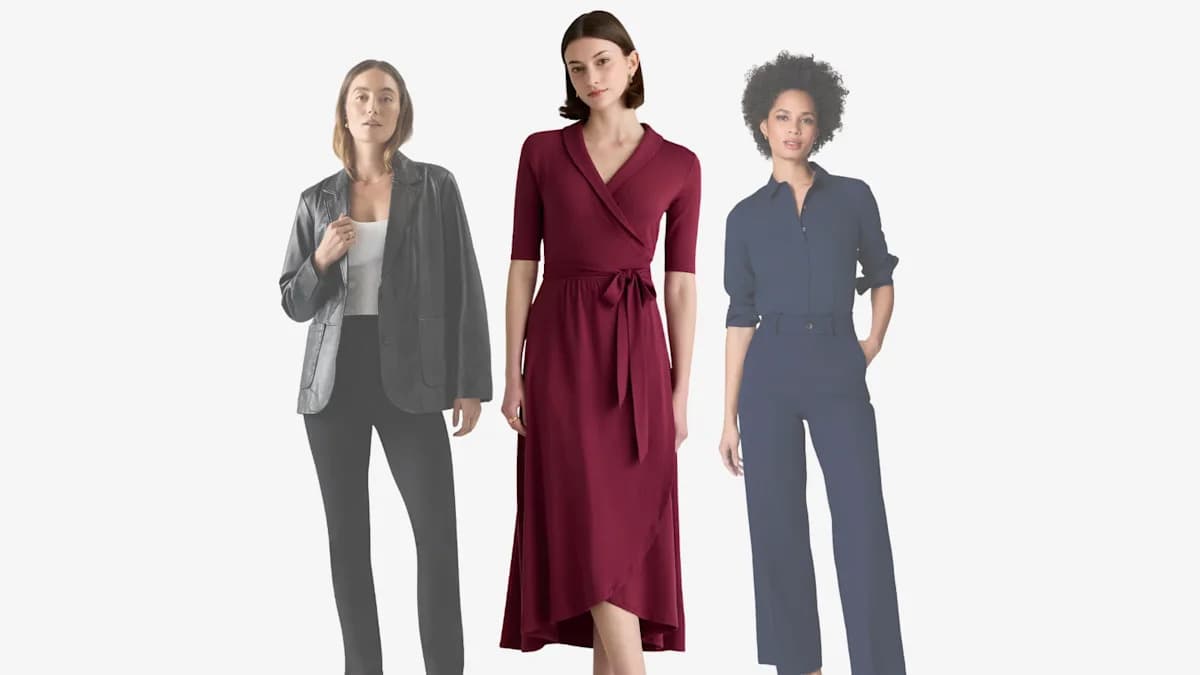
For a workwear wardrobe, this is the key takeaway: the best new tailoring is not oversized for the sake of looking cool, and it is not cut so tightly that it reads costume-y. It sits in that useful middle ground where structure meets ease. Think jackets with softer shoulders, trousers with air under the leg, and suiting that can be broken apart and reassembled without losing its shape. The point is versatility, not performance.
What to look for in office-ready tailoring
- A suit that layers cleanly over knits or a shirt without pulling
- Fabric with movement, especially if it catches light instead of looking flat
- Volume that creates shape, not bulk
- Matching separates that can be worn together or split up across the week
That is why the most relevant SS26 tailoring feels like a wardrobe strategy, not a runway stunt. It is the first time in a while that softening reads as strength.
Florals are back, but they are not playing sweet
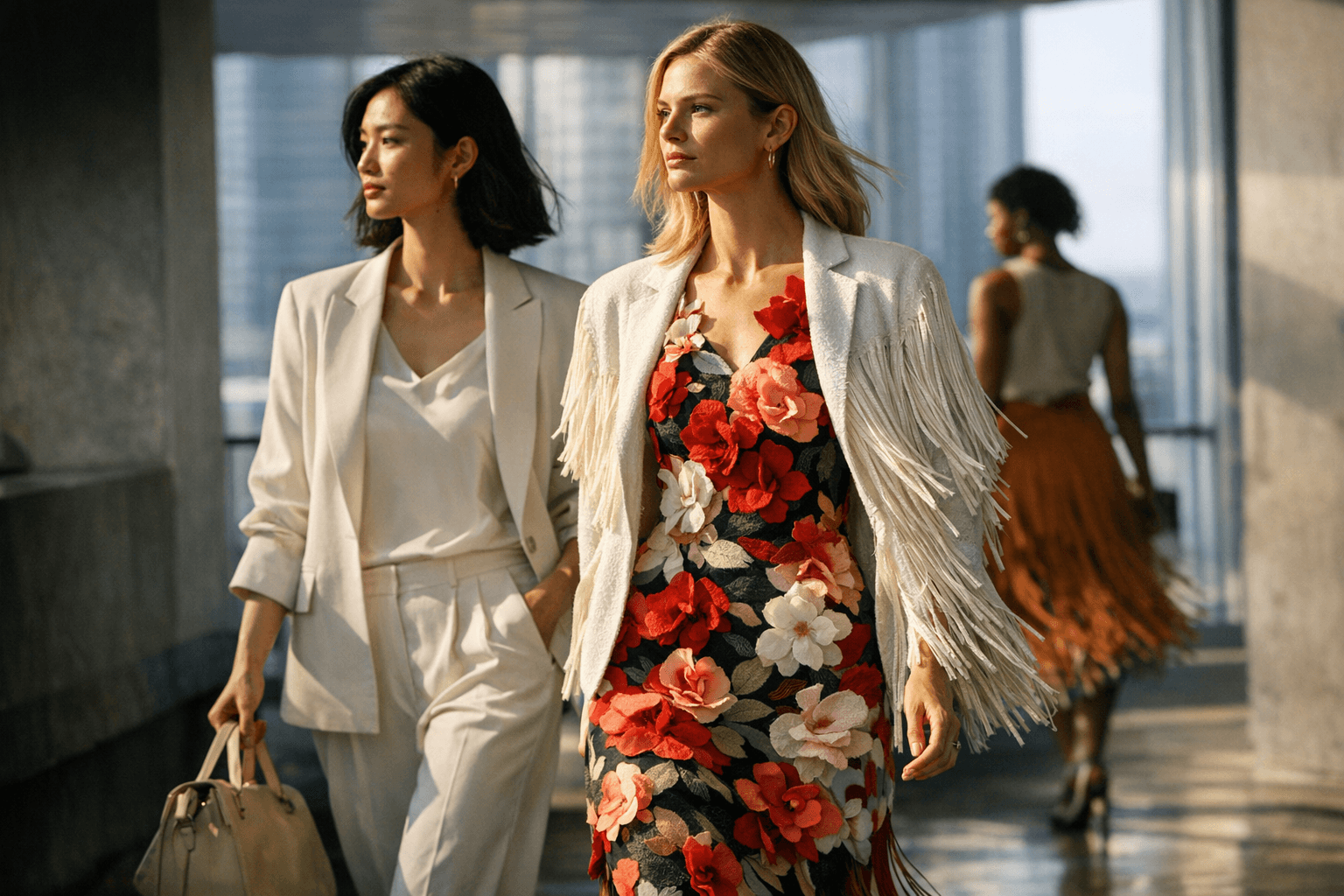
Florals are everywhere this spring, but the smart versions are not the dainty, garden-party kind. Who What Wear framed the trend as something to wear in chic, modern ways, and that tracks with what was actually happening on the runways. The best SS26 florals looked sculptural, not sugary, with sharper placements and more disciplined silhouettes that kept the print from drifting into costume territory.
For workwear, that matters. A floral blouse can still be office-appropriate if the print is abstract, the palette stays restrained, and the shape underneath is clean. A floral dress works when the cut does the heavy lifting, not when the print is doing all the talking. The version to avoid is anything too literal or too romantic, because once the print starts feeling like wallpaper, professionalism slips.
London made that balance especially clear. At Erdem, florals sat alongside trains and fringing, which linked the house’s vision to wider SS26 trends rippling through the season. The lesson is useful: florals do not have to read as decorative fluff. In the right shape, they can look tailored, deliberate, even a little severe. That is the sweet spot for workwear, where the print should sharpen the outfit rather than soften its authority.
Fringing is the wild card, and it is not always office-safe
Fringe was the season’s true showstopper, all motion and drama. WWD described it as the embellishment that rippled, swung, and brought garments to life at Balmain, Bottega Veneta, Rick Owens and more. That kind of energy is irresistible on a runway because fringe loves movement, but in a workwear context it has to earn its place. One strip too many and suddenly your blazer is doing the most in a conference room.
Still, fringe is not automatically off-limits. The cleanest way to wear it for work is as a controlled accent, not a full effect. A fringed hem on a skirt, a subtle finish on a sleeve, or a bag with movement can add texture without tipping the outfit into party mode. What makes fringe dangerous is also what makes it great: it announces itself fast. So for the office, the trick is restraint, not elimination.
The line between desk-ready and runway-only
Runway fringe works when it is theatrical. Office fringe works when it is architectural. A little swing at the cuff or hem gives a look energy. Full-body drama belongs elsewhere.
That same divide applies to the rest of the season’s more expressive ideas. Sheerness and shine were part of the broader SS26 mood, but those details need editing if they are going anywhere near a workplace. The best office versions of the trend are the ones that whisper rather than shout, a glossy trouser under a structured jacket, a sheer layer under something solid, a reflective fabric used like punctuation instead of a paragraph.
The striped suit is the clearest office buy-in
If you want one SS26 idea that feels instantly usable, it is the striped suit with a matching shirt that Who What Wear singled out in London. It is a fresh spin on the three-piece suit, and it works because it delivers order with just enough personality. The stripe gives the outfit rhythm, while the matching shirt keeps it pulled together in a way that feels smarter than a standard white button-down.
This is exactly where workwear is headed: coordinated, but not stiff; tailored, but not severe; expressive, but still professional. Erdem’s mix of stripes, fringing, trains and florals may have started on the runway, but the styling logic translates cleanly into real life. Pair the suit with a sharp shoe and the look stays office-facing. Swap in something softer, and it moves straight into after-hours territory without a costume change.
How to wear SS26 workwear without losing polish
The season is pushing a very specific idea of modern dressing, and it is one that rewards editing. The office looks worth copying are the ones that borrow from the runway but stop short of literal translation. Soft tailoring gives you structure with air. Florals give you pattern with control. Fringe gives you texture, as long as you keep it on a short leash.
The old power suit was about looking untouchable. SS26 workwear is about looking composed, current, and a little more human. That shift, more than any single trend, is what will reshape suiting for the next round of office dressing.
This article was produced by Prism’s automated news system from verified source data, official records, and press releases, then run through automated quality and moderation checks before publishing. The system is built and supervised by the people who set the standards it runs under. Read our full AI policy.
Did this article answer your question?