This Spring, Men's Tailoring Lets Loose
Unstructured suits are taking over the SS26 workwear conversation, and the good news is that looser tailoring can look sharper than a stiff one, if you know the rules.
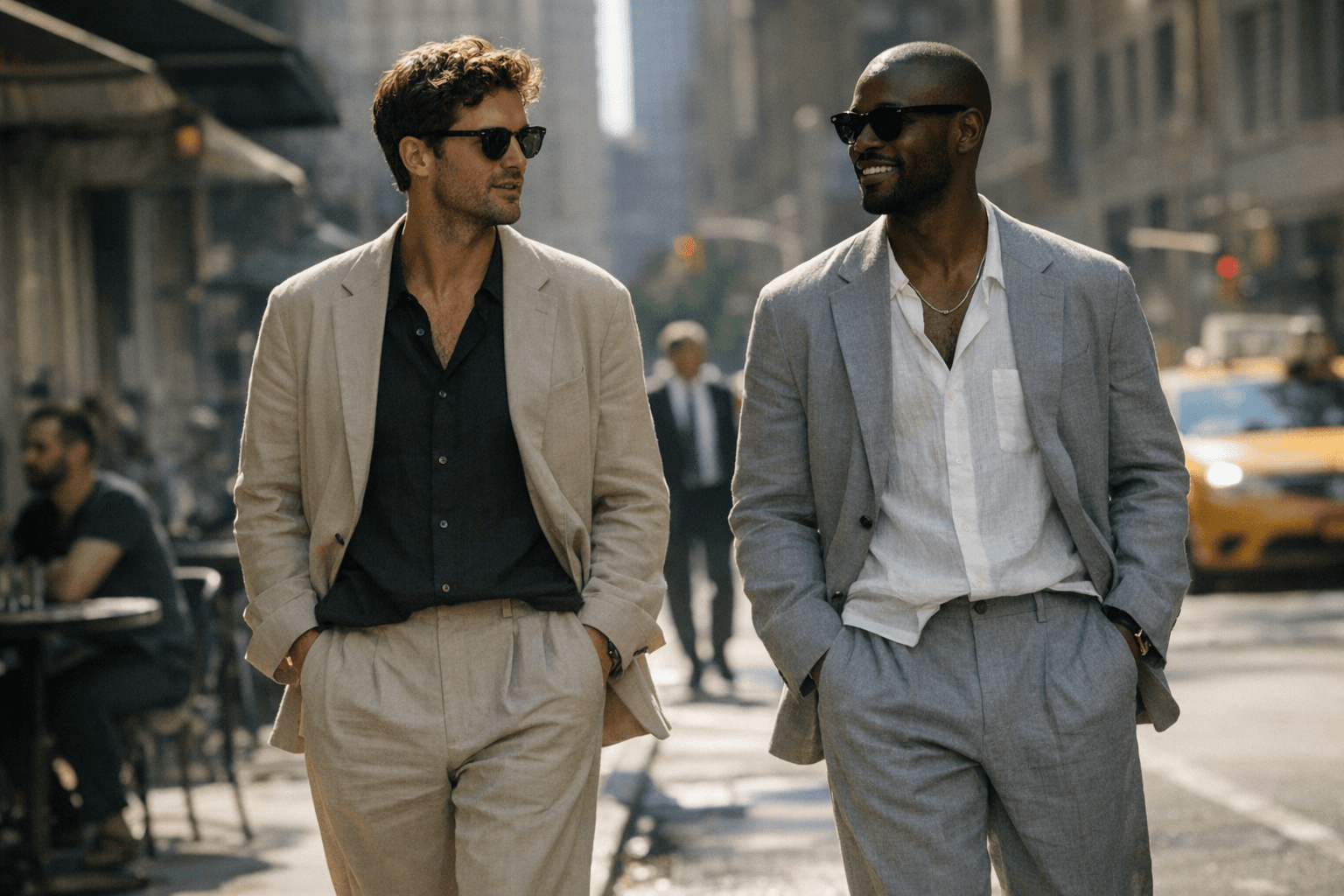
The suit never left the office. But the version showing up on desks this spring looks noticeably different: shoulders sit a little lower, trousers breathe a little more, and the whole thing moves with you rather than against you. L'OFFICIEL USA's SS26 men's tailoring survey, published at the end of March 2026, made the case plainly: the season's dominant shift is toward relaxed, unstructured suiting that maintains genuine polish while prioritizing movement and all-day wearability. For anyone navigating a hybrid schedule, it's the most practical style development in years.
The challenge, of course, is that "relaxed" can tip into "didn't try." The difference between intentional soft tailoring and a suit that just looks rumpled comes down to four variables: fabric weight, shoulder construction, trouser volume, and what you put on your feet. Get those right, and you look modern. Get them wrong, and you look like you borrowed someone else's jacket.
Start With the Fabric
Fabric is where this trend either works or collapses. The SS26 shift away from tight, sculpted suiting runs on natural fibers: linen, cotton-wool blends, and lightweight wools that drape without clinging. These are what forecasters are calling "anti-heat" fabrics, materials that handle spring warmth without sacrificing the composed look of tailoring.
Linen is the season's clearest statement. Pure linen jackets, as seen in Wax London's SS26 tailoring edit, have a built-in ease that reinforces the unstructured silhouette rather than fighting it. The fiber's natural texture also gives the look visual weight, so even a relaxed cut reads as considered rather than thrown on. For offices with stricter dress codes, a linen-wool or cotton-wool blend offers slightly more body and polish while keeping the hand light enough for spring.
Half-lined construction is the technical detail worth understanding. An unlined or half-lined jacket removes the rigid interior scaffolding of traditional suiting and lets the outer fabric behave naturally. The result is a jacket that drapes from the shoulder rather than holding a manufactured shape, which is exactly what makes the silhouette look modern. Minimum shoulder padding, or none at all, is part of the same logic.
The Shoulder Question
In SS26 tailoring, the shoulder is the most significant structural shift from recent seasons. The extended or slightly dropped shoulder, with a deeper armhole and a fuller chest, creates what the tailoring world has started calling a "tailored-relaxed" line: the jacket still follows the body, but with enough ease to feel like clothing rather than armor.
This is where intention matters most. A dropped shoulder that is intentionally cut and properly proportioned reads as fashion-forward; a shoulder seam that simply slides off the point because the jacket is too large reads as sloppy. The distinction is fit through the chest and midsection. The jacket should skim, not hang, and the sleeves should still break cleanly at the wrist.
Milan's SS26 shows reinforced this: designers leaned into airy drape and relaxed proportions, with silhouettes designed to flow. Broad-shoulder references from 1980s tailoring reappeared, but filtered through contemporary minimalism, resulting in a line that reads powerful rather than dated.
Trouser Volume and How to Wear It
L'OFFICIEL USA's feature specifically highlights "drawier trousers" as a key category, and this is where the relaxed-suiting trend makes its most dramatic statement at the office. Fuller-cut trousers with a higher rise and a clean, slightly tapered leg are the workable version: they offer the visual ease of wide-leg tailoring without tipping into costume territory.
The fabric here matters as much as it does in the jacket. A fuller trouser in stiff or shiny fabric looks cheap. The same cut in linen, lightweight flannel, or a soft cotton-wool blend looks intentional and expensive. Aim for a mid-to-high rise, which anchors the trouser and keeps the silhouette from reading as shapeless, and let the hem break just at the shoe, no pooling.
One practical note: if you are wearing a very relaxed jacket, taper the trouser slightly. If the jacket is more structured, you can afford to let the trouser run fuller. The two pieces should balance each other, not compete.
Breezy Shirts and Understated Knits
L'OFFICIEL USA rounds out the SS26 tailoring picture with two supporting players: breezy shirts and understated knits. Both are about what you put under the jacket, and both reflect the same anti-stiffness logic driving the outerwear.
A breezy shirt in this context means something with a lighter hand than a traditional dress shirt: a washed oxford, a fine cotton poplin with a relaxed collar, or a camp-collar in a solid or subtle print. These pair directly with the unstructured jacket without the formality clash that a stiff spread-collar dress shirt might create. For meetings, a clean white or pale blue poplin worn open a single button does the work.
Understated knits, a fine-gauge crewneck or a tonal polo, are the creative-office alternative to a dress shirt entirely. Worn under a linen blazer, a well-fitted knit in ivory, oatmeal, or soft grey keeps the look cohesive while dropping the formality register just enough to signal ease. The knit should be slim enough to sit cleanly under the jacket without adding bulk.
Meeting-Ready Formula
The goal in a traditional office or client-facing environment is to signal authority while wearing something that breathes. The formula:
- Jacket: half-lined linen or cotton-wool blend, extended shoulder, subtle structure through the chest
- Trouser: mid-rise, slightly tapered fuller leg in a matching or tonal fabric
- Shirt: crisp white or pale blue poplin, collar open or with a discreet tie
- Shoe: dark leather loafer, oxblood or black, in a polished finish
The loafer is doing critical work here. It bridges the gap between the jacket's relaxed construction and the professional context, keeping the look grounded in office legitimacy. Suede adds texture and warmth for spring; polished leather reads more formal for presentations or client meetings.
Creative-Office Formula
In more relaxed workplaces, the same silhouette can be pushed further without losing its edge.
- Jacket: unlined linen blazer, patch pockets, notch lapel, worn open
- Trouser: fuller-cut drawstring or elasticated waist in linen or cotton
- Knit: fine-gauge crewneck in a neutral, tucked or half-tucked
- Shoe: a clean, minimal leather sneaker in white or ecru, or a chunky suede loafer
A leather sneaker in a minimal silhouette, nothing too technical or logo-heavy, sits easily under a relaxed linen blazer without looking like an error in judgment. The key is keeping the sneaker monochromatic and low-profile. The relaxed tailoring does the visual work; the shoe just needs to not undermine it.
The Underlying Logic
What makes the SS26 relaxed-suiting trend durable, rather than a seasonal novelty, is that it solves a real problem: how to dress with authority across a workday that might involve a commute, a long video call, a client lunch, and a 6 p.m. errand. Stiff, structured tailoring was designed for one environment and stayed there. Soft tailoring, built from natural fibers with considered proportions, actually travels. The suit's authority is still intact. It has just stopped pretending that comfort is a compromise.
This article was produced by Prism’s automated news system from verified source data, official records, and press releases, then run through automated quality and moderation checks before publishing. The system is built and supervised by the people who set the standards it runs under. Read our full AI policy.
Did this article answer your question?