U.S. Forest Service is moving its headquarters to Salt Lake City, USDA says
USDA is relocating Forest Service HQ to Salt Lake City, shifting 260 positions from D.C. office dress into Mountain West field-gear country, with uniform procurement set to follow.
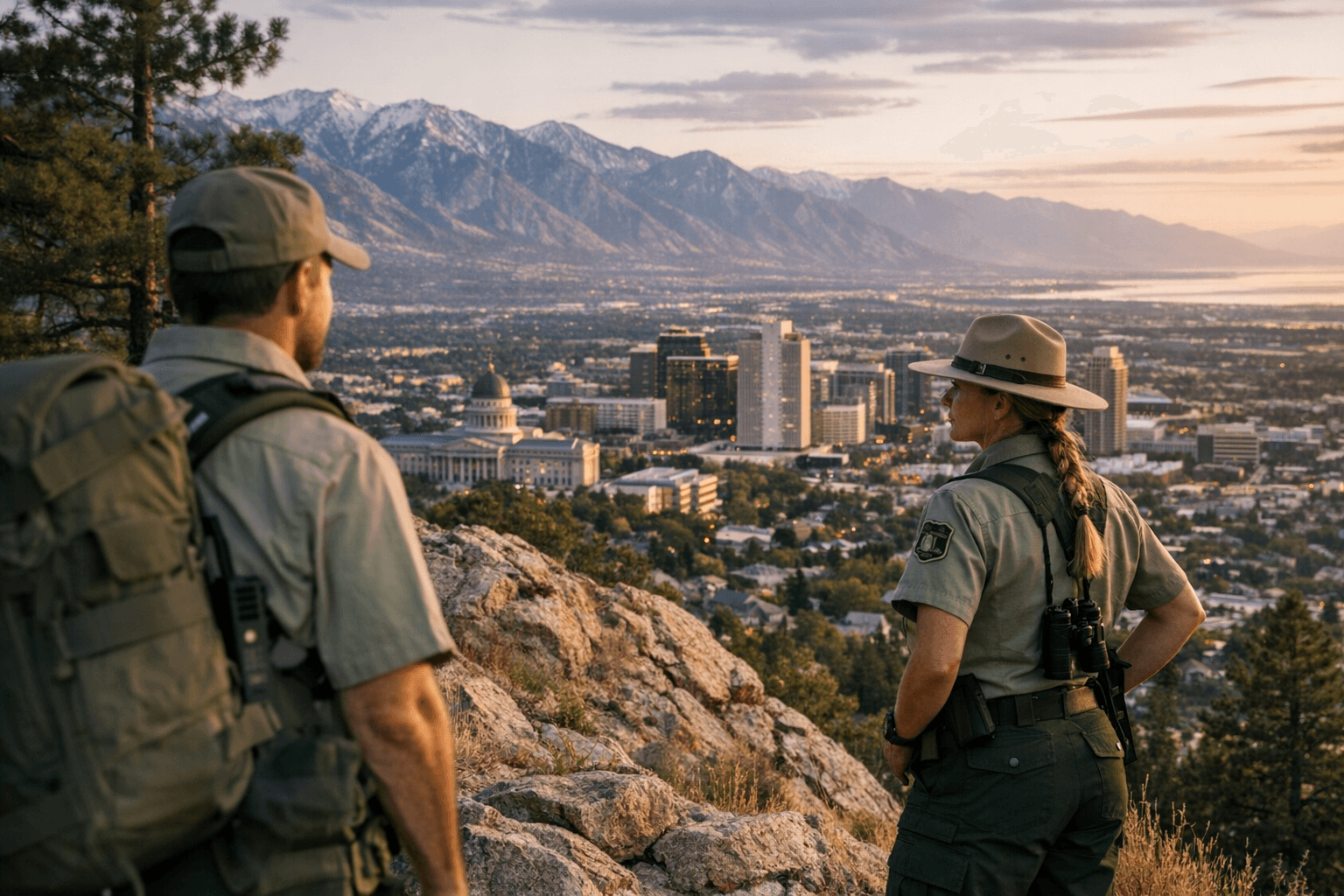
The U.S. Department of Agriculture announced on March 31 that it is relocating the U.S. Forest Service headquarters from Washington, D.C., to Salt Lake City, shifting approximately 260 positions into the center of the Mountain West's outdoor-industry corridor. With nearly 90 percent of the agency's roughly 193 million acres of national forests and grasslands lying west of the Mississippi River, the geographic rationale has never been seriously disputed. The uniform and procurement implications are another matter entirely.
Agriculture Secretary Brooke L. Rollins called the move a mission-focused decision: leadership closer to the land means faster field responsiveness, lower operating costs, and a stronger recruitment pipeline. Utah Governor Spencer Cox welcomed it as an economic win that will bring hundreds of jobs to the state. What neither statement addressed is the specific gravity of the destination. Salt Lake City is not a generic western hub. It sits at the center of the Mountain West's outdoor-industry corridor, home to Black Diamond Equipment and surrounded by a commercial ecosystem where technical apparel and field-ready gear are the default language, not a premium upgrade.
Human Technologies Corporation currently holds the contract to outfit Forest Service personnel in official green-and-gray. That relationship was built within a D.C.-centric administrative framework. When the contracting officers, supply chain managers, and program administrators making those purchasing decisions relocate to a city where softshells and packable insulation are considered business casual, the cultural pressure on what constitutes adequate field gear shifts with them. Whether that translates to formal contract changes or simply a different set of assumptions in vendor conversations, the proximity effect is real and historically consistent across federal agency relocations.
The Bureau of Land Management offers a precedent worth examining closely. When the first Trump administration moved BLM headquarters to Grand Junction, Colorado in 2019, 287 of the 328 designated positions never made the trip. Only 41 employees relocated with their jobs; the rest retired or found new employment elsewhere. Vacancies surged from 121 open positions in July 2019 to 326 by March 2020, and the Biden administration eventually reversed the move entirely. That 87 percent attrition rate is the benchmark Forest Service workforce planners are now measuring against.
The agency has already stated the terms directly: employees reassigned to a new location must accept the move or lose their position. The broader reorganization does distribute the pressure across multiple cities. USDA is establishing operational service centers in Fort Collins, Colorado, Raleigh, North Carolina, Kansas City, Missouri, and Indianapolis. All Forest Service research operations consolidate to Fort Collins. Regional offices in Juneau and Albuquerque will be converted to state offices, and the Vallejo, California, facility becomes a national training center.
The employees who do follow the headquarters west will find themselves in a city where the distance between a federal building and a trailhead is measured in minutes, not metro stops. A Washington-based Forest Service administrator works in an environment calibrated to congressional proximity: pressed trousers, structured blazers, leather oxfords. The equivalent role in Salt Lake City places the Wasatch Range within a lunch break and the Intermountain Region's operational core within a short drive, where professional credibility is built in merino, Cordura, and Vibram-soled boots. The agency's uniform has always been designed for the field. With 260 headquarters positions relocating to a city that treats technical outerwear as everyday kit, the long-standing gap between what Forest Service administrators wear and what the work actually demands may finally close by geography alone.
Know something we missed? Have a correction or additional information?
Submit a Tip