Wylie Welling Revives Vintage Carhartt as Upcycled, Unisex Workwear
Wylie Welling, Gretchen Valade's new label, reworks 1970s-2000s Carhartt into one-off unisex pieces ranging from a $195 restored shirt to nearly $3,500 archive finds.

Vintage Carhartt has always had a secondary market, but Wylie Welling makes a more ambitious claim on it. Founded by Gretchen Valade, a great-great-granddaughter of Carhartt patriarch Hamilton Carhartt, who started making durable overalls for railroad workers in 1889, the label launched its Spring 2026 debut by reclaiming original garments from the 1970s through the early 2000s, cutting them apart, and rebuilding them as one-off, unisex pieces refurbished in both Los Angeles and Detroit.
The brand name carries its own family archaeology. Hamilton Carhartt's son bore the full name Wylie Welling Carhartt, his mother Annette having brought the Welling surname into the family line. The label draws from that same lineage, threading two generations of Carhartt identity into a project that connects circular practice to the bloodline that built the original workwear.
The Spring 2026 debut breaks into two tiers: Well Worn, described as product that has been sanitized, mended, and restored, and Archive, centered around vintage product. Pants retail from $195 to $350 and shirts run $250 to $295. Archive pieces are higher-priced and more exclusive, with the launch collection of fewer than ten pieces priced between $595 and nearly $3,500. Both categories are sourced from the open market, primarily menswear, though Valade views Wylie Welling as "more of a unisex brand."
Valade grew up immersed in the family business, interning for the company when she was just 14 and joining full-time a decade ago after working at Li & Fung in Hong Kong. From there she moved through design, merchandising, and community programming before landing in sustainability. She launched Carhartt Reworked, a program that collects, cleans, and repairs previously worn garments for resale, and created the Carhartt Workshop, a community initiative offering locals free tool rental. Wylie Welling occupies the space between those two initiatives: more premium than a repair service, more deliberately considered than a vintage flip. "Circularity just went along with our business model," Valade said, noting that Carhartt had always been repairing and standing by its products, even without advertising it.
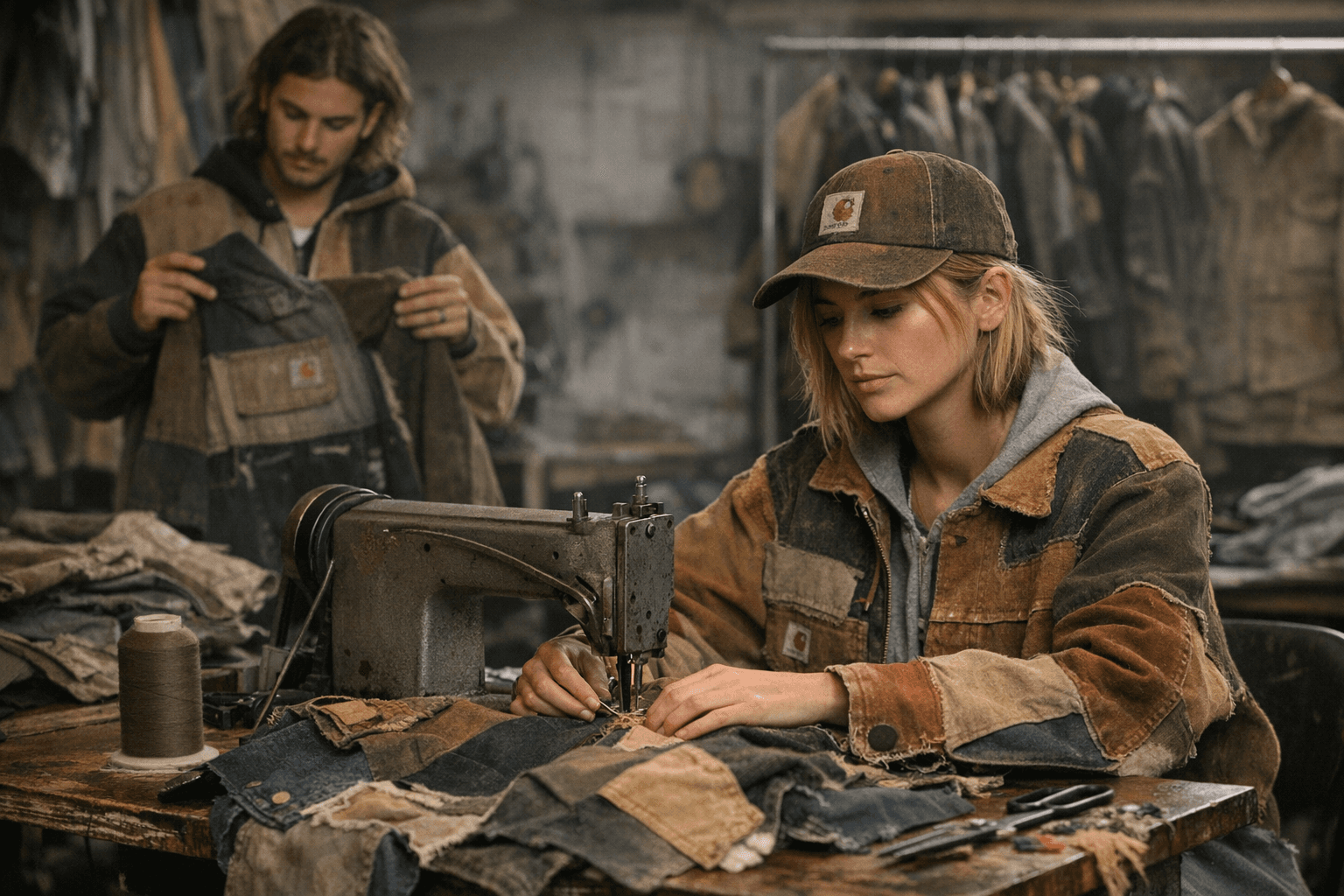
For buyers, the realities of upcycled workwear demand honest expectations. Because every piece originates from open-market vintage stock, fits are inherently variable: duck canvas worn on a job site for a decade carries a different structure than one that sat in storage. Well Worn pieces lean into restored patina; Archive finds tend toward more structurally intact examples. With fewer than ten pieces at launch, restocks simply do not exist.
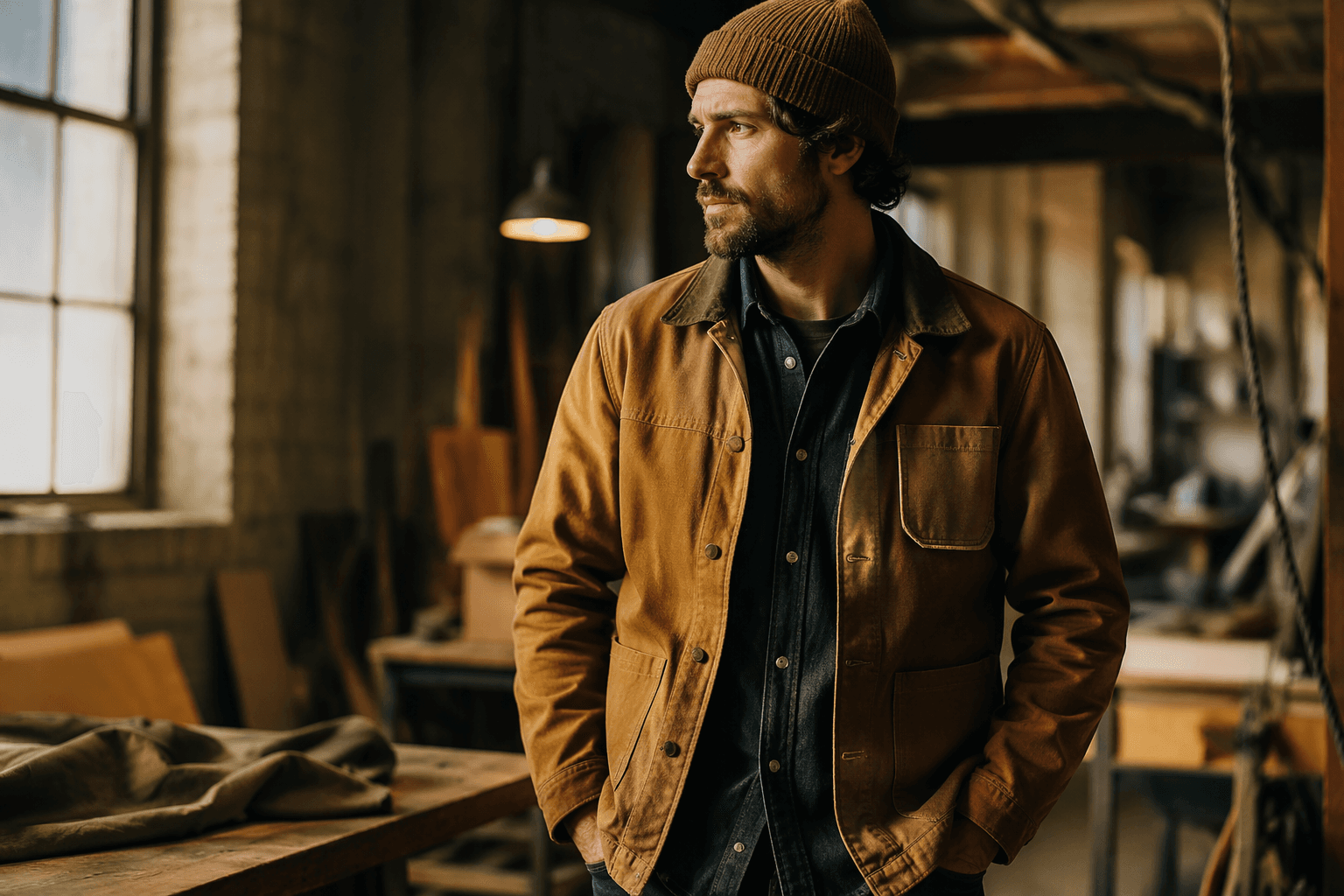
The silhouettes are workwear-adjacent but sized to read unisex. A Well Worn chore coat worn over a slim turtleneck and tailored trousers moves cleanly into smart-casual office territory without announcing itself. Heavier Archive pieces, with original Carhartt hardware and stitching intact, work best in workplaces where the workwear aesthetic is already embedded in the dress code, or on weekends where provenance speaks louder than polish.
Beyond the garments themselves, Valade is planning a Detroit retail hub that will offer workshops on mending and sustainable practice, alongside a forthcoming online launch. When the family that built the original Carhartt archive starts recutting it at premium price points, the circular economy stops being a boutique experiment. Wylie Welling is the inheritance claiming itself.
This article was produced by Prism’s automated news system from verified source data, official records, and press releases, then run through automated quality and moderation checks before publishing. The system is built and supervised by the people who set the standards it runs under. Read our full AI policy.
Did this article answer your question?