Pharrell's JOOPITER Drops Limited Capsule Tied to Triceratops Skeleton Auction
Pharrell's JOOPITER dropped a "Trey" capsule with fossil fragments and 424 streetwear, tied to a $3.8M Triceratops skeleton auction running through March 31.

Pharrell's JOOPITER platform launched the limited-edition "Trey" capsule on March 17 alongside the opening of global bidding for an actual 66-million-year-old Triceratops skeleton, with the auction carrying a starting bid of $3.8 million and an estimated closing range of $4.5 million to $5.5 million.
The capsule, created with Co-Museum and Los Angeles-based brands 424 and Hoorsenbuhs, includes a distressed trucker hat, a patched T-shirt, and a red-painted tote bag embellished with JOOPITER and 424 branding and dinosaur imagery. Hoorsenbuhs contributed a sterling silver keychain, and Co-Museum produced a limited-edition dinosaur sculpture. The most striking object in the drop is a replica skull containing genuine fossil fragments, bridging the line between collectible and artifact in a way few fashion capsules have attempted.
The skeleton at the center of the auction is no generic fossil. According to JOOPITER, Trey is "the only long-term museum-exhibited Triceratops skeleton ever to come to auction." Dating back more than 66 million years, Trey was discovered in 1993 by legendary geologist and paleontologist Allen Graffham. Trey is the only dinosaur procured through Graffham to come to market in the past two decades and represents the last privately owned specimen from his discoveries, making this auction a genuinely singular moment in the natural history market.
The capsule and the bidding window share the same timeline: both opened March 17 at 10:00 AM EST, and the auction closes March 31. The apparel and objects were available via JOOPITER.com, fourtwofour.com, and co-museum.com. No retail prices for individual capsule items were disclosed, and edition sizes were not announced.
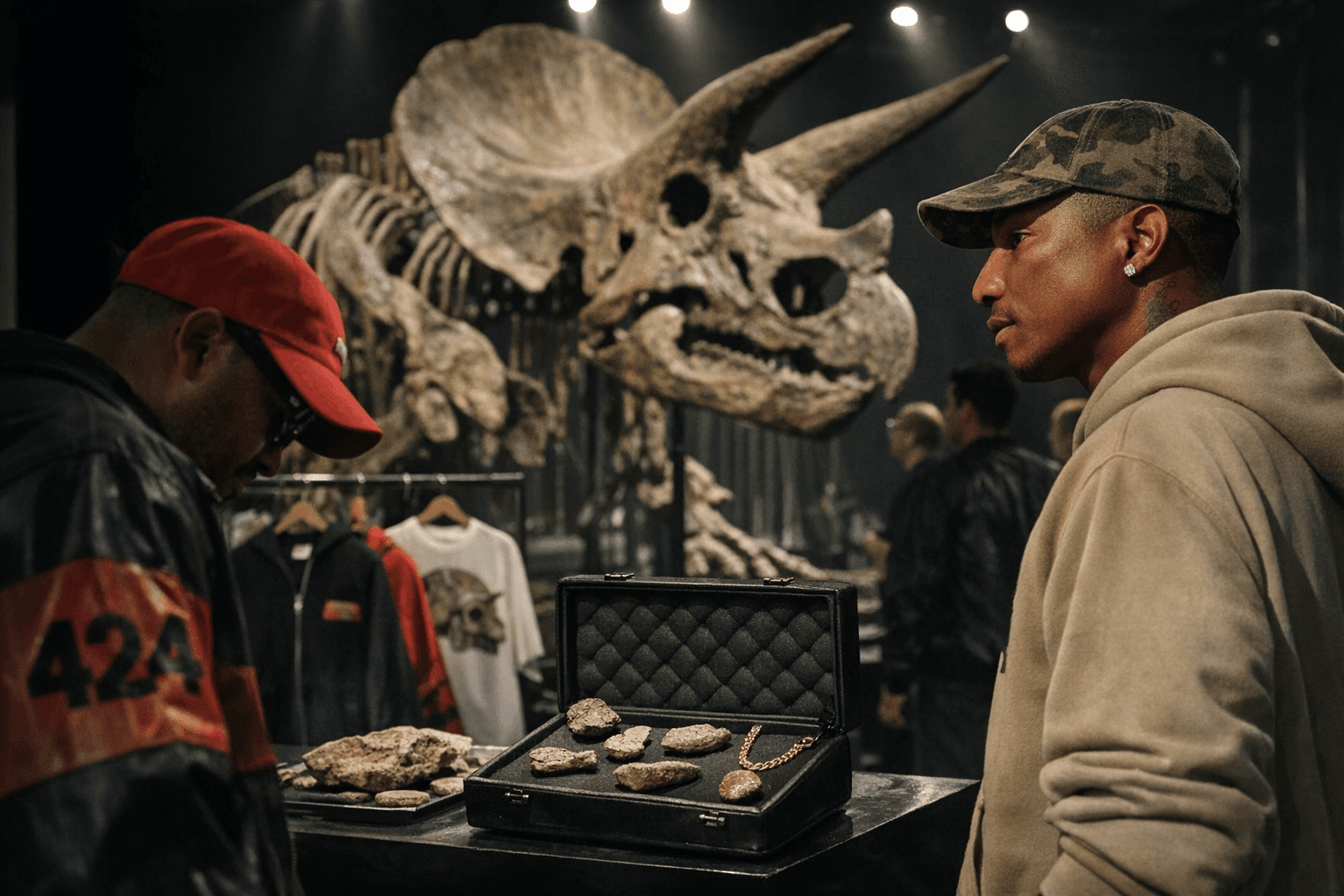
What makes the "Trey" drop notable beyond the novelty factor is its structure as a story-driven object release rather than a conventional streetwear collaboration. The fossil fragment replica skull is the clearest example: it functions as a collectible that references a specific, named specimen with documented provenance rather than generalized dinosaur iconography. Whether the fragments in those replicas originate from Trey specifically has not been confirmed. That distinction matters considerably to serious collectors and would affect both the object's cultural weight and its long-term value.
For the skeleton itself, the $3.8 million starting bid positions Trey well above the range of most private fossil sales, which is consistent with its museum exhibition history. Comparable Triceratops specimens have fetched significant sums at major auction houses in recent years, though none carried the specific museum-exhibition provenance JOOPITER has attached to Trey's listing. The auction closes March 31, with nine days remaining as of today.
Know something we missed? Have a correction or additional information?
Submit a Tip