Practical holiday gifts for hikers, walkers and backpackers by budget tier
The smartest hiking gifts solve real trail problems: blisters, visibility, weight and weather. The best under-$50 picks are the ones that become part of every outing.
The new rule for hiking gifts: solve a problem
Hiking gifts are getting more practical because hiking itself is getting bigger. Outdoor Industry Association’s 2025 Outdoor Participation Trends Report says hiking gained more than 2 million new participants, within a U.S. outdoor-recreation base of 181.1 million Americans. Growth is coming from seniors, youth, Black Americans, and Hispanic Americans, which makes this a broad consumer story, not a niche gear story.
That shift is exactly why the best gifts for hikers, walkers, and backpackers are the ones that make a trail day easier. The smartest buys prevent blisters, keep people visible, carry less weight, and handle rain, snow, and wind. In other words, the winner is not the fanciest object. It is the piece of gear that quietly disappears into the routine.
Start with the use case, not the aesthetic
Backpacker’s 2025 holiday coverage gets the framework right: a beginner, an intermediate hiker, and an advanced backpacker do not want the same thing. A first-timer usually needs comfort and confidence, an experienced day hiker wants versatility, and an ultralight backpacker is intensely focused on pack weight. That is the selection system that keeps a gift from feeling generic.
For a practical guide, the easiest way to shop is by trail problem:
- Blister prevention and foot comfort
- Staying visible in low light
- Carrying less weight
- Weather protection in cold, wet conditions
That structure also explains why under-$50 gifts so often outperform showier purchases. The best everyday trail staples are not sentimental in a decorative sense, but they become valuable because they are used constantly.
Under $50: the gifts that disappear into every outing
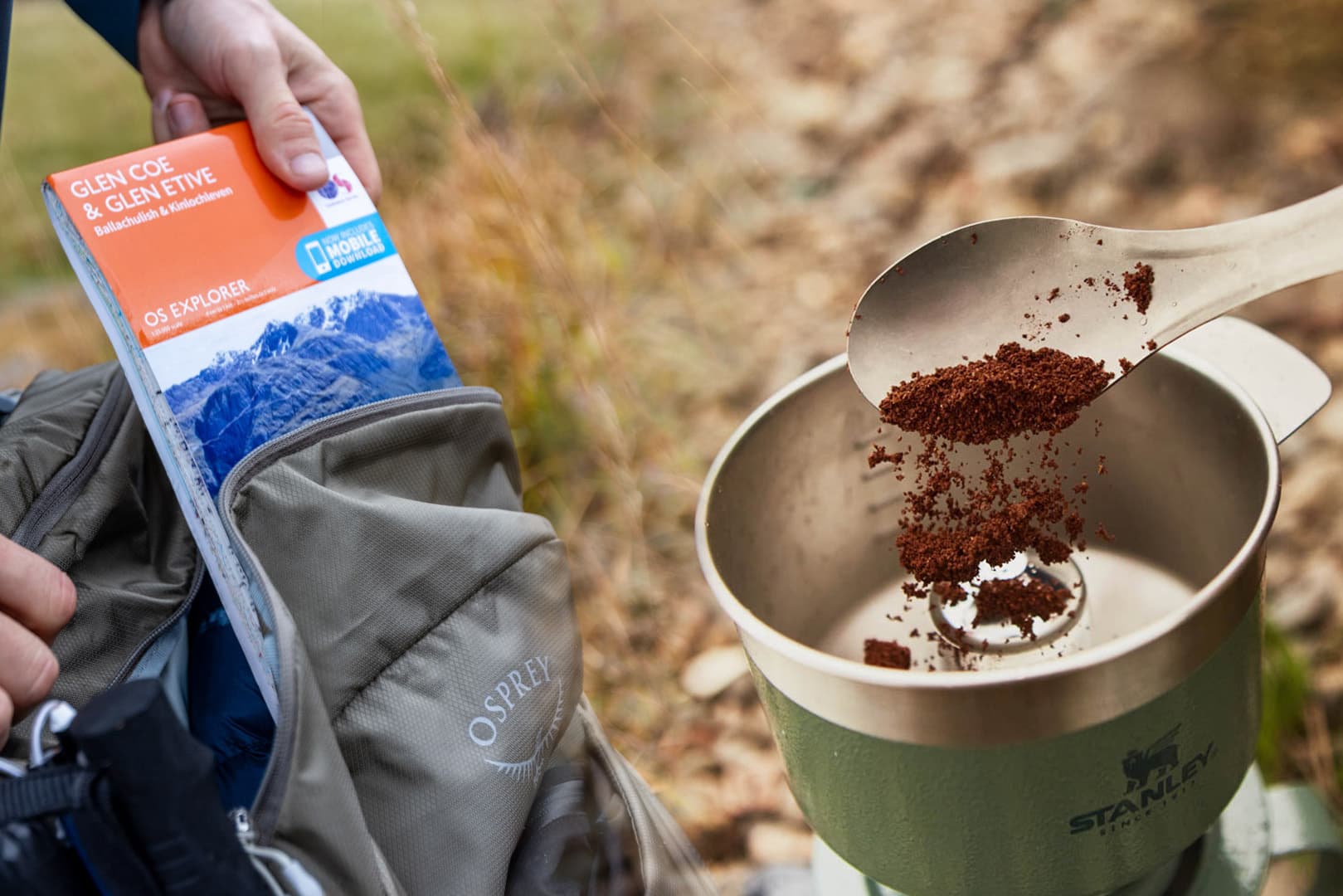
The most useful gifts in this tier tend to be the ones that get used before a hike, during a hike, and again the next weekend. REI’s holiday guide for hikers, updated October 30, 2025, leans into that logic with trail-ready picks instead of novelty items, including the AeroPress Go Travel Coffee Press. At $49.95 and 11.5 ounces, it is a rare backpacking gift that feels like a treat while still respecting pack space.
That same logic applies to socks, especially a proven pair like Darn Tough Hiker Micro Crew Cushion Socks, which show up in REI Co-op’s current gifts-for-hikers assortment. Socks are the simplest answer to blister prevention because they address the problem most hikers actually feel mile after mile: friction, heat, and pressure points. A good pair is not flashy, but it is the sort of gift that gets worn into the ground, which is exactly the point.
This is also the tier for small trail fixes and visibility helpers. Patches, compact protective kits, and headlamps all fit the same philosophy: solve an annoyance before it becomes an obstacle. For walkers who start before dawn or finish after dark, visibility is not an accessory. It is part of feeling safe enough to go back out the next day.
Mid-tier gifts: comfort that changes the day
Once you move beyond the smallest staples, the best gifts are the ones that change how a hike feels. REI’s assortment includes trekking poles, rain jackets, hiking pants, headlamps, and packs, which tells you where practical spending tends to go when people are ready to upgrade. These are not abstract upgrades. They are the pieces that soften long descents, keep weather off the body, and make a shoulder season outing more comfortable.
Trekking poles are especially good gifts for hikers who want to reduce strain on knees and improve balance on uneven ground. Rain jackets and hiking pants matter because a wet or cold hiker is a distracted hiker, and that is when a pleasant outing turns tense. For anyone who walks locally as much as they backpack, this is the tier where a gift begins to feel less like equipment and more like a daily companion.
REI’s current assortment also shows how this middle zone works across categories. A thoughtful gift here does not have to be the most expensive thing on the shelf. It just has to be the item that gets chosen every time, because it makes the outing easier than improvising.
Higher-value gifts for the hiker who already has basics
At the higher end, the most successful gifts are the ones that reduce effort. Packs matter because they shape how much a hiker can carry, how comfortably weight rides, and how long a person can stay out. That is especially true for advanced backpackers, who pay close attention to every ounce. Backpacker’s coverage makes the distinction clear: the more experienced the hiker, the more the gift has to respect how they move.
Weather protection belongs here too, particularly for cold-weather hikers. American Hiking Society emphasizes layers and protective outerwear for rain, snow, and wind, and that advice is less about fashion than about staying active through a season that can make trails feel harder than they are. A good shell or insulating layer does not need to be dramatic. It needs to be reliable.
For walkers and casual hikers, this tier can also include pieces that bridge trail and town, especially clothing that works well in both settings. The advantage is not status. It is versatility. The best higher-tier gift is the one that gets worn on a Sunday walk, a weekday errand, and a wet trail day without feeling specialized.
Why these gifts matter beyond the package
Hiking is not only growing, it is becoming more representative of how Americans spend time outside. Outdoor Industry Association says participation growth was led by Black Americans, up 12.8 percent, and Hispanic Americans, up 11.8 percent, while seniors rose 7.4 percent and youth 5.6 percent. That breadth matters because it shows outdoor recreation is widening, not narrowing.
The stewardship side of the sport matters too. In 2025, American Hiking Society reported that 115 students from 10 colleges and universities took part in an Alternative Break, contributing 4,332 volunteer hours worth $150,170 in labor value to parks and a National Wildlife Refuge. That kind of participation explains why hiking gifts feel especially resonant when they are functional. They support a culture built on time outside, shared trails, and the practical gear that keeps people returning.
The best holiday gifts for hikers, walkers, and backpackers are not the loudest ones. They are the pieces that solve a blister, keep a head visible, lighten a load, or block the weather, and the most successful gifts are still the ones under $50 that become part of the next outing before the wrapping paper is even gone.
Know something we missed? Have a correction or additional information?
Submit a Tip