Roseville Pottery resurges as a collectible housewarming gift
Roseville Pottery gives a housewarming gift real provenance: small pieces often run $100 to $300, yet the story can feel far richer than a generic new vase.
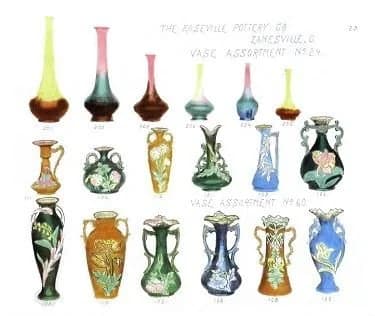
Moving into a new home is full of practical noise, from moving boxes to mismatched essentials, so the smartest gift is one that feels beautiful on day one and still earns its place after the dust settles. Roseville Pottery fits that brief unusually well: it is decorative enough to read as a design object, but storied enough to feel personal rather than interchangeable. For someone who values collected interiors, a small Roseville piece can be the rare housewarming gift that lands as both useful and memorable.
Why Roseville feels special in a new home
Roseville Pottery was founded in 1892 in Zanesville, Ohio, and it began with practical stoneware before shifting into art pottery around 1900. That evolution matters because it gives the pieces a double life: they come from a company that understood utility, yet they often look like objects made for display. The company operated until 1954, and that finite run gives the work a collectible edge that modern homewares rarely match.
It also helps that Roseville sits in serious company. It was one of the major Ohio art potteries alongside Rookwood and Weller, which places it firmly in the center of American decorative arts rather than on the fringe of antiques collecting. The Metropolitan Museum of Art holds Roseville pieces dated around 1904 to 1908, including works designed by Frederick Hurten Rhead, which is the kind of institutional pedigree that makes a gift feel instantly more considered.
For a housewarming present, that history does something a new vase cannot. A fresh, mass-market vessel may be handsome, but it usually arrives without a backstory. A Roseville piece brings the kind of recognizable provenance that collectors notice and hosts remember.
What makes it a gift worth giving
The sweet spot is a small Roseville piece, which typically runs about $100 to $300. That is not pocket change, but it is exactly the kind of price band where a gift starts to feel intentional without becoming intimidating. You are not paying for generic brand polish; you are paying for design history, age, and a piece that has already proved it can live well in a room.
Rarer Roseville pieces can command more than $1,000, and especially desirable examples can climb much higher depending on pattern, size, and condition. That spread is useful for a gift buyer because it creates a clear lane: you do not need a trophy piece to give something impressive. In fact, a smaller, cleaner example often makes the better housewarming gift because it is easier to place on a shelf, console, or mantel in a new home.
The strongest appeal is emotional as much as visual. A housewarming gift should solve the awkwardness of arriving with something beautiful that does not feel obligatory. Roseville does that well because it is pretty, practical, and anchored in real American craft history, which makes it feel less like decor and more like an object with a point of view.
Which Roseville forms feel most giftable today
The most giftable Roseville pieces are usually compact vases and sculptural forms that can move easily from one room to another. The Met’s Roseville examples show why: a vase by Frederick Hurten Rhead, the Aztec Vase, and the Della Robbia vase with trees all read as serious decorative objects rather than filler. That is exactly the quality you want in a housewarming present, because a new homeowner can set one down immediately and it still feels finished.
Among collectors, names matter because they help a piece feel legible. A Roseville vase with a clear form and recognizable pattern gives the recipient something to place, use, and talk about, which is part of the charm. If you are choosing between a plain new vessel and a vintage Roseville vase with documented style history, the latter usually wins for someone who cares about interiors with character.
- Small vases for a mantel, bookshelf, or entry table
- Compact sculptural pieces that hold their own without needing a full arrangement
- Examples with strong pattern definition, especially if the shape is listed by name or tied to a known designer
Look for forms that feel self-contained and easy to live with:
In gift terms, the best Roseville pieces are not necessarily the biggest. They are the ones that look collected, not crowded, and that can settle naturally into a home without demanding a complete room redesign.
How to buy one safely at thrift or resale prices
Buying Roseville at thrift or resale prices is about patience and inspection. Start with condition, because a clean example in the low hundreds is usually a better gift than a damaged rarer piece that looks impressive in theory but disappoints in person. Check the rim, base, and any handles or protruding details for chips, cracks, hairline fractures, and repairs.
If you are shopping online, ask for sharp photos from several angles, including the bottom and any marks. Ask for exact measurements too, because Roseville’s value shifts with size, and a small piece that photographs dramatically may still be modest in person. The Hunker pricing range makes the market especially clear: if a seller is asking well above $300 for a small piece, you want a compelling reason, such as an unusual pattern, exceptional condition, or strong documentation.
- Prefer intact glaze and even wear over obvious restoration
- Be cautious with heavily cleaned surfaces that may have lost definition
- Compare the piece’s shape and decoration to known Roseville forms, especially the named vases tied to the company’s design history
- If the price is approaching the four-figure range, make sure the piece is truly exceptional, not just old
A few practical buying rules make the hunt safer:
That last point matters because Roseville’s market is broad. Common small examples often trade in the low hundreds, but the most desirable pieces can rise above $1,000, and the difference usually comes down to pattern, rarity, size, and condition. In other words, you are not just buying age. You are buying how well the piece survived and how well it represents the company’s best work.
Why it beats a generic new vase
A new vase can be useful, but it often disappears into a room. Roseville tends to do the opposite. It gives the recipient a functional object with a named past, a specific place of origin in Zanesville, Ohio, and a lineage tied to one of the important American art pottery traditions of the early 20th century.
That is why it makes such a strong housewarming gift for a design-minded host. It is tasteful without being predictable, collectible without being fussy, and practical without feeling plain. For someone setting up a home they want to inhabit slowly and beautifully, Roseville offers a gift that already feels lived-in, and that is exactly why it stands out.
This article was produced by Prism’s automated news system from verified source data, official records, and press releases, then run through automated quality and moderation checks before publishing. The system is built and supervised by the people who set the standards it runs under. Read our full AI policy.
Did this article answer your question?