How to choose luxury wine gifts for any occasion
Luxury wine gifts work best when the bottle fits the social script: Dom Pérignon for hosts, Château Margaux for collectors, and Coravin when the wine should keep.
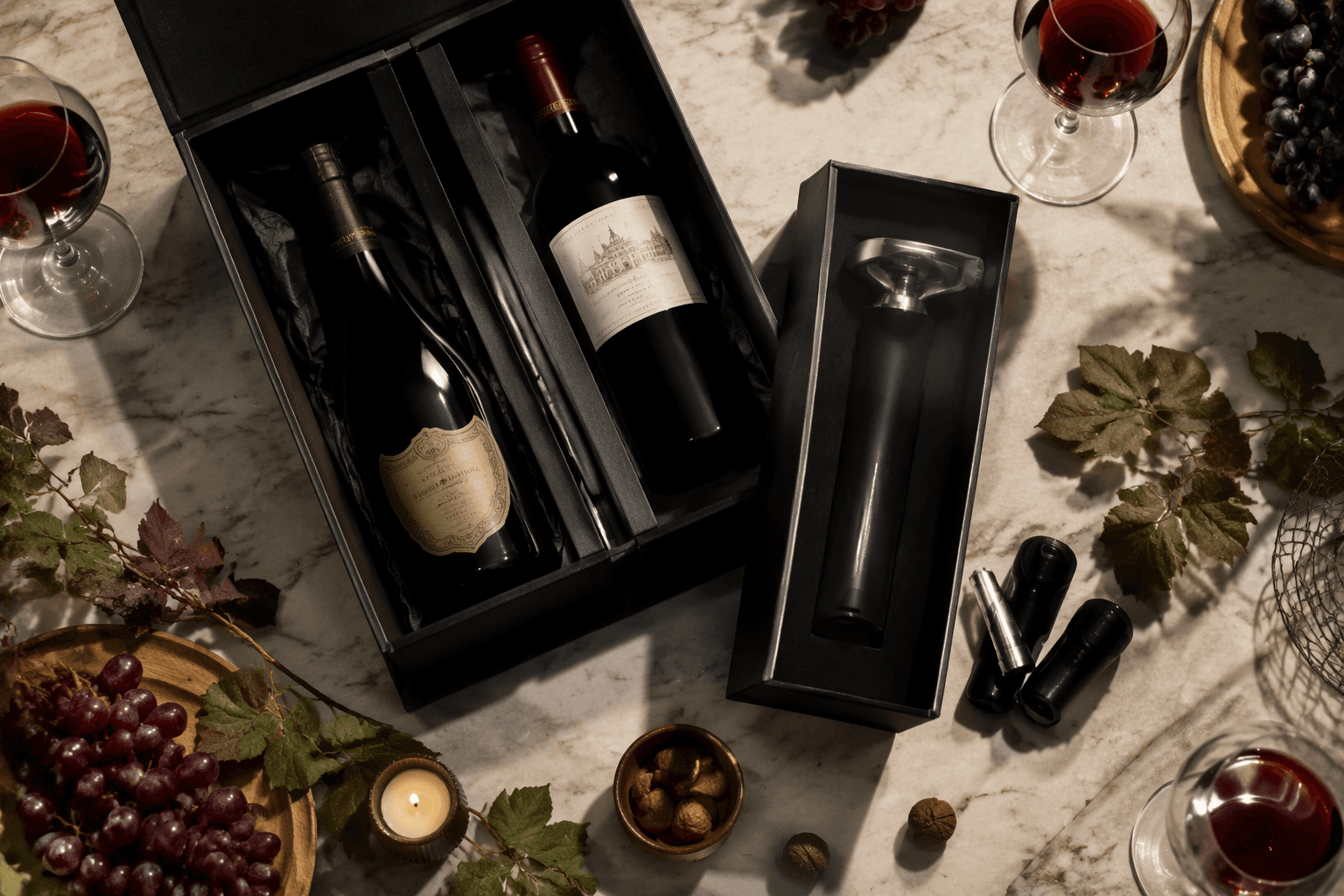
A 750 ml bottle of Dom Pérignon is selling for $354.99 at Coborns, but the best luxury wine gift says “I know your taste” instead of “I know the market price.” The hard part is choosing the right level of formality for the person, the occasion, and the room.
The social code behind the bottle
Wine sits in a very useful pocket of luxury: personal without being intimate, celebratory without being loud. The definition of luxury is expanding and changing. In wine, that expansion shows up in the difference between a prestige label that feels thoughtful and one that feels transactional.
The safest prestige signals are names with cultural weight and a clear drinking identity. Dom Pérignon works because it is vintage only, which gives it the right kind of discipline for gifting. Wine-Searcher lists an average ex-tax price around $300. That is the zone where a gift reads polished, not showy.
What to send to a host
For a dinner host, I want a bottle that can be opened without a seminar. Prestige-house Champagne, a classically structured Bordeaux, a high-end Burgundy, or a well-regarded Napa Cabernet all do that job because they signal taste without asking the recipient to decode them. If the bottle is going straight onto the table, you want recognition before you want rarity.
Dom Pérignon is one of the cleanest host gifts for exactly that reason. It has enough name power to feel generous, but it does not force the host into a collector’s conversation. If you want red instead, Château Margaux 2019 is the sort of bottle that makes a statement immediately, with Wine-Searcher listing an average ex-tax price of about $871 for 750 ml. That is a serious gesture, so I would reserve it for a dinner where the rest of the table understands why the bottle matters.
There is also a more relaxed Bordeaux move if you want the same family of prestige without the same level of intensity. Margaux du Chateau comes in around $129 ex-tax for 750 ml, which makes it the better choice when you want the gift to feel elegant and drink-now rather than ceremonious. That is the sweet spot for hosts who appreciate a label but do not need a museum piece.
How to handle client gifts without making them feel calculated
Client wine gifts live or die on tone. The safest move is still a polished bottle, but the relationship changes the read, so the presentation matters more. A proper bag, box, or wooden case shifts the gift from casual to luxury, while a bottle dumped into a generic sack can make even a good choice feel thin.
Wine gifts are more than bottles. Bottles, gift baskets, decanters, and stemware all belong in the category. A client gift can absolutely be a bottle, but when it becomes a basket, it works best only if the contents are edited with restraint instead of stuffed with filler.
For a corporate recipient, I would stay away from obscure cult bottles unless you know the person is already deep in wine. A prestige Champagne or classic Bordeaux keeps the message clean. The goal is recognition, not insider status.
When the gift is for a collector
Collectors are where you can get more specific, but only if you actually know the recipient’s level. A limited-production cuvée, an older vintage, or a bottle from a producer with cult status can be a very good gift because it feels considered instead of random. The audience is not static, and younger drinkers are reshaping what serious collecting looks like.
This is also where you need to think about drinking window. A grand cru or first-growth label can be dazzling, but if the recipient has no cellar space or no patience for a long horizon, the gift becomes a project. In that case, I would choose a bottle that can be enjoyed sooner rather than something that demands a spreadsheet and a humidified room.
If you want the collector to actually use the gift, Coravin Model One at $124.99 is a smart companion. It is the rare accessory that makes sense because it solves a real problem: how to pour from a valuable bottle without treating the whole bottle as a one-night event. That is a much better fit for a collector than a novelty add-on that will sit in a drawer.
Accessories that help instead of cluttering
Wine gifting does not have to stop at the bottle, but accessories should support the wine rather than compete with it. Decanters and glassware are established companion gifts, not afterthoughts. A crystal decanter, a serious set of stemware, or a preservation tool can make the wine easier to enjoy and therefore make the gift feel more complete.
The exception is the accessory that looks luxurious on paper but reads cheap in the hand. A Laguiole-style corkscrew can be elegant, but the wrong version drifts into souvenir territory fast. I would not pair a $30.40 engraved Etsy Laguiole opener with a $300-plus bottle and call the whole gesture refined. If you want the opener to carry weight, it needs to feel substantial enough to belong beside the wine, not beneath it.
A bottle, a proper case, and one well-chosen tool is usually stronger than a pile of extras.
The rule that keeps the gift from feeling transactional
The best bottle is the one that matches the recipient’s knowledge and the moment’s tone. Prestige labels impress when they look like a natural extension of the occasion, not a performance of spending. Accessories work when they make the wine easier to enjoy, and they cheapen the gesture the second they start competing for attention.
This article was produced by Prism’s automated news system from verified source data, official records, and press releases, then run through automated quality and moderation checks before publishing. The system is built and supervised by the people who set the standards it runs under. Read our full AI policy.
Did this article answer your question?