W spotlights high jewelry as everyday luxury in spring 2026
Spring 2026’s most persuasive luxury gift is high jewelry that can be worn in daylight, with W framing 11 exceptional pieces as everyday statements.
High jewelry, made for daylight
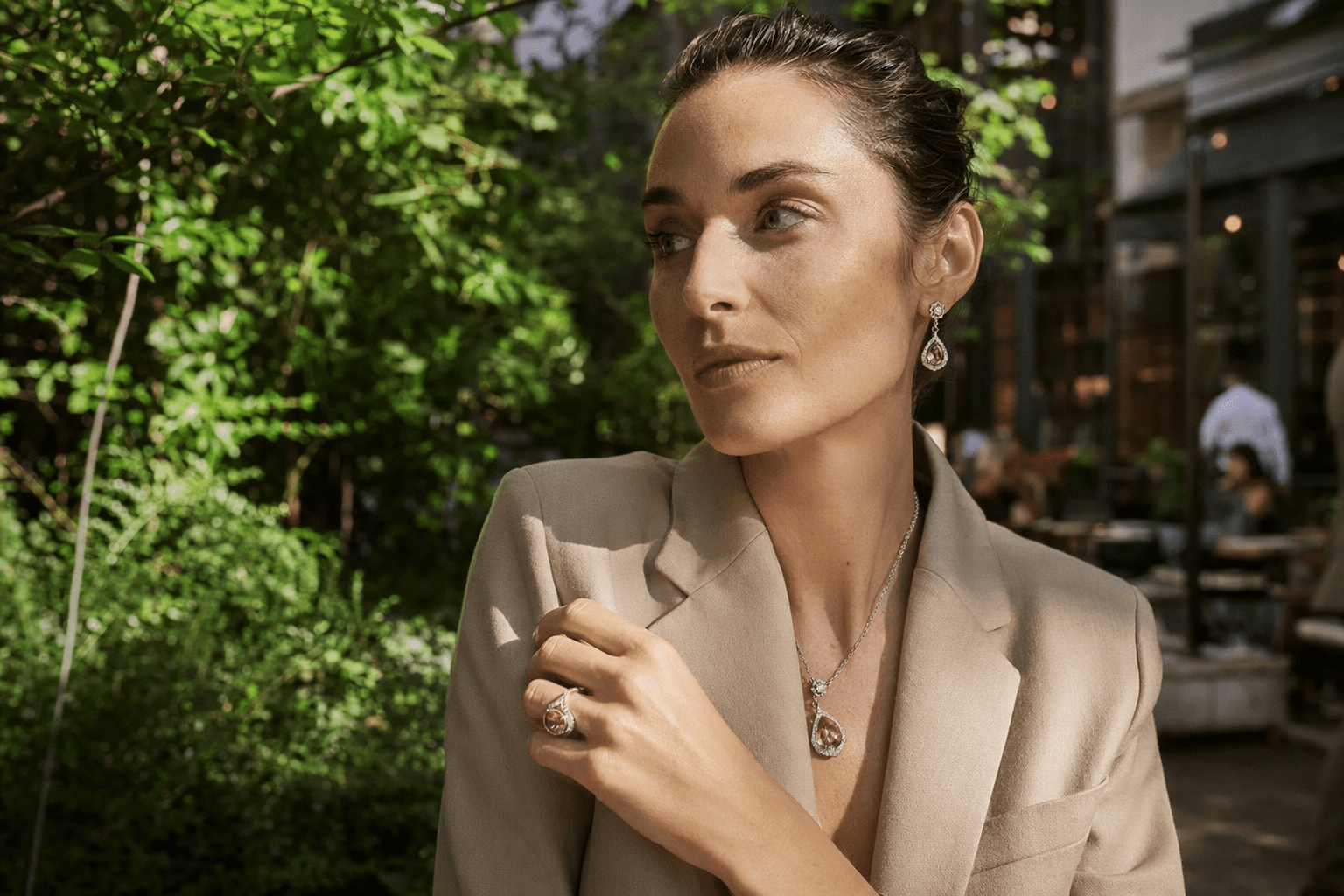
W’s “11 Pieces of High Jewelry for Low-Key Days” takes one of luxury’s most rarefied categories and makes it feel surprisingly usable. Photographed by Louis Dewynter, styled by Jade Vallario, and set by Marine Armandin at Lambert-Lambert, the feature presents 11 pieces as wearable art in ordinary tableaux, which is exactly why it lands now. The message is not that high jewelry should stay locked away for gala season. It is that the right jewel can work like the most elevated kind of daily signature, especially when it comes from a house whose name already carries instant recognition.
That framing matters because spring 2026 has been unusually jewelry-forward. Runway coverage and accessories reporting have both treated precious jewels as a central part of fashion’s conversation again, not a sideline. In that climate, a high-jewelry story feels less like fantasy and more like an argument for how milestone gifts should function: visible, personal, and substantial enough to mark a moment without needing a formal occasion to justify them.
Why the big houses still matter
The power of the W lineup is its breadth. Dior, Chanel, Boucheron, Tiffany & Co., Bulgari, Cartier, Chopard, Van Cleef & Arpels, De Beers London, and Graff all appear, which turns the feature into a broad survey of what prestige jewelry looks like in 2026. These are not anonymous objects. They are brand signatures with built-in histories, and that is what makes them so effective as gifts. When a piece comes from a house people recognize immediately, it carries both emotional value and social shorthand.
That recognition is part of the appeal. A jewel from one of these maisons can do what many luxury gifts cannot: it reads as thoughtful to the person receiving it and unmistakably serious to everyone else. The result is a category that feels less like a collector’s vault and more like the final, polished layer of real life.
Dior and Chanel: heritage made current
Dior’s Spring-Summer 2026 collection is described by the house as exploring its heritage with empathy and wit, and that tone carries neatly into its haute joaillerie. Victoire de Castellane has led Dior high jewelry since 1999, building pieces that blend couture spirit, nature, and abstract art. For gifting, that makes Dior especially compelling when you want something that feels cultured rather than loud. It is the kind of jewel that rewards close looking, which is often what makes a gift feel intimate.
Chanel offers a different kind of clarity. Its high-jewelry collections are built around six emblems inherited from Gabrielle Chanel: the lion, number 5, the comet, the ribbon, the feather, and the camellia. That symbolism gives Chanel jewelry an immediate emotional code. It is recognizably Chanel from across a room, but the emblems also make it feel personal, almost talismanic, which is exactly the balance a milestone gift should strike.
Boucheron and Tiffany & Co.: story, craft, and rarity
Boucheron’s 2026 Histoire de Style collection, “Nom : Boucheron Prénom : Frédéric,” is a compact but pointed statement. The four high-jewelry creations are built around the founder’s legacy, and the house reminds viewers that Frédéric Boucheron was the first jeweler to open a boutique on Place Vendôme. That kind of origin story matters in luxury gifting because it gives the object more than sparkle. It gives it pedigree, place, and a sense of continuity that feels especially strong when you are buying for an anniversary or another marker of longevity.
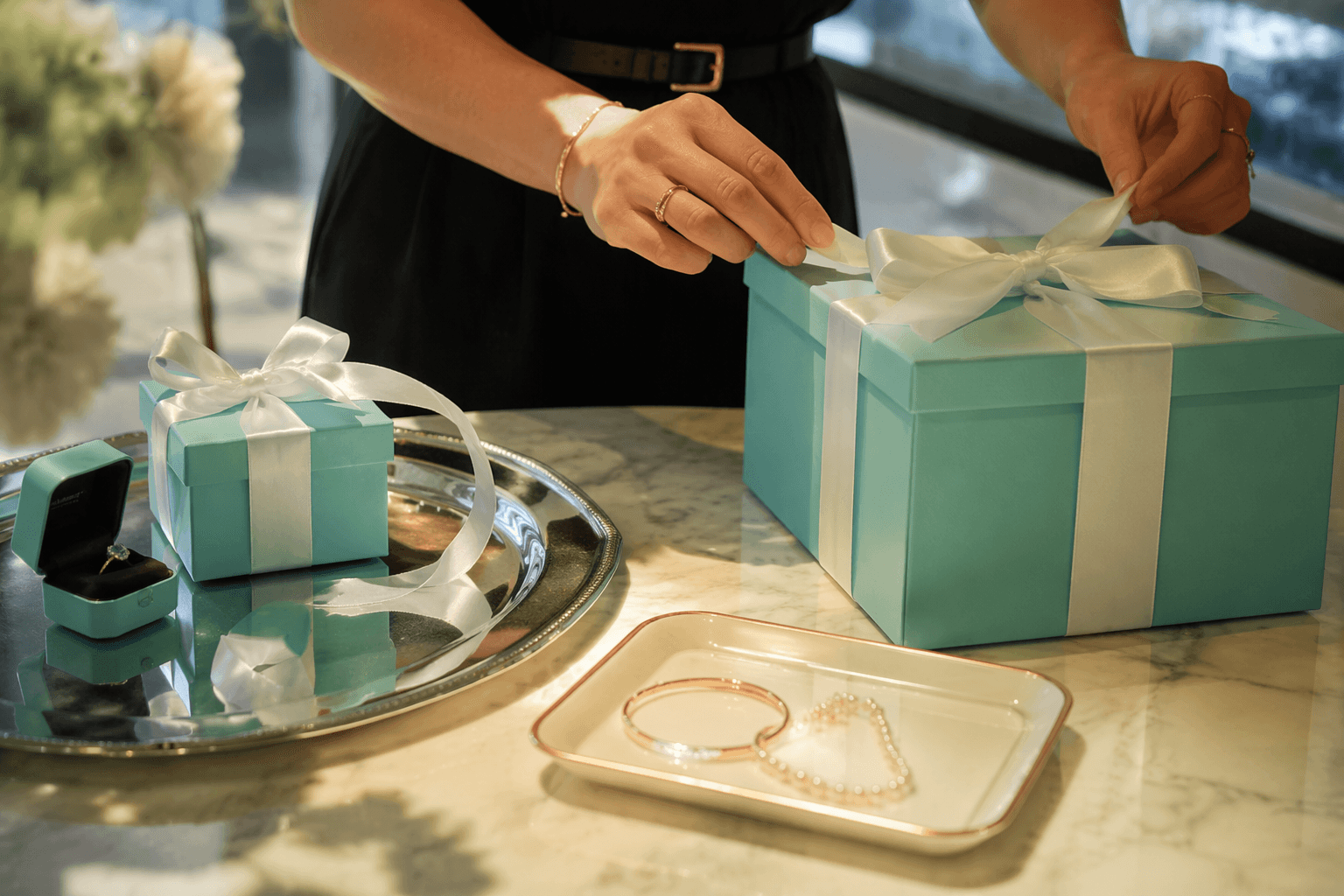
Tiffany & Co. takes a more botanical path with Blue Book 2026: Hidden Garden, designed by Nathalie Verdeille with the Tiffany Design Studio. The collection is framed around the world’s finest diamonds and extraordinary colored gemstones, while reinterpreting Jean Schlumberger’s flora-and-fauna motifs. That combination of recognizable Tiffany authority and surreal, nature-based design makes it one of the more giftable high-jewelry narratives in the field. It is rare enough to feel special, but its imagery is soft and legible enough to read as deeply wearable.
Chopard, De Beers London, and Graff: occasion, origin, and stone power
Chopard brings red-carpet authority to the conversation. The house says its relationship with the Cannes Film Festival dates to 1998, when it became the festival’s official partner, and its Red Carpet collection is unveiled each year in Cannes. That history gives Chopard a gift-worthy kind of glamour: the kind that has walked the stairs, flashed under lights, and still manages to feel tailored rather than extravagant for extravagance’s sake.
De Beers London adds a different register. The brand says it was founded in London and is inspired by the nature of Africa, and it is opening a new Paris flagship on rue de la Paix. That Paris address places it firmly inside high jewelry’s historic center, while the Africa reference keeps the story tied to stones, terrain, and origin. For a buyer, that combination signals a house that understands both symbolism and seriousness.
Graff, meanwhile, leans all the way into rarity. The brand says a high-jewelry suite unveiled during Haute Couture week in Paris featured a 31-carat unheated sapphire and more than 200 carats of Graff diamonds. That is the sort of detail that stops the conversation, because it tells you exactly where the value lives: not just in design, but in the stones themselves. In a category where the strongest pieces are often the least shouted-about, Graff’s numbers do the talking.
The price reality behind the fantasy
Cartier gives the clearest read on the category’s ultra-luxury range. Its current high-jewelry offerings include pieces priced from $56,500 earrings to $345,000 necklaces. That span is useful because it shows that “everyday luxury” in high jewelry does not mean modest; it means wearable enough to move through life while still operating at the highest end of the market. A Cartier jewel can be a daily signature and a major purchase at the same time, which is exactly why it remains one of the category’s most potent gift names.
Taken together, W’s spring 2026 feature argues that high jewelry is no longer only about special occasions. It is about how extraordinary objects can enter ordinary life without losing their charge. In a season when the runways are jewelry-heavy and the maisons are leaning hard on archive, symbolism, and rare stones, the best high jewelry gifts feel less like trophies than like beautifully calibrated declarations.
This article was produced by Prism’s automated news system from verified source data, official records, and press releases, then run through automated quality and moderation checks before publishing. The system is built and supervised by the people who set the standards it runs under. Read our full AI policy.
Did this article answer your question?