A Behavioral Scientist’s Guide to Gift-Giving
Givers optimize for wow; recipients remember useful. A behavioral science checklist that fixes the most expensive mistake in Mother's Day gifting, by budget and mom type.

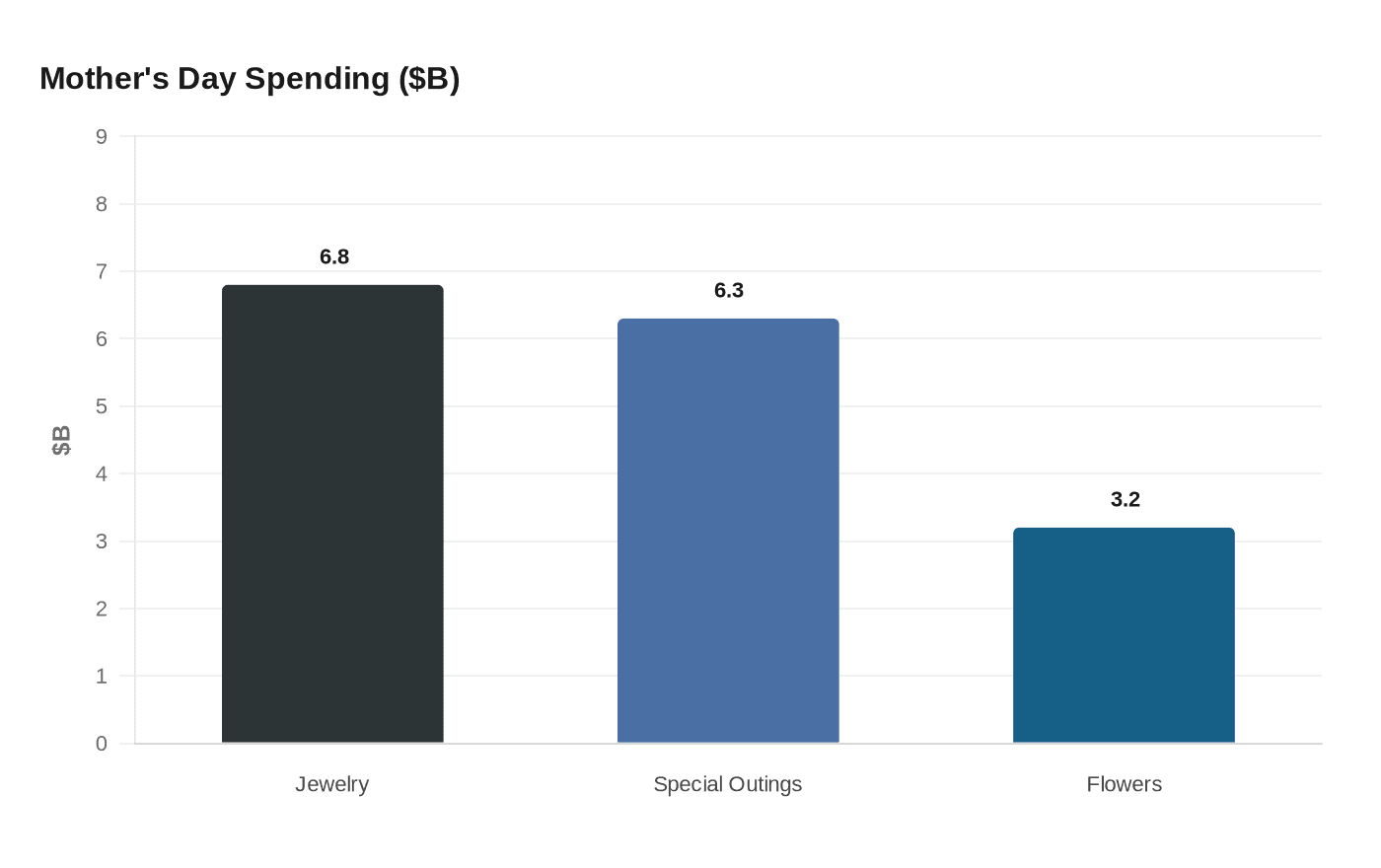
Americans will spend $34.1 billion on Mother's Day this year, a figure that tells you everything about how much people care and almost nothing about how well they're doing it. The National Retail Federation projects $6.8 billion going toward jewelry, $6.3 billion toward special outings, and $3.2 billion toward flowers. Much of that money, behavioral scientists would argue, is spent on the wrong things for the wrong reasons — not from lack of love, but from a predictable cognitive trap that researchers at Yale have spent years mapping.
Here is the counterintuitive insight that should change how you shop this Mother's Day: givers optimize for the moment of unwrapping; recipients remember what they actually use. The Yale Center for Customer Insights synthesized a body of research into one clarifying finding: gift givers tend to favor aspirational, visually impressive goods, while receivers consistently report greater satisfaction from practical, usable items. The giver who chooses a striking but impractical object is, in effect, optimizing for their own emotional experience of giving, not for the recipient's experience of receiving.
Ernest Baskin and Nathan Novemsky of Yale, along with co-authors in a 2014 Journal of Consumer Research study, put it directly: "Gift givers imagine the receiver using the gift when they are choosing it." The problem is that imagination is abstract and idealized, while daily life is concrete and specific. The fanciest restaurant in town sounds magnificent in theory; the one that's easy to book and close to home is what actually gets used and remembered fondly.
The 5-Minute Checklist
Before you finalize anything, run your shortlisted gift through these five questions, each grounded in the YCCI framework:
1. Will she actually use it? This is the giver-receiver gap made actionable.
You may love the idea of a velvet-lined jewelry box containing an aspirational piece she'd never buy herself. She may love the idea of a spa credit she'll book within a week. Ask yourself honestly which one enters her daily life and which one sits in a drawer.
2. Is it psychologically close or distant? YCCI researchers found that the giver-receiver mismatch nearly disappeared when givers were asked which gift they would personally prefer rather than which one the recipient would prefer.
That reframe is your reset button. Picture her on a random Tuesday in June, not on the morning she opens the gift. What does she reach for?
3. Can she access it easily? Prioritizing ease of use and availability is rule three in the YCCI framework, and it is the one most routinely ignored in Mother's Day planning.
A restaurant reservation that requires three weeks of lead time and a 45-minute drive fails this test even if the food is transcendent. A beautifully packaged subscription to a service she uses every day passes it, even at a fraction of the price.
4. Does it create a shared memory? Experiential gifts carry a specific advantage: a Frontiers in Psychology study found that the consumption of experiential gifts is perceived as more autonomy-supportive and generates greater gratitude, especially when the giver is present.
The dinner out, the cooking class, the weekend away — these work when you are there to share them. A spa visit she takes alone works for a different reason: it gives her genuine solitude, which for many mothers is the actual luxury.
5. Are you guessing or knowing? YCCI's fifth principle is simple: use registries or guided choice when uncertain.
There is no award for improvising. If she has mentioned something specific, written it down, or sent a link, that is not an unromantic shortcut. Research shows that recipients prefer receiving what they asked for, and that givers who veer from explicit requests tend to produce gifts the recipient appreciates less, not more.
By Budget and Mom Type
The checklist works across every price point. The mistake is not spending too little; it is spending without running the filter.
The New Mom (Under $75). She is sleep-deprived, time-poor, and surrounded by baby gear. The giver-receiver gap is at its widest here: the giver wants to celebrate the milestone with something beautiful; the recipient wants something that makes Tuesday easier. A high-quality nursing balm, a meal delivery credit, or a two-hour cleaning service scores far higher on the usability test than a keepsake frame she will not get around to filling for six months. If you want to mark the milestone, a personalized necklace with the baby's birthstone threads sentiment through practicality.
The Grandmother (No ceiling required, but $100-$300 is a strong range). She is typically the hardest to shop for because she claims she wants nothing and means it, at least materially. The experiential gift principle applies most strongly here. A shared outing — a matinee, an afternoon tea, a cooking class with her grandchildren — produces a memory that compounds over time. If a material gift feels right, lean into personalization: a photo book of the past year, a piece of engraved jewelry with grandchildren's initials. These pass the usability test because they are emotionally used every time she looks at them.
The Long-Distance Mom ($50-$200, delivered). Physical distance makes the psychological distance problem worse. You cannot be present, so the gift must carry presence for you. A recurring flower subscription from a service like UrbanStems or Bouqs, scheduled to arrive monthly, distributes the gesture across time rather than concentrating it in a single morning. A restaurant gift card for a place she has mentioned, or a streaming subscription for a show you can watch simultaneously and text about, turns a material gift into a shared experience despite the miles.
The Hard-to-Shop-For Mom (Any budget). She has everything, buys what she needs, and returns what she does not like. Stop guessing. YCCI's guided-choice principle exists precisely for her. Ask her to text you three options in a price range. Ask her sisters or her close friends what she has been wanting. Frame it as a collaboration, not a survey. Research consistently shows that the recipient's happiness is higher when the gift matches her expressed preference, regardless of how "thoughtful" the unsolicited alternative felt to the giver.
Avoid These Common Mother's Day Traps
- The impressive-on-paper gift. Jewelry purchased because of its price point rather than her style, a spa day at a location inconvenient to reach, a designer item she would never choose herself — these are gifts optimized for the giver's imagination of giving, not the recipient's reality of receiving.
- The group-gift diffusion problem. When multiple family members pool resources, the temptation is to spend the combined budget on something grand and impractical rather than something she would genuinely use. A grand gesture that nobody individually would have chosen is rarely the right call.
- The guilt-driven over-spend. The NRF data shows average Mother's Day spending hovering around $254 per person. Spending above that threshold does not correlate with recipient satisfaction. A $60 book by her favorite author, wrapped with care and accompanied by a handwritten note explaining exactly why you chose it, will outperform a $300 gift chosen in a hurry.
- The last-minute default. Flowers sent May 10th are a rescue flare, not a gift. The behavioral science case for planning is not sentimental; it is practical. Lead time allows you to book the accessible restaurant, order the personalized piece before the engraving cutoff, and arrange the shared experience she will actually attend.
The behavioral science of gift-giving is, at its core, a case for paying a different kind of attention. Not more expensive attention. Not more elaborate attention. The kind that asks, honestly, what will she use, what will she remember, and what will make an ordinary Tuesday in June a little better because of what arrived on Mother's Day.
This article was produced by Prism’s automated news system from verified source data, official records, and press releases, then run through automated quality and moderation checks before publishing. The system is built and supervised by the people who set the standards it runs under. Read our full AI policy.
Did this article answer your question?