Austin Makers Market Highlights Personalized Gifts and Curated Craftsmanship
Austin's April 11 Makers Market proves curated pop-ups are the sharpest way to discover personalized gifts you won't find anywhere else.
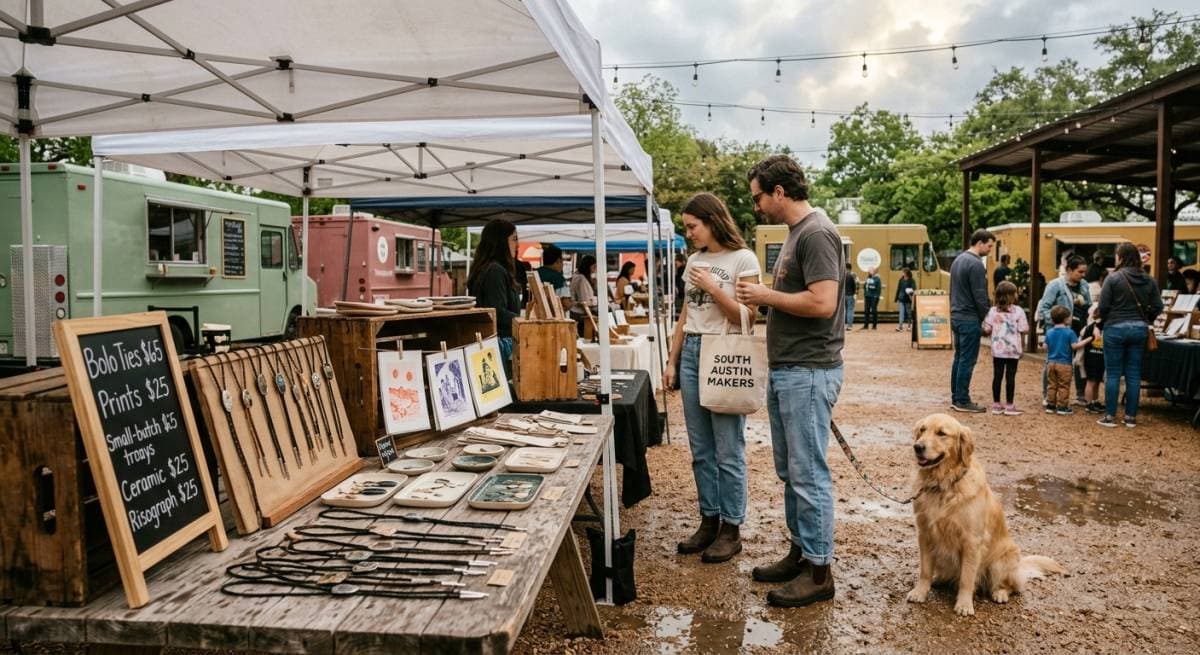
Walk into a well-run makers market and something clicks almost immediately. The jewelry isn't in a glass case behind a bored sales associate; it's inches from the hands that shaped it. The ceramics still carry the faint story of the kiln. The artist printing your name onto a linen tea towel is doing it right in front of you. That tactile immediacy is exactly what Austin's April 11 Makers Market at Thicket, on the city's South First corridor, is built around, and it's why pop-ups like this have become serious discovery channels for anyone trying to give a gift that actually means something.
Why Curated Markets Beat Generic Gift Shopping
Not every market earns the word "curated," but the distinction matters enormously when you're hunting for something personal. Pop Up Gallery, the organization behind the April 11 event, has been running makers markets since 2017 and now operates across more than 14 countries. Their philosophy isn't accidental: "Pop Up Gallery isn't a random vendor free-for-all. The organization focuses on curated markets that elevate independent creators and small brands, championing craftsmanship and community-building." That editorial gatekeeping is what separates a productive afternoon of gift shopping from an overwhelming sea of identical imports.
Pop Up Gallery's own mission frames it plainly: they aim to "cultivate a thriving environment that blends business, culture, and community while championing and uplifting every location." For shoppers, that translates into a vendor floor where every booth clears a quality threshold before it earns a spot. Markets are curated specifically to ensure a balanced experience for both vendors and shoppers, which means you're unlikely to find three candle makers competing for the same corner or no ceramics at all.
What's on the Floor: The Vendor Mix
The April 11 market brings together four core product categories that happen to overlap almost perfectly with the most-wanted personalized gift types: jewelry, ceramics, art prints, and personalized home goods. Each of these categories offers something mass retail genuinely cannot.
- Jewelry: Independent jewelers at markets like this typically work in small runs, meaning a piece is rarely in stock more than a few times. Many offer on-site engraving or custom sizing. A monogrammed ring or a birthstone pendant sourced directly from its maker carries a provenance that a department store simply cannot replicate.
- Ceramics: Hand-thrown mugs, bowls, and planters are among the most reliably loved personalized gifts, especially when a maker can add a name or date with underglaze before firing. The imperfection in handmade ceramics is the point; no two pieces are identical, which makes each one inherently personalized even before any text is added.
- Art prints: Custom portraits, illustrated maps of meaningful addresses, and hand-lettered quotes printed on archival paper are a staple of maker markets for good reason. They're flat, easy to ship, and available at a wide range of price points that make them accessible as both budget-friendly and splurge gifts.
- Personalized home goods: This category has expanded significantly in the last several years. Cutting boards with laser-etched names, linen napkins with embroidered initials, and hand-stamped leather keychains all show up regularly in Austin's maker market circuit. These are the gifts that sit on a kitchen counter for a decade.
Timing and Strategy for Shoppers
Arriving early is the single highest-leverage move at any makers market, and the April 11 event is no exception. The first hour of a pop-up is when inventory is freshest, lines at busy booths are shortest, and makers are most available for the conversation that leads to a custom commission. Personalization often requires a lead time discussion, and that conversation is best had before the vendor has fielded the same question forty times.
A few practical approaches worth keeping in mind:
- Bring cash in small denominations. Many independent makers are card-capable, but cash speeds up transactions and is often appreciated.
- Walk the full market before buying. The booth you almost skipped at the end of the row sometimes has exactly what you were looking for at the first booth, but for less.
- Ask about commissions directly. Makers at curated markets frequently take on custom work they don't advertise on their signage. The conversation is low-stakes and the answer is often yes.
- Know your recipient's aesthetic before you arrive. "Personalized" means very little if the home goods are rustic farmhouse and the recipient lives in a glass-and-steel condo.
What Makes a Market Gift Actually Personal
The word "personalized" gets applied loosely in retail, often meaning little more than a name on a standard template. What makers market vendors offer is categorically different: the maker knows their material, can advise on what personalizations work technically and aesthetically, and can often produce something one-of-a-kind in real time or within a short turnaround.
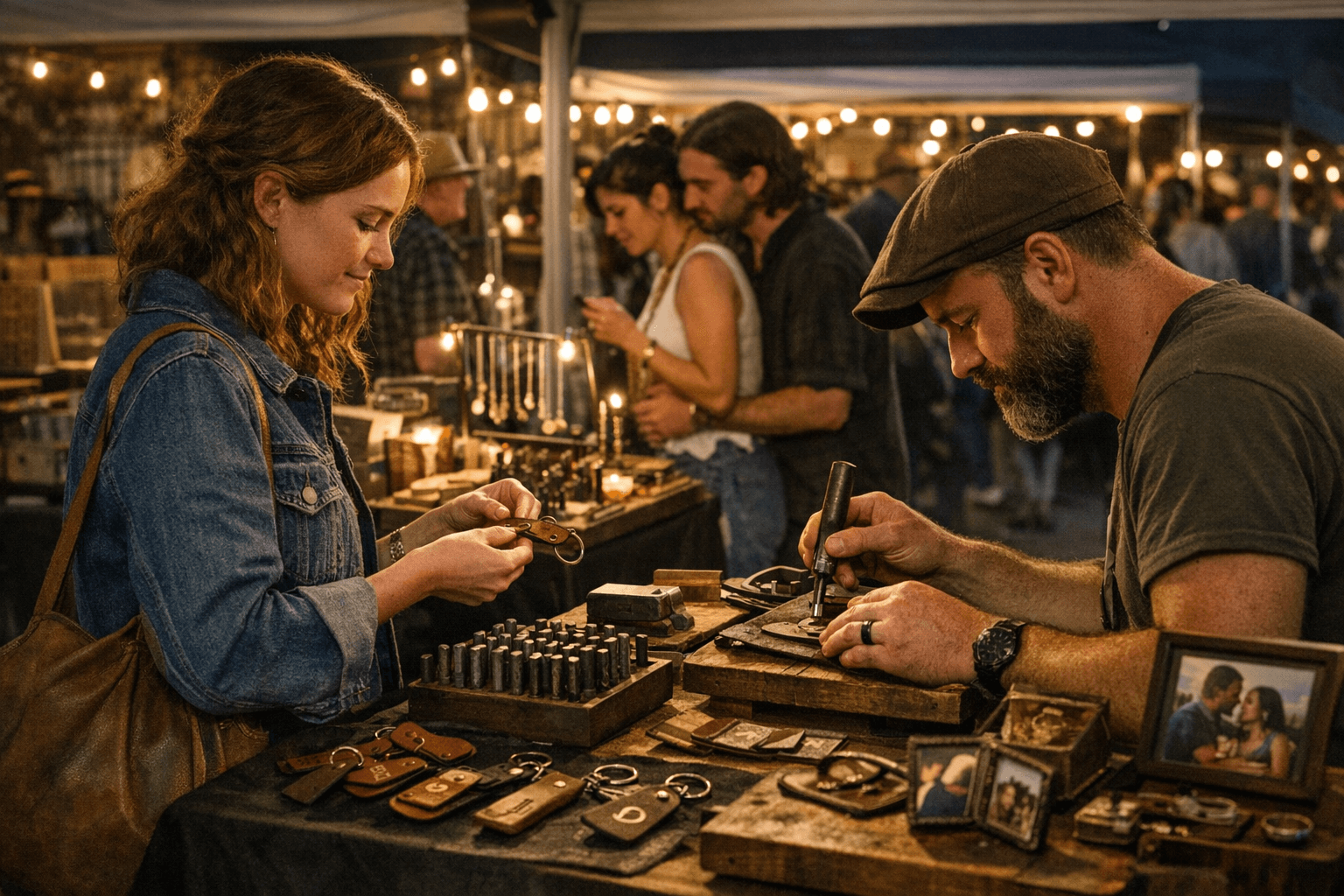
Live customization, where a vendor personalizes an item in front of you, is increasingly common at pop-up markets and is a meaningful signal of quality. A calligrapher writing directly onto a leather journal, a jeweler stamping a date into a cuff, or a printmaker adding a name to a run of cards: these aren't gimmicks. They're demonstrations that the maker has genuine command of their medium.
For Creators: Display, Assortment, and the Social Commerce Opportunity
Maker markets aren't only shopping destinations; they're marketing events for the vendors themselves. Austin's pop-up circuit generates significant social media content organically, with shoppers photographing and tagging booths, products, and makers throughout the day. Vendors who understand this design their display accordingly.
A few principles that consistently perform well:
- Height and depth in display create visual interest that photographs better and draws foot traffic from across the aisle.
- Offering a visible "starting at" price on signage removes the hesitation that keeps casual browsers from approaching.
- Keeping a small inventory of immediately giftable, already-personalized pieces alongside custom-order options gives shoppers who didn't plan ahead something to buy today.
- A simple QR code linking to a custom-order page turns every in-person interaction into a potential online sale, long after the market ends.
Austin's Broader Maker Market Moment
The April 11 event lands in the middle of a genuinely busy spring season for Austin's indie shopping scene. The Austin Spring Makers, Artisans and Food Market runs April 10 through 12 at Pease District Park, drawing a wide mix of makers and food vendors across three days. The Spring Vibe Market at Distribution Hall earlier in the season brought together more than 110 rotating artists daily in a mostly free-to-attend format. Austin Flea, one of the city's longest-running handmade markets, operates year-round with a strict no-imports policy, hand-picking every vendor to guarantee locally made originals.
What this concentration of maker markets signals is that Austin shoppers have developed a real appetite for the alternative to algorithm-driven gifting. The gift guide recommendations you find online often cycle through the same forty products. The piece you discover at a South First pop-up on a Saturday morning, the one personalized by the person who made it, rarely appears anywhere else.
That's not a coincidence. It's the entire point.
This article was produced by Prism’s automated news system from verified source data, official records, and press releases, then run through automated quality and moderation checks before publishing. The system is built and supervised by the people who set the standards it runs under. Read our full AI policy.
Did this article answer your question?