Gen Z drives natural diamond demand with higher spending and self-gifting
Gen Z is spending about $4,080 a piece on natural diamonds, and three-quarters of U.S. demand now comes from non-bridal buys.
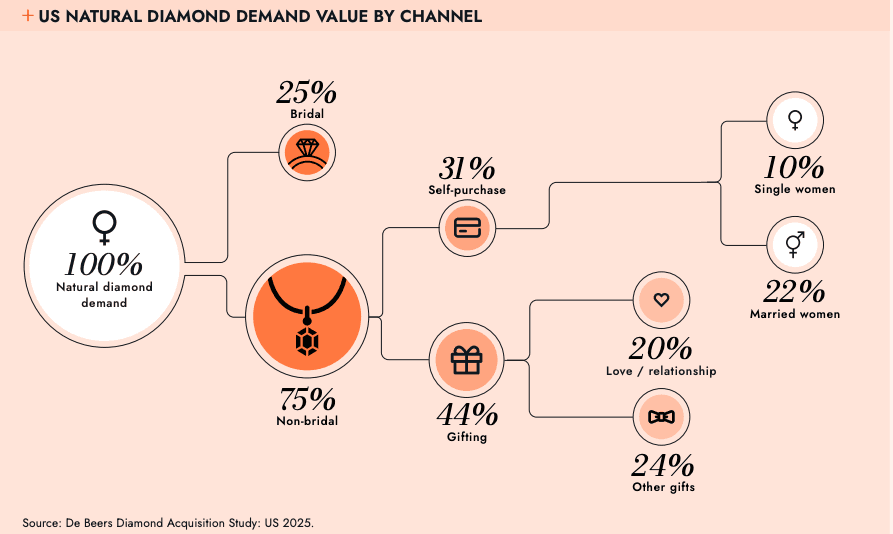
The biggest signal in De Beers’ latest U.S. diamond study is not brides. It is younger buyers, self-purchases and a willingness to spend more for a piece that feels personal. Natural diamonds remain the most desired luxury jewelry item, and that matters because the market is moving toward the kind of identity-driven jewelry that can justify an everyday buy, not just an engagement-ring splurge.
The June 11 study surveyed 18,500 women ages 18 to 74 and found average natural diamond purchase prices in the U.S. rose 25% to $4,063 in 2025 from $3,242 in 2023. Average stone size climbed to 1.86 carats from 1.65 carats, a clear sign that shoppers are not only buying more often but trading up when they do. Gen Z is now the second-largest generation buying natural diamonds, accounting for 23% of U.S. demand by value while making up 18% of the population. Their average spend is about $4,080 per piece, far above the $2,250 average for Baby Boomers.
Three-quarters of overall U.S. demand now comes from non-bridal occasions, with purchases tied to new jobs, promotions, achievements, birthdays and just-because moments. Acquisition rates held steady at 9% overall, but households earning $150,000 or more increased purchases to 15% from 12% in 2023. That is the sweet spot for personalized jewelry: a diamond pendant with a meaningful date, a signet ring with initials or a bracelet chosen as a self-reward feels less arbitrary when the purchase itself is already about marking a personal milestone.
The retail data back that up. Point-of-sale figures from 950 U.S. independent jewelers showed diamond sales growth of 4% in the fourth quarter of 2025 and 9% in the first quarter of 2026. De Beers researcher Diana Mitkov said consumers still want natural diamonds, but the how and why are changing, and the company places today’s demand shift in a longer history that moved from wartime devotion gifts in the 1940s to female self-purchase in the 1970s. For jewelry buyers, the takeaway is simple: personalization is no longer a decorative extra. It is the feature that turns a diamond into a reasoned purchase.
This article was produced by Prism’s automated news system from verified source data, official records, and press releases, then run through automated quality and moderation checks before publishing. The system is built and supervised by the people who set the standards it runs under. Read our full AI policy.
Know something we missed? Have a correction or additional information?
Submit a Tip