Hotels Swap Generic Amenities for Artisanal, Personalized Welcome Gift Experiences
Hotels are ditching the generic fruit basket: a new wave of arrival gifts treats check-in like a personalized unboxing, and it's measurably moving loyalty scores.
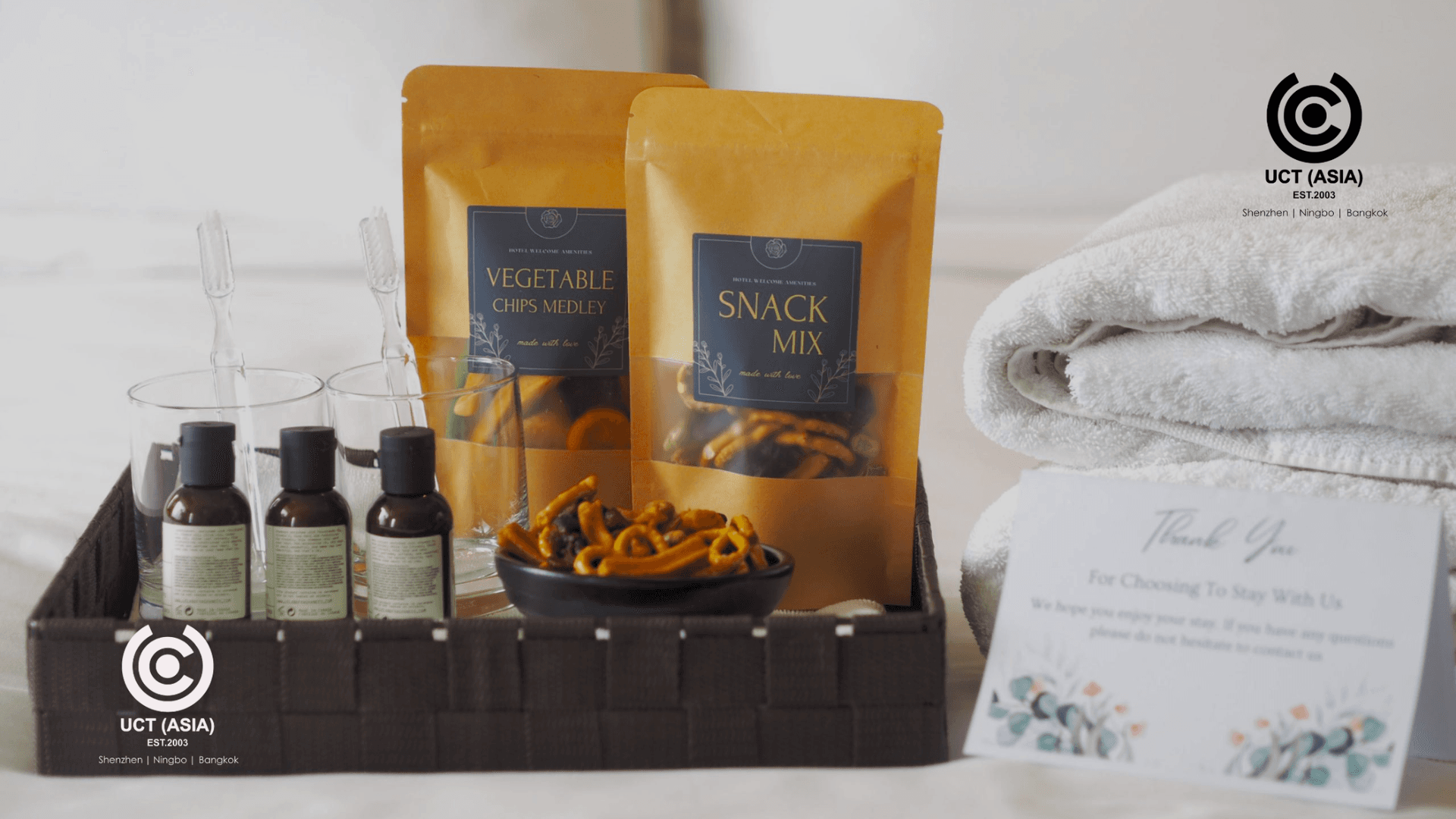
The hotel industry's latest operational pivot has nothing to do with thread counts or app-based check-in. It starts the moment a guest opens their door. Across properties from boutique city hotels to destination resorts, procurement teams are quietly replacing the standard bowl of wrapped mints and a branded pen with something that looks far more like a curated gift box: monogrammed stationery, tote bags stuffed with snacks from nearby makers, and custom welcome kits built around the specific reason someone booked in the first place.
This is not a soft upgrade. It is a deliberate strategic move, and trade platforms including PhocusWire and HRC International, along with travel media outlet AFAR, have all flagged it as one of hospitality's most consequential current shifts. The welcome gift, long treated as an afterthought line item, is being repositioned as the first moment of differentiation in a stay.
The Unboxing Has Checked In
What makes the new format distinct is the framing. Hotels that are executing this well are treating the arrival experience the way a direct-to-consumer brand treats its packaging: every element of the welcome kit is meant to feel chosen specifically for the recipient. A local honey jar is not just a honey jar; it comes tagged with the name of the farm thirty minutes away. A tote bag is not just branded; it is monogrammed with the guest's initials and filled with snacks sourced from a vendor the hotel has a named partnership with.
The product categories showing up most frequently in the new welcome format include:
- Monogrammed stationery (notebooks, note cards, custom folios)
- Branded tote bags pre-loaded with locally made food items
- Custom welcome kits assembled around guest occasion (anniversary, business travel, family trip)
- On-property hands-on craft workshops offered as a gift experience rather than an add-on activity
That last category is the most operationally ambitious. A small number of properties have begun positioning hands-on experiences, ceramics classes, tea blending sessions, letterpress printing, as the welcome gift itself. The physical object guests take home is made by them, on-site, during arrival day.
How Local Maker Partnerships Actually Work
The sourcing model behind these programs is generating a parallel B2B story. Hotels establishing local maker partnerships are typically locking in two to five vendors per quarter, selecting producers within the region who can meet minimum order requirements with short lead times. The operational priority is not exclusivity for its own sake; it is the ability to fulfill on-demand as bookings come in, without a three-week production window.
For small food producers, chocolatiers, candle makers, and paper goods studios, a hotel partnership functions as a low-friction wholesale account with built-in marketing exposure. Guests who receive a locally made item often search for or purchase from that maker directly after their stay, creating downstream value the hotel did not need to build itself.
The branded merchandise angle is just as active. Hotels are working with gifting suppliers capable of running short-run monogrammed or logo-printed items at reasonable per-unit costs, so a tote or stationery set can carry both the hotel's identity and a personal touch without requiring luxury-tier minimums.
Personalization at the Occasion and Dietary Level
What is actually changing operationally is not just the product mix. It is the intake process. Hotels building out this model are adding questions to the pre-arrival communication sequence, asking about dietary restrictions, the purpose of the visit, whether the stay marks an occasion. That data, once collected only for restaurant reservations and spa bookings, is now feeding into welcome gift assembly.
A guest celebrating a milestone anniversary receives a different kit than a solo business traveler on a one-night stopover. A guest who flagged a nut allergy does not receive a snack basket assembled without that information. The personalization is, in many cases, not high-tech; it is a well-designed intake form and a staff member with fifteen minutes and a checklist. The cost per customized kit typically lands well below $30 at the mid-tier level and between $50 and $100 at upscale properties, which is competitive with standard minibar restocking costs.
Why This Moves Loyalty Numbers
PhocusWire and HRC International's trade commentary has specifically tied personalized arrival gifts to two measurable outcomes: higher guest satisfaction scores and increased likelihood of repeat booking. The mechanism is not complicated. A guest who receives something that visibly reflects information they shared before arriving experiences a recognition moment that reads differently than a standard room amenity. Recognition, not luxury, is the emotion being engineered.
The social sharing dimension is equally intentional. An arrival kit that looks good, involves local branding, and includes something the guest did not expect produces the same behavior that DTC subscription boxes have relied on for years: guests photograph it, post it, and tag the hotel. For properties that have historically had limited traction on social channels through promotional content, the welcome gift is emerging as a more reliable content generator because it is something the guest initiates, not the hotel.
What Gift Shoppers Can Borrow From This
The hotel model is effectively a proof of concept for any personal gifting occasion, and the mechanics translate directly. The products that are performing at hotels, locally sourced edibles, monogrammed paper goods, custom-assembled kits organized around a specific occasion or preference, are also the products that land best when given person to person.
The practical takeaways from the hotel execution:
- Gather one piece of specific information before assembling a gift (dietary restriction, favorite flavor profile, what they're celebrating) and let it visibly shape the contents
- Pair a branded or monogrammed item with a consumable local product; the combination reads as curated rather than generic
- Presentation matters as much as product; an assembled kit in a tote or box with a handwritten note performs like a gift worth three times its actual cost
- Price discipline is possible: the $25 to $75 range covers most of what hotels are doing at the mid-tier level, and the perceived value far exceeds the spend
The hotels getting this right are not spending more per room than they were on standard amenities. They are spending the same money with more intention and better information. That is a lesson with a much wider application than hospitality procurement.
This article was produced by Prism’s automated news system from verified source data, official records, and press releases, then run through automated quality and moderation checks before publishing. The system is built and supervised by the people who set the standards it runs under. Read our full AI policy.
Did this article answer your question?