The Structural Reset Defining Retail In 2026
Retail's top 10 players now command 19% of global sales, up from 11% a decade ago. Three converging forces are making this split permanent.

A decade ago, the ten largest retailers in the world accounted for 11% of global retail sales. According to Euromonitor International data cited in a Forbes analysis by Michelle Evans, that figure now stands at 19%. Eight percentage points gained across ten years may sound incremental; the structural implications are not.
"What used to be cyclical is becoming structural." Evans' framing cuts to the core of what separates this moment from prior retail disruptions. Three forces are driving this shift simultaneously: a deepening consolidation at the very top of the market, a pullback from the cross-border trade architecture that powered two decades of globalized retail, and the emergence of generative AI as the primary interface through which consumers discover what to buy. Individually, each force carries strategic weight. Together, they are compelling every retailer, from mass-market giants to niche direct-to-consumer labels, to rethink fundamentals that most assumed were settled.
Retail's Structural Split
The concentration numbers are precise and telling. "The largest retailers, boosted by scale efficiencies, supply chain strength and digitally powered value propositions, continue to expand their dominance," while retailers just outside that top group have experienced slower sales and diminishing momentum. The compounding advantages of proprietary logistics networks, vast consumer data, and integrated digital infrastructure are not easily closed gaps. They widen with time.
"Retail is splitting in two: the biggest players keep expanding while niche brands accelerate at the edges." That bifurcation is the defining dynamic of the current moment. The middle of the market, historically occupied by mid-sized regional chains and category specialists, is the most exposed terrain. The brands caught between the efficiency of scale and the intimacy of specialization face the steepest climb.
The Retreat from Cross-Border Commerce
The second structural force is a deepening retreat from globalized cross-border commerce, a reversal of the supply chain and distribution logic that shaped retail expansion strategies for much of the past two decades. Pressure is coming from multiple directions: trade policy volatility, logistics costs, and a growing appetite among both consumers and regulators for regional accountability. The directional shift is consistent regardless of category or geography. The era of frictionless, borderless retail is contracting, and brands built on cross-border arbitrage face urgent questions about supply chain exposure and market dependency.
Evans places this retreat alongside AI-driven discovery and market concentration as a structural, not cyclical, disruption. That framing matters: brands cannot simply wait this one out.
Generative AI: Retail's New Front Door
The third force may be the most immediately actionable for brands at any scale. Generative AI is rapidly becoming the primary discovery layer between consumers and products, and it operates on fundamentally different logic than traditional retail marketing.
"AI does not respond to beautiful packaging or brand storytelling, it responds to structured data. Clean attributes, complete specifications, consistent pricing, and machine-readable content will determine which products surface. Retailers and brands that fail to prepare will simply disappear from this new discovery layer, even if they are the top-selling brand today."
That final clause deserves particular attention. A brand that has spent years building recognition, loyalty, and shelf presence can be rendered invisible in an AI-driven discovery environment if its product data is incomplete, inconsistent, or unreadable by machine. The four requirements Evans identifies are not aspirational; they are threshold criteria:
- Clean attributes
- Complete specifications
- Consistent pricing
- Machine-readable content
This represents a meaningful recalibration of where brands should concentrate their operational investment. The marketing spend that historically flowed into visual identity, packaging, and narrative now requires a structural counterpart: a product data architecture that AI systems can parse, rank, and surface with accuracy. "The power dynamics of visibility are changing," and the change carries no reversal clause.
The Personalization Counterplay for Niche Brands
For direct-to-consumer and niche brands sitting outside the top tier, the structural split carries a specific strategic implication. Competing on scale is not a viable path. The alternative is depth: personalization that the largest retailers, optimized for efficiency and volume, are poorly positioned to replicate.
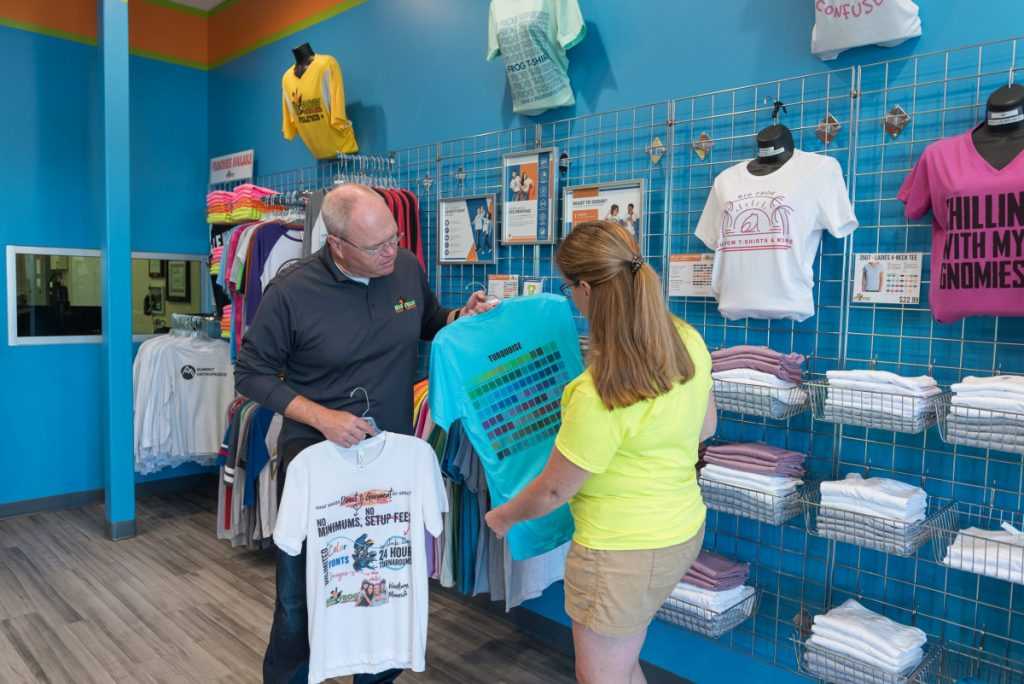
Evans identifies personalization as a genuine strategic advantage for smaller brands, delivered through four distinct tactics: storytelling, hyper-targeted product assortments, bespoke services like engraving and monogramming, and on-demand customization. The stated value proposition is concrete: personalization helps smaller brands compete against scale by delivering "intimacy and provenance."
These are not soft or incidental differentiators. Storytelling that connects a product to its maker, materials, or origin builds the kind of specificity that a warehouse-fulfilled, algorithmically priced item cannot match. Engraving and monogramming produce objects that are, by definition, singular. On-demand customization transforms the purchase into a relationship rather than a transaction. In a market where the top ten players are winning decisively on price, speed, and breadth, a niche brand's most defensible ground is the purchase that makes a customer feel known, not just served.
The New Playbook
"Retail isn't navigating a single inflection point, it's rewriting the entire playbook. Scale advantages, shifting trade rules and AI driven discovery aren't isolated developments; together, they're redefining how value is created, how consumers engage, and where growth will emerge next."
The convergence of these three forces means that a strategy optimized for any one of them in isolation, whether chasing scale efficiencies, localizing supply chains, or overhauling product data, will not be sufficient. The brands and retailers positioned to grow through this environment are those treating all three as simultaneous and interdependent requirements rather than sequential line items on a strategic roadmap.
"The bottom line: 2026 demands a new playbook." The retailers who navigate this structural reset will not be those who reacted fastest to any single shift. They will be those who understood that the shifts are connected at the root, and built accordingly. For niche brands, that may be the most clarifying moment the market has offered in years: a clear lane, defined not by what they cannot do at scale, but by what the scale players cannot do at all.
Know something we missed? Have a correction or additional information?
Submit a Tip