April 2026 — Rapaport Magazine (jewelry retail & trend coverage)
Jewelry's emotional pull is stronger than ever, but the pieces that actually get worn tell a story. Here's what the industry's sharpest buyers know right now.
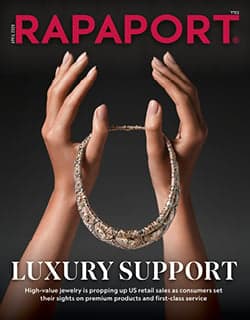
The most telling Valentine's Day data point isn't about roses or chocolates. It's this: high-end jewelry is outpacing the broader gift market, and the buyers driving that growth aren't chasing sparkle for sparkle's sake. They're looking for pieces with a narrative, a history, and a reason to be worn on a Tuesday.
That's the through-line in Rapaport Magazine's April 2026 coverage of the jewelry retail landscape, which frames how jewelers navigated post-Valentine's inventory and what longer-term demand signals actually look like when the holiday rush clears.
The Motif That Won't Stay in the Past
Nothing illustrates the appetite for narrative-rich jewelry quite like the resurgence of the Lover's Eye, a motif with a 300-year history that has quietly found its way back into modern collections. Part miniature portrait, part jewel, the Lover's Eye originated as a secretive token of romantic devotion, a single painted eye worn close to the body as a symbol of intimacy that only the wearer understood.
"A single eye is enough to evoke an entire world of emotions and states of mind," says Italy-based jeweler Giulia Fracasso. That sentiment captures exactly why the motif resonates now: in an era of mass-produced gifting, a piece this loaded with personal meaning stands apart.
Contemporary designers are pushing the form further. Italy-based jeweler Francesca Villa radically updates the form with contemporary lenticular moving images that change when tilted in different directions, offering animated holographic interpretations of the lover's eye. This isn't nostalgia dressed up in new packaging; it's a genuinely different object that earns its price point through craft and concept simultaneously.
The motif's broader cultural moment has been building. In season one of Bridgerton, the character Marina Thompson repeatedly appears wearing a Lover's Eye jewel as a choker, where the jewel serves as a costuming clue into her conflicted romantic arc. For a generation that consumes period drama as aesthetic inspiration, that kind of cultural reference point accelerates desire in a way no ad campaign can manufacture.
Silver, Colored Stones, and the Value Pivot
Not every Valentine's gift buyer is shopping at the top of the market, and Rapaport's reporting tracks a significant shift in what the middle tier actually wants. As gold prices continue to climb, shoppers are pivoting to silver and colored stones, not as a compromise, but as a deliberate choice that often delivers a more visually striking piece at a fraction of the cost.
Demand for colored gemstones such as rubies, sapphires, and emeralds is rising as collectors and gift buyers seek alternatives to diamonds. A Tiffany & Co. necklace adorned with a Paraiba tourmaline and diamonds sold at Christie's for $4.2 million, ten times its low estimate. That auction result is a market signal: colored stones are no longer the consolation category. They're the category.
On Faire's retail platform, silver jewelry saw higher volume in personalized and engraving-friendly formats for Valentine's Day, while gold jewelry dominated in sentimental motifs like hearts, initials, and lockets. The takeaway for gift buyers is practical: if the budget points toward silver, lean into personalization. An engraved silver cuff or a birthstone-set band carries as much emotional weight as anything gold, and it will actually get worn.
The key jewelry trends for 2026 include bold statement pieces like chunky silver and gold chains, minimalist and mixed-metal styles combining yellow, white, and rose gold, and a growing preference for colored gemstone pieces reflecting personalized stories. For Valentine's gifting specifically, the colored gemstone angle is particularly well-timed: a ruby for passion, an aquamarine for calm devotion, an emerald for someone who finds sentimentality in nature. The stone does the storytelling.
What "Elevated Experience" Actually Means
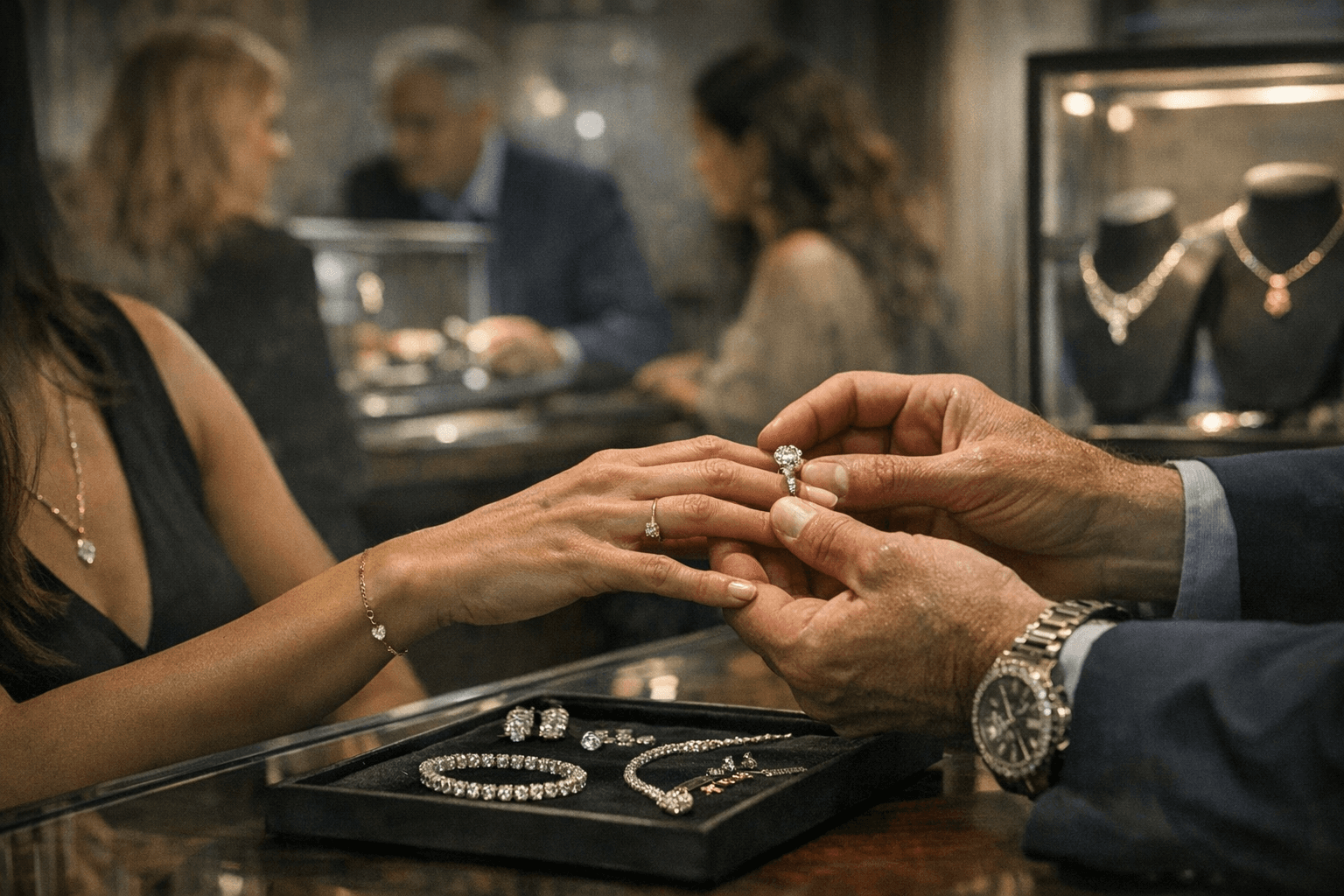
Rapaport's April 2026 retail coverage documents a wave of in-store renovation and experience upgrades among jewelry retailers, and it's worth understanding what's driving that investment. The retailers gaining share aren't just refreshing their carpets. They're redesigning the buying environment to slow customers down, to create the kind of unhurried, consultative moment where a $400 silver bracelet becomes a $1,200 custom piece with engraving and a story.
For the gift buyer, this shift is an invitation. Walking into a renovated independent jeweler before the next major occasion and asking to be shown narrative-rich pieces, historically rooted motifs, or custom personalization options will yield a fundamentally different result than scrolling a product grid. The industry data confirms that high-end and big-ticket jewelry remains a growth category precisely because the in-store experience still converts emotional intent into something physical.
Wearable Over Impressive
The clearest mandate from the current market is the shift away from jewelry that performs occasion and toward jewelry that integrates into real life. Valentine's Day jewelry gifts for 2026 that feel personal, wearable, and timeless represent the strongest category, from everyday gold pieces to lab-grown diamond essentials. The pieces collecting dust in drawers share a common characteristic: they were bought to impress rather than to be worn.
The Rapaport framework for this moment is useful: jewelry remains the top emotional gift category, but the buyers who do it right treat the purchase as a long-term proposition, not a single-occasion gesture. A Lover's Eye brooch, a colored-stone ring set in silver, a mixed-metal layering piece with an engraved date: these are gifts that age into meaning rather than out of it. The best jewelry retailers are already designing their post-Valentine's merchandising around exactly this idea, using the holiday as an entry point into collections that deepen over time.
The industry's smartest move right now is the same as the smartest gift: make it personal, make it wearable, and give it something to say.
Know something we missed? Have a correction or additional information?
Submit a Tip