Best necklaces for Valentine’s Day gifts, from charms to pendants
Valentine's Day jewelry is headed for a $7 billion moment, and the best necklace gifts now signal feeling first, price second.
The smartest Valentine’s necklace gift feels deliberate, not generic. With jewelry expected to claim the biggest share of U.S. Valentine’s spending, the strongest pieces are the ones that make an emotional point, whether that point is sentimental, playful, bold, or beautifully restrained.
1. Pendant necklaces
Pendants are the clearest romantic signal because they put the message at the center, literally and emotionally. Heart-shaped pendants and lockets carry the deepest Valentine’s tradition, with heart jewelry long tied to love, remembrance, and enduring affection, which makes this the best choice when you want the gift to feel classic rather than overworked.
A pendant is especially strong when the relationship already has a shared language and you want to give something wearable every day. It reads as intimate without being precious, and it works just as well as a self-gift when you want one meaningful piece to do the work of a whole jewelry box.
2. Charm necklaces
Charms are the most personal-feeling option because they can turn a necklace into a tiny autobiography. That makes them ideal for a gift that is meant to feel playful and specific, with each symbol standing in for a memory, an inside joke, or a milestone the two of you actually share.
This style also carries a nostalgic edge that feels right for Valentine’s Day, since charm jewelry has long belonged to the tradition of sentimental tokens. If a pendant says “I love you,” a charm necklace says, “I know you,” which is why it feels especially thoughtful for a relationship that values detail over drama.
3. Beaded necklaces

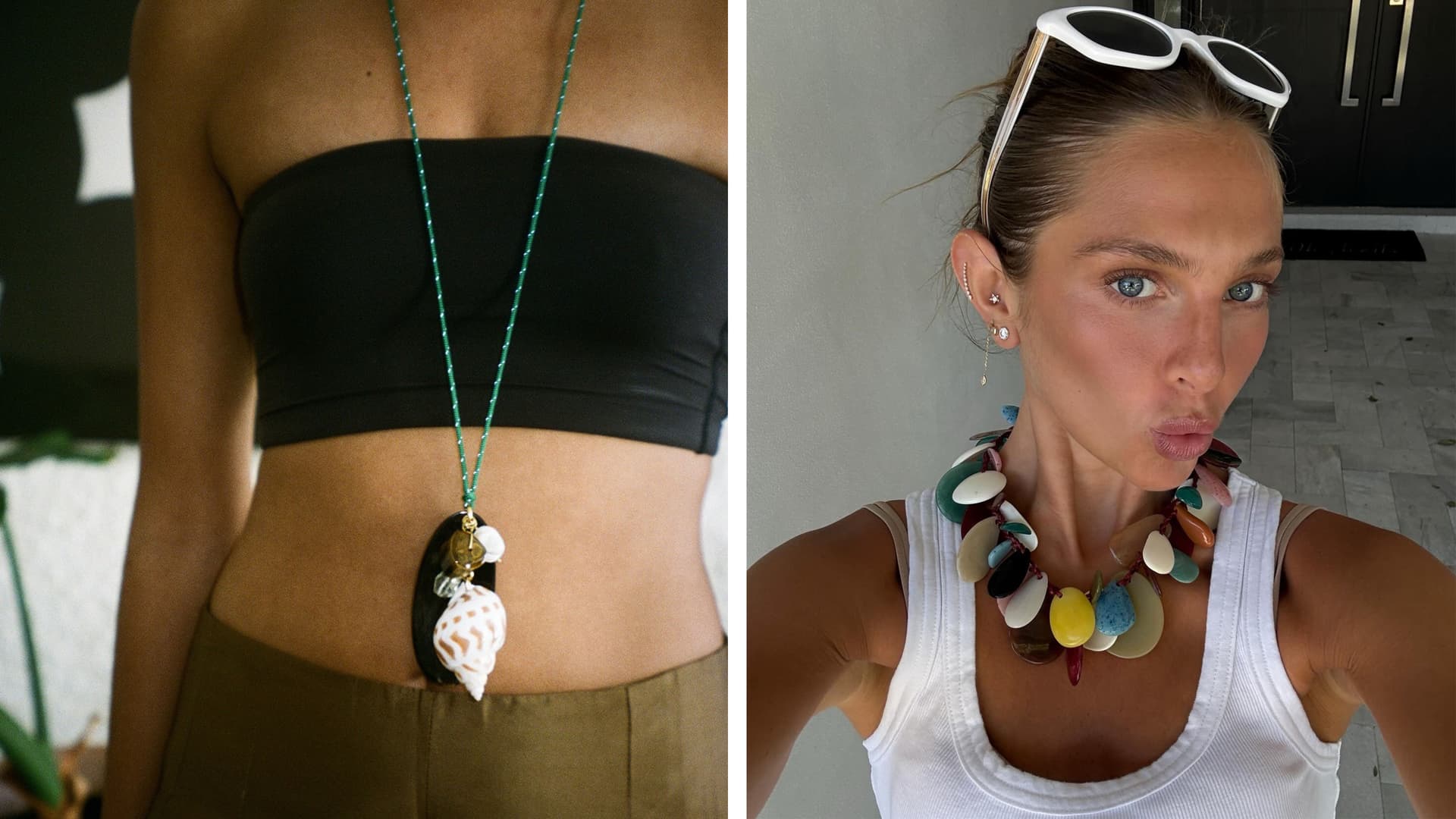
Beaded necklaces are the most current read in the edit, and they are having a clear fashion moment. Marie Claire called Summer 2026 jewelry part of “curated maximalism,” and the runway mix at Tory Burch, Chanel, Celine, and Zankov leaned into seed beads, crystals, pearls, shells, Murano glass, and enamel, which makes this the strongest pick for someone who likes a gift with personality and pulse.
Beads signal confidence, color, and a slightly more fashion-forward point of view than a standard fine-chain necklace. They are the right move when you want the present to feel cheerful and modern, not merely romantic, and they prove that Valentine’s jewelry does not have to whisper to feel luxurious.
4. Tassel necklaces
Tassels are the flirtier, more movement-driven choice, which makes them ideal when you want the gift to feel a little unexpected. They bring a sense of swing and energy that can make even a simple outfit feel dressed with intention, and they work well for a partner whose style leans into statement pieces rather than quiet classics.
What makes tassels especially useful in this edit is that they soften the formality of jewelry gifting. They feel playful without becoming precious, which is a useful balance for Valentine’s Day, a holiday that rewards romance but punishes anything that feels too stiff or overplanned.
The larger story here is that Valentine’s jewelry is not just about preciousness anymore, it is about specificity. The National Retail Federation says U.S. consumers are expected to spend a record $29.1 billion on Valentine’s Day, with $7 billion projected for jewelry alone, and that spending still centers on meaning: 55% of consumers planned to celebrate, 83% of celebrants planned to buy a gift for a significant other, and 25% planned to buy jewelry.
That context helps explain why this necklace edit works so well. It spans tassel, beaded, charm, and pendant styles across a wide range of budgets, which means the real luxury is not the price point, it is the clarity of the gesture. A pendant feels sentimental, a charm necklace feels deeply personal, beads feel current and joyful, and tassels bring the kind of boldness that turns a simple box into a memorable moment.
This article was produced by Prism’s automated news system from verified source data, official records, and press releases, then run through automated quality and moderation checks before publishing. The system is built and supervised by the people who set the standards it runs under. Read our full AI policy.
Did this article answer your question?