Personalized and sustainable gifts drive Valentine’s Day shopping trends
Valentine’s shoppers are rewarding gifts that feel personal, practical, and responsible, while the holiday’s spending keeps setting records.

Valentine’s Day shopping is moving away from generic algorithm-fed picks and toward gifts that feel chosen, not surfaced. The strongest gifts now signal something specific about the relationship, whether that is a custom detail, a shared memory, or a clearer set of values behind how the item was made.
The new Valentine’s brief is personal
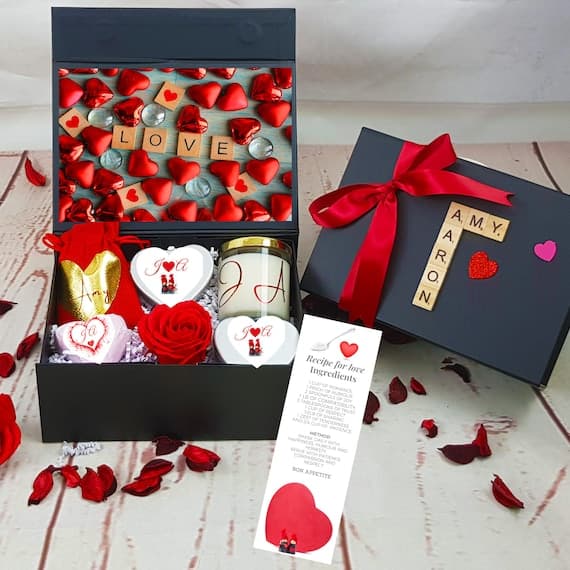
The clearest shift in the category is toward personalization with a purpose. Etsy’s Valentine’s marketplace pages keep surfacing the same message in different forms: shoppers are looking for custom photo gifts, name-based pieces, and products made for a specific couple rather than a broad audience. That matters because a personalized gift does not need to be expensive to feel luxurious. A well-chosen photo print, a piece engraved with initials, or an item tied to an inside joke can feel more considered than a generic premium box.
That same logic is pushing the market beyond standard romance cues and into gifts that reflect how people actually live together. Online retail makes that easier, and the appeal is obvious: the best Valentine’s gifts now often arrive with a stronger sense of story than a mass-produced item ever could. The winning purchase is not the most obvious one. It is the one that could only have been chosen for this person.
Spending is still rising, and the holiday is still big business
The National Retail Federation continues to treat Valentine’s Day as a major retail moment, and the numbers are hard to ignore. U.S. consumers were expected to spend a record $27.5 billion in 2025, up from $25.8 billion in 2024, and the federation projected another record in 2026 at $29.1 billion, with average planned spending of $199.78 per person. NRF has surveyed consumers about Valentine’s Day annually for more than a decade, which gives the holiday a rare kind of continuity: retailers can see how preferences move, and readers can see how the definition of a good gift keeps changing.
That growth does not mean people are simply spending more for the sake of it. It suggests the holiday has widened into a full retail category, one shaped by cards, gifts, jewelry, flowers, dining, and experiences. The best gifts in that mix are often the ones that feel less like a transaction and more like a plan, especially when the recipient cares more about the thought behind the purchase than the logo on the box.
The traditional players still know something useful
Hallmark remains central to the story because Valentine’s is still, at heart, a card holiday. The company says it is the second-largest card-exchange holiday, and it says its first Valentine’s Day cards appeared on store shelves in 1916. That history matters because it shows how durable the ritual is: before the gift, there is still the message, and before the message, there is still the card.
Hallmark also says it formalized a paper recycling program in 1943 as part of its sustainability commitments. That detail is useful because it separates a concrete operational step from the vague language that often surrounds green marketing. Anyone can print “eco-conscious” on a product page. Fewer brands can point to a long-running practice that changed how they handled materials across the business.
What sustainability really has to mean now
Sustainability still matters to many shoppers, but the strongest consumer research suggests it has to coexist with value. Deloitte says a core segment of consumers continues to make sustainable purchases and may accept tradeoffs, including paying more for sustainable products. McKinsey’s broader consumer work says price and quality remain the most important product characteristics for shoppers globally in 2025, which is the reality check every Valentine’s gift guide needs.
That combination changes how to judge eco-friendly claims. A meaningful sustainable gift is not just one that sounds good in packaging copy. It is one that can explain, in plain language, what makes it better: lower waste, longer wear, durable materials, recycled inputs, or a real recycling program attached to the company behind it. If the only evidence is a soft green adjective, the claim is cosmetic. If the product or brand can show a visible operational choice, the claim is doing real work.
Deloitte’s retail coverage also describes the industry moving toward a data-driven hyper-personalized experience, or “mass to micro.” That shift fits the moment. Shoppers are not only looking for sustainability, they are looking for sustainability that feels tailored, specific, and worth the price. A gift that is personalized and responsibly made is more persuasive than either idea alone.
The best gifts live where sentiment meets practicality
The most useful Valentine’s purchases are rarely the loudest. A custom photo item, a name-based keepsake, or a couple-specific product can be more memorable than a generic luxury object because it carries evidence of attention. The same is true for experiences: dinner, a weekend plan, or something you do together often lands better than another decorative object, especially when the household already has enough things.
If you want the gift to feel genuinely elevated, look for three things:
- A detail that belongs to the two of you, not to everyone
- Materials or construction that justify the price
- A sustainability claim that points to an actual practice, not just a mood
That is the real shift in Valentine’s shopping. The holiday still supports cards, flowers, jewelry, and novelty gifts, but the most meaningful purchases are becoming less generic, more personal, and harder to fake.
This article was produced by Prism’s automated news system from verified source data, official records, and press releases, then run through automated quality and moderation checks before publishing. The system is built and supervised by the people who set the standards it runs under. Read our full AI policy.
Did this article answer your question?