Pinterest trends and spring jewelry merchandising: what retailers should know (Spring 2026)
Pinterest's spring 2026 save data from 600 million users is pointing jewelry retailers toward one clear imperative: personalization over spectacle, with gold and stackable designs leading the charge.
U.S. consumers spent a record $27.5 billion on Valentine's gifts in 2025, and yet a growing number of them walked away feeling like the gift missed the mark. The tension between record spend and persistent dissatisfaction is the most useful starting point for any jewelry retailer planning spring 2026 merchandise. The National Retail Federation's data confirmed that momentum is expected to continue into 2026, but the shape of that spending is shifting in ways that Pinterest's platform data makes unusually legible.
What 600 Million Saves Are Actually Telling You
According to the seasonal analysis of what's in and what's out, based on search and save data from over 600 million Pinterest users, this spring is less about perfectionism and more about self-expression, comfort, and positive vibes. That is not a vague cultural observation: it is a merchandising signal. Pinterest summarizes the cultural moment driving its Spring 2026 data with a single insight: people want to feel good about their lives in 2026, not upend them. This framing represents a departure from the aspirational, transformation-focused content that has dominated social media and marketing for years.
What Pinners are searching for instead are approaches that enhance what they already have, add comfort where they already live, and make their spaces and meals and weekends feel better without requiring a complete overhaul. For jewelry retailers, this means the "upgrade your whole look" pitch is out. The "this piece is meant for exactly you" pitch is in. Messaging built around radical transformation or aspirational lifestyles that require major financial commitment will be less resonant this season than messaging that speaks to accessibility and self-expression.
Pinterest's annual Predicts report, which highlights 21 aesthetics, activities, and items predicted based on a year's worth of user search data, includes a trend specific to jewelry: brooches. Pinterest is hailing brooches as one of the coming year's biggest trends. Specifically, Pinterest notes: "There's a new way to wear your heart on your sleeve. Or tie. Or socks. In 2026, boomer and millennial men will punctuate their fits with vintage pins, crystal clip-ons, and heirloom brooches." For retailers who have largely ignored this category, the window to stock and merchandise brooches before they feel saturated is narrowing.
Gold Leads, But Personalization Is the Real Driver
Gold jewelry dominated Valentine's Day demand on Faire, generating nearly twice the interest of silver jewelry in the lead-up to the 2026 season. That gap has only widened since: in the last three months, demand for gold jewelry has more than tripled the demand for silver, despite the rising cost of gold, and the top-selling gemstones have been pearl, turquoise, and diamonds.
The metal divide, however, is not simply about aesthetics. Retailers preferred gold options when paired with sentimental motifs such as hearts, initials, and lockets, while silver jewelry saw higher volume in personalized or engraving-friendly formats. What that pattern reveals is that personalization is the actual purchase driver, and gold simply offers a warmer canvas for sentimental design. Brilliant Earth expects statement gemstones, zodiac pieces, and personalized jewelry among the most popular trends in 2026. "The appeal is clear: These pieces go beyond adornment to become wearable memories and connections," the company reports.
On the runway side, Vogue's coverage of the 2026 season showcased beaded necklaces, oversized gemstones, colossal flowers, crystal-clear cuffs, and flattened silhouettes, reflecting a mix of high and low and bold and minimalist aesthetics. The breadth of that range is itself a signal: there is no single dominant aesthetic this spring, which means retailers who try to go narrow risk losing a meaningful share of browsers.
The Stackable, Layerable, Mix-Metal Moment
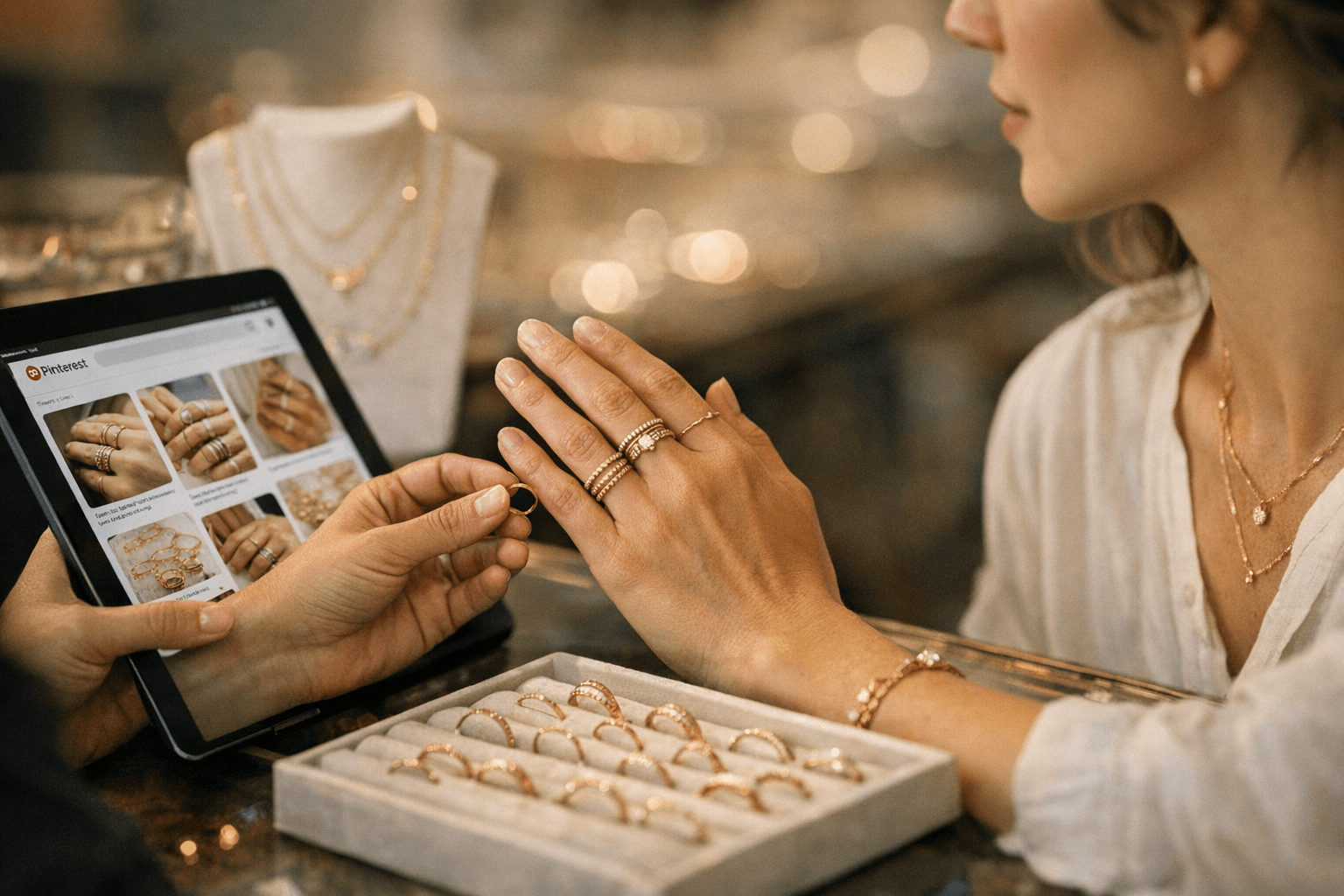
Stackable rings remain one of the biggest trends for 2026. Thin bands featuring different birthstones allow wearers to create a personalized set that evolves over time. This format matters to retailers for a specific operational reason: it converts a single-occasion gift into a repeat-purchase relationship. A customer who buys one birthstone band for Valentine's Day is a candidate to return for a partner stone, an anniversary band, or a milestone charm. Pairing birthstone bands with diamond bands or mixing metals creates a modern look that reflects family, life milestones, or personal journey, and the layering trend continues to grow as it allows jewelry lovers to build a living, evolving collection.
The days of picking just one metal are over. In 2026, mixing metals is the move: stacking a silver ring next to a gold one, or pairing rose gold earrings with a white gold necklace. Retailers who organize their display cases by metal color rather than by style are working against their own conversion: a customer open to mixing metals needs to see the combinations, not the categories.
The most notable jewelry trends in 2026 include personalized jewelry such as name necklaces, layered necklaces, men's jewelry, symbolic celestial designs, and lab-grown diamonds, all reflecting a shift toward individuality and everyday styling. Men's jewelry, specifically, is one of the fastest-growing underdeveloped segments in most independent retail assortments, and the brooch trend from Pinterest Predicts reinforces that the male buyer is more receptive to ornament than most buying plans currently acknowledge.
Affordable Luxury and the Value-Conscious Buyer
McKinsey notes that shoppers "are more cautious and value-conscious than ever before," adding that "this creates a unique opportunity for small businesses that can deliver meaningful, high-value products." Consumers are increasingly hunting for what analysts call "affordable luxury": gifts that feel indulgent and meaningful without carrying a sky-high price tag.
This is the positioning window that independent jewelry retailers are best placed to occupy. The research from the Valentine's and early-spring gifting cycle makes clear that buyers favored personalized and experience-based gifts over single-category splurges. Bundling a modest engraved piece with a sensory add-on, such as a handwritten card, custom gift wrap, or a short personalization consultation, recalibrates the perceived value without requiring a higher price point. Thoughtful, daily-wear pieces with intention are gaining ground, with couples, friends, and families choosing jewelry that does more than look pretty but anchors a feeling, a goal, or a ritual.
The at-home celebration trend is pulling a share of seasonal spend toward grocers and food retailers, which means jewelry retailers are competing with charcuterie kits and specialty chocolates for the same discretionary Valentine's budget. Winning that competition requires leaning into what food cannot offer: permanence, wearability, and customization.
The Personalization-Merchandising Calendar
Quick-turn personalization is now a competitive expectation rather than a premium service. Online platforms use browsing history to recommend tailored gifts as soon as Valentine's sections go live, which means the personalization conversation is starting earlier each cycle. Some brands are already testing "Valentine's Months," stretching promotions from early January through mid-February, compressing the window in which a late-launching retailer can capture early-season intent.
The post-holiday clearance window, typically the two to three weeks following February 14, is the right moment to clear season-specific inventory (heart motifs, red and pink colorways) at a discount while simultaneously launching a spring personalization push. The Valentine's-to-spring bridge is where the strongest forward revenue sits: customers who just received a piece of jewelry are primed to think about what else they want to add to that collection. Search behavior shows predictable spikes in late January and early February, with top-performing categories including personalized gifts, jewelry, printable cards, décor, and beauty items, and a second, less-exploited spike tends to emerge in March and April as spring gifting occasions (birthdays, Passover, Easter, Mother's Day planning) come into view.
The practical calendar for jewelry retailers reads roughly like this:
1. Early January: Launch personalization services prominently. Surface initial, birthstone, and engraving options in the first fold of every display and landing page.
2. Late January through February 14: Run the Valentine's peak. Prioritize gold with sentimental motifs, stackable birthstone bands, and any brooch assortment to catch the early-adopter male buyer.
3. February 15 through end of February: Clear heart and red-adjacent inventory at clearance prices. Begin seeding spring messaging (florals, pastels, layering).
4. March through April: Launch spring personalization event. Zodiac pieces, celestial motifs, and stackable collections perform well here as gifters start thinking about Mother's Day.
The Persistent Shift Retailers Cannot Afford to Ignore
The personalization-and-at-home trend that accelerated in the back half of 2024 has not corrected. Analysis of Valentine's and early-spring gifting behavior for 2026 positions it as a structural shift rather than a pandemic-era anomaly. Online shopping continues to hold the leading share of purchase volumes, which raises the bar for in-store experience: the pieces that tell a story are the most giftable, whether an initial pendant charm bracelet or an engraved heart necklace, and story is harder to communicate through a thumbnail than through a well-trained sales associate who can speak to the meaning behind a piece.
Pinterest's Spring 2026 data from 619 million users is not predicting a trend so much as confirming one already in motion. Retailers who are still leading with spectacle, with high-shine displays and category-first assortments, are selling against the current. The spring 2026 buyer wants to feel seen, not dazzled, and the jewelry that earns a place in that buyer's rotation will be the piece that carries their name, their stone, or their date.
Know something we missed? Have a correction or additional information?
Submit a Tip