Plantable seed-paper Valentines turn recycled paper into wildflowers and herbs
Turn recycled paper into a living valentine: plantable seed-paper hearts that bloom into wildflowers or herbs when planted in spring.
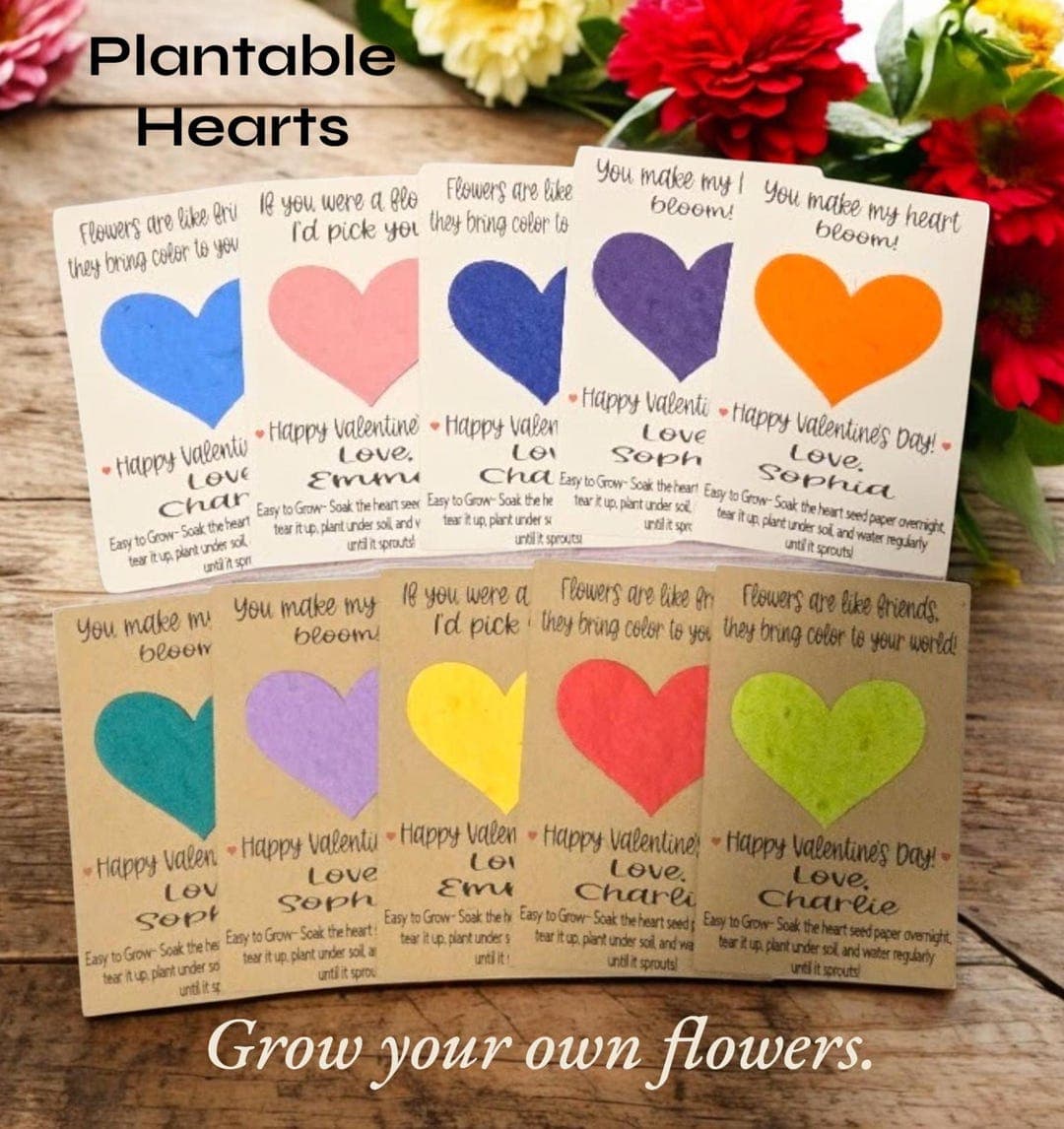
“Plantable seed-paper valentines are an eco-minded, low-impact gift that converts a paper card into wildflowers or herbs when planted.” That sentence doubles as the best pitch and practical promise: give a card that becomes a patch of flowers or herbs. The craft is surprisingly accessible, child-friendly and endlessly adaptable, whether you want a rustic jar of confetti hearts or a hand-stamped card topped with a sprig of dried miniature roses.
- kid-friendly classroom valentines: simple seed-paper attached to a printable card for little hands, as described in Woodlark Blog; the how-to is childproof and invites kids to sign and decorate.
- weekend-craft givers: the blender-and-frame method, which produces sheets you can stamp, round the corners and pair with ribbon, as Greeninreallife shows.
- garden-lover favors: the neat toilet-paper layering system from Latebloomerinbakerville, which spaces seeds precisely and produces durable hearts ready for gifting.
What this project is, and who it suits
This is a Valentine that keeps on giving. Use recycled paper scraps, a blender and a screened frame to make pulp sheets you cut into hearts, or follow a no-blender toilet-paper layering method that yields tidy, plant-ready shapes. The approach is for three distinct gift styles:
- recyclable paper: grocery bags, egg cartons, newspaper, printer paper or tissue paper, or standard whiter paper if you want a pale base. Greeninreallife notes, “Newsprint will take on a grey hue when pureed, and this will remain when dry and will darken any tint.”
- seeds: general wildflower mixes, California native wildflower seeds used by the Woodlark Blog author, or viola seeds used in Greeninreallife examples.
- tools: a food processor or blender, a window screen (you can also buy in store at Home Depot for the same price), towels, sponges, small cookie cutters (Woodlark used a roughly 2.25" cutter), a screened mould & deckle or frame, and basic craft glue like Elmer’s for assembly.
- extras for styling: cardstock printables for the card, stamps and inks in Valentine pink and garden-friendly green, reusable satin ribbon and dried pink miniature roses as shown in Greeninreallife images.
- flattening weight: a baking sheet and a cast-iron pan to press slightly wavy paper for a couple of hours.
Materials and tools that matter
Gather mostly household or low-cost items and a few specialty pieces:
Three proven methods, step by step
Core steps across methods follow the same intent: convert recycled paper into pulp, shape it, add seeds, dry and finish. As the Original Report summarizes, “Core steps: (1) Collect recycled paper (scraps or printer paper), tear into small pieces and soak in warm water; (2) Blend the soaked paper i” — the fragment captures the pivot from soak to blend that every method shares.
1. Blender, pulp and screened-frame method (Woodlark Blog and Sugarmaplefarmhouse)
This is the classic route for flat sheets you can stamp and cut.
1. Rip your paper into small pieces and soak them in a bowl of warm water until fully saturated, at minimum for a couple of hours.
2. After soaking, place the paper into your food processor or blender and add enough water to cover. Blend into a pulp that is thick and mushy.
3. Dump the paper slurry into a tub, adding water as needed. Sugarmaplefarmhouse suggests filling the blender with bits of paper and two cups of water before blending and repeating until you have a good consistency.
4. Use a screened frame or mould and deckle to lift a sheet of pulp, flip the frame onto towels and press with sponges to remove excess water. Sugarmaplefarmhouse warns, “Be aware that any paper you make will spread just a little when you do this.”
5. Remove the frame carefully so you don’t rip the still-damp sheet, then let it dry for 12 to 24 hours depending on humidity. “Let it dry for 12 – 24 hours. Dry time will depend on the humidity conditions in your home. I did this in the winter and let it dry overnight. That worked perfectly,” the author notes.
6. Once dry, cut or punch shapes, then attach to printed cardstock with a dab of Elmer’s or craft glue for classroom or party-ready valentines.
- Prepare pulp as above. Instead of dunking frames, lay a towel under the frame and set a heart cookie cutter on top.
- Spoon the slurry into the cookie cutter to cover the interior, add dried flowers and seeds, wiggle the cutter to define the edges, then remove the cutter and repeat.
- Follow the same pressing and drying steps. If a heart won’t release, “leave it until it dries and then use a knife to help guide it off. It’s helpful to have two frames just in case this happens.”
2) Cookie-cutter heart variant on a tray (Sugarmaplefarmhouse)
A fast way to produce shaped hearts without cutting a large sheet.
- Sprinkle a few seeds on a first strip of toilet paper, spacing them to fit cookie-cutter hearts. For one project, the author “carefully placed one seed per heart, leaving room to fit five hearts on the final sheet.”
- Cover with three overlapping strips crosswise, spray with water so they adhere, sprinkle more seeds, then cover with three vertical strips and spray again.
- Add a final layer of strips crosswise over the last seeds, give the whole sheet a generous spray and lift to a drying rack. After air drying overnight the paper will be ready to cut into hearts.
- If the paper waves slightly, “flatten it easily by placing a baking sheet on top and weighing it down with a cast-iron pan for a couple of hours.”
3. Toilet-paper layering method for tidy seed placement (Latebloomerinbakerville)
If precise seed placement or a no-blender process interests you, this layering trick makes neat sheets.
Finishing, assembly and presentation
Woodlark Blog gives a simple finishing workflow for classroom-friendly cards: print the valentine printable double-sided on cardstock, cut out along the dotted lines, attach one plantable seed paper to the front of each valentine using a dab of Elmer’s, and have kids sign. The completed valentine size in that project is approximately 3.5" x 5", with a 2.25" cookie cutter used for the seed-paper heart.
For grown-up gift styling, Greeninreallife recommends cutting seed papers to suit stamp shapes, rounding corners and stamping in Valentine pink with accents of garden-friendly green. They also show small off-cuts punched into confetti and stored in a jar as favors: “Small off-cuts and extras were punched to make a jar of plantable hearts – a cute present or favour idea!” A reusable paper gift box tied with satin ribbon and topped with a plantable seed-paper card and a sprig of dried mini roses makes for an elegant greener wrap.
Planting notes and voice lines for cards
Make sure recipients know how to turn the valentine into a patch of blooms: “Be sure your Valentine knows to plant the heart in the spring, water it well and watch a sweet patch of wildflowers come to life!” Suggested lines you can print or hand-write include: “Plant this heart and watch our friendship grow!”, “Sowing the seeds of love.” and “Add water. Watch love grow.”
- Color choices: “Newsprint will take on a grey hue when pureed, and this will remain when dry and will darken any tint,” so use standard white paper for pale tones or coloured egg cartons as a pre-tinted pastel base.
- Humidity governs dry time: expect 12 to 24 hours or overnight drying depending on conditions.
- Expect some spread when transferring pulp from frame to towels.
- If shapes stick, let them dry and ease them off with a knife, or keep a spare frame on hand.
- For tools, a window screen can be bought in-store at Home Depot for the same price the blog cited, which makes the frame option accessible.
Troubleshooting and material choices
A few practical cautions will save time:
Why this is worth gifting
Plantable seed-paper valentines are proof that luxury in giving comes from intention and resonance rather than price. These valentines convert everyday recycling into a tangible, lasting memory: a stamped card, a child’s handwriting on the back and, come spring, a sweet patch of flowers or a pot of herbs. Whether you choose a playful classroom packet or a styled boxed card with dried miniature roses and a satin ribbon, the gift is low-impact, tactile and, above all, generous in time and attention.
If you want a single takeaway to guide your plan: match the method to the recipient. Use the blender-and-frame route when you want polished sheets to stamp and pair with ribbon; choose the toilet-paper layering trick for exact seed placement and a no-equipment weekend project; and use the cookie-cutter technique for simple, repeatable hearts that children can help make. Plantable seed-paper valentines are an elegant, hands-on alternative to candy and flowers, and they leave the kind of mark only something that grows can.
This article was produced by Prism’s automated news system from verified source data, official records, and press releases, then run through automated quality and moderation checks before publishing. The system is built and supervised by the people who set the standards it runs under. Read our full AI policy.
Did this article answer your question?