Regional Rose Sales Data Reveals Valentine's Day Floral Demand Worldwide
Some 250 million roses are produced globally for a single holiday, and the logistics behind that number explain exactly why prices surge every February.
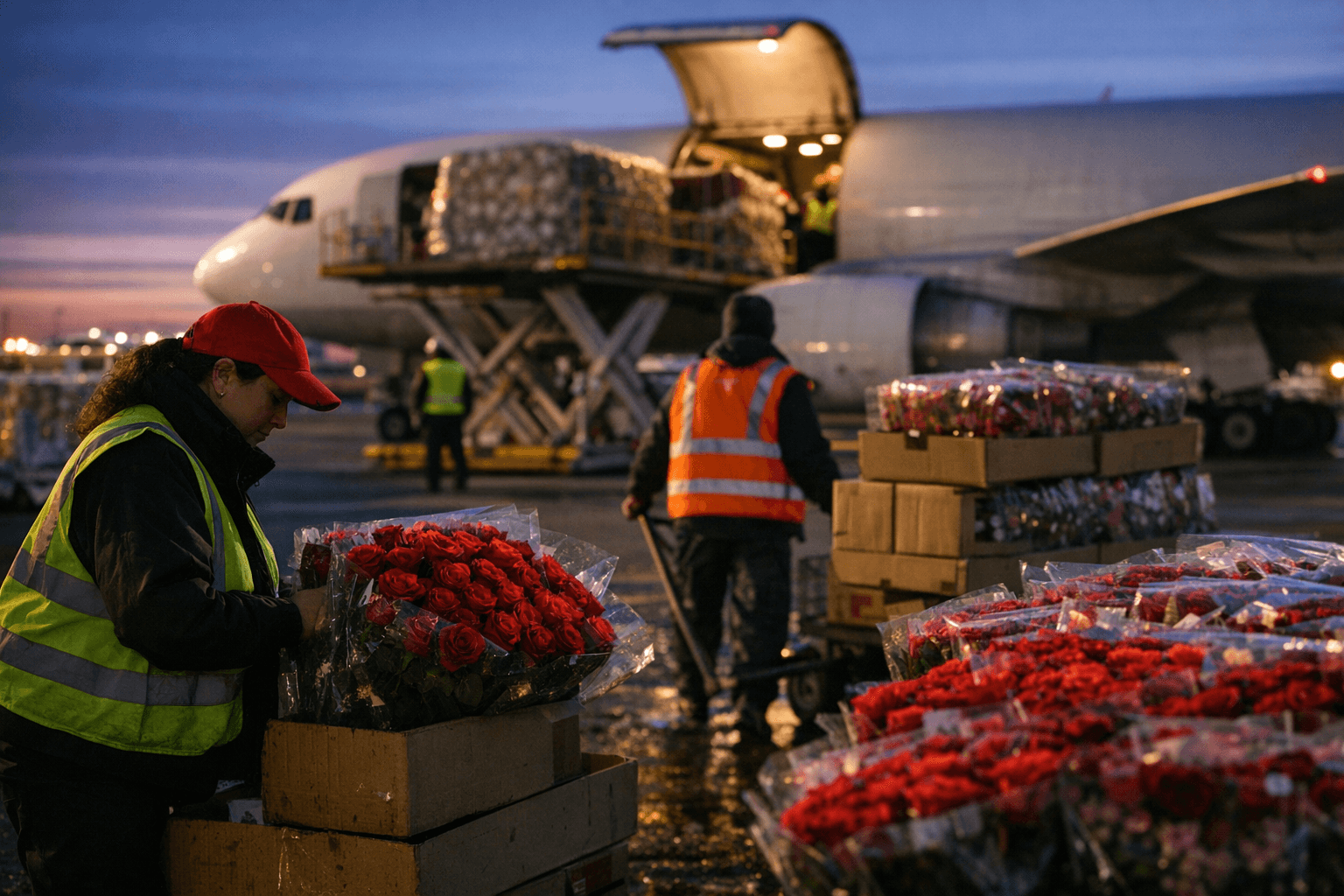
The number that anchors the entire Valentine's Day floral industry is 250 million. That is the estimated number of roses produced globally for February 14 each year, a figure so compressed into a single two-week window that it reshapes pricing, supply chains, and availability across every region from North America to Southeast Asia. A regional dataset published by Statista in early April 2026 tracking rose volumes sold for Valentine's Day confirms what anyone who has bought flowers in February already suspects: demand is not distributed evenly, and where you live determines how much you pay and how fresh your blooms will actually be.
North America absorbs the largest share of that global volume. The Society of American Florists estimates around 110 million roses move through the U.S. market alone during Valentine's season, with roughly 60% of those being red, long-stemmed varieties. Of the 54 million Americans who bought flowers for the holiday, approximately 38 million chose roses specifically. That concentration matters because it compresses the entire supply chain into a few frantic days, pushing prices well above what any other time of year will support.
The mechanism behind the price spike is straightforward once you trace where Valentine's roses actually come from. Over 80% of cut roses sold in the United States are imported, with Colombia alone supplying roughly 80% of those imports. Ecuador and Kenya provide most of the remainder. These countries hold the advantage of high-altitude equatorial growing conditions: consistent sunlight, cool nights, and minimal pest pressure produce the long stems and tight buds that command premium retail prices. But growing the roses is only part of the equation. Getting them to a Chicago florist or a Manhattan bodega by February 12 requires cargo planes, temperature-controlled warehouses, and customs clearance, with Miami International Airport handling the majority of U.S. floral imports.
That logistics cost does not stay hidden in the supply chain. It lands directly on the price tag. A dozen roses that costs a florist $12 at wholesale in September can cost $36 or more in the week before Valentine's Day, a markup driven not by greed but by the arithmetic of airfreight surcharges and the sheer compression of demand. In 2023, wholesale rose prices in the United States ran approximately 50% above the prior Valentine's season, pushed by rising fuel and airfare costs that growers passed directly to importers and then to retailers.
The regional picture outside North America adds important context to how that 250-million-rose figure gets distributed. The European Union represents a significant second demand center, with the United Kingdom, Germany, France, and the Netherlands among the highest per-capita flower spenders historically. IFPA data shows 61% of UK consumers plan to buy flowers for Valentine's Day, a participation rate that rivals American levels. Latin America's relationship with Valentine's rose demand is layered: the region is simultaneously a major source of supply and a growing consumption market, as rising middle-class incomes in Brazil and Mexico have expanded domestic gifting culture considerably in recent years.
Asia presents the most complex regional picture. In Japan, Valentine's Day convention runs in reverse: women give chocolate to men on February 14, while White Day on March 14 functions as the occasion for men to reciprocate, frequently with flowers. That creates a dual-season demand pattern that affects exporters differently than North America's single-peak model. South Korea follows a similar two-holiday structure. China and India represent the category's most significant emerging demand, though cultural preferences in both markets often favor alternative blooms: peonies and chrysanthemums in China, marigolds and jasmine in Indian gifting contexts outside of Western-style occasions.
Understanding this regional patchwork is not just an industry concern. It directly determines what shoppers encounter when they walk into a store or open a delivery app in February. The freshness of a rose purchased at a local florist in Denver or Dublin traces back to which growing region shipped that week's allocation, how long it sat in transit, and whether the retailer ordered early enough to receive the first cargo flights of the Valentine's window rather than the last. Flowers arriving at retail on February 12 have been in transit for 24 to 72 hours from Colombia or Ecuador; flowers arriving on February 14 may have been cut five to seven days earlier.
That freshness gap is the strongest argument for ordering from a local florist rather than a last-minute online delivery. Local florists typically receive their Valentine's inventory in staged shipments beginning in late January and have the refrigeration infrastructure to hold roses properly. Pre-ordering before February 10 usually means receiving flowers from earlier, fresher shipments. Florists filling orders placed the week of Valentine's Day are drawing from whatever remains, which is frequently older and higher-priced.
For buyers who prioritize value, grocery chains and warehouse clubs offer a structurally different entry point. In 2026, per-stem rose prices at retailers including Costco, Trader Joe's, and Sam's Club ran below $2 in most markets during the pre-Valentine's window, compared to $4.50 or more per stem at online delivery florists. The trade-off is presentation: a grocery bunch sold in a clear plastic sleeve requires the buyer to arrange and style the flowers, a step that local florists handle as part of their service.
Alternative blooms offer a third path, particularly for buyers whose recipients are not attached to the red rose specifically. Ranunculus, anemones, and garden tulips are not subject to the same Valentine's premium and are often sourced from Dutch auction houses or domestic greenhouse growers who operate on an entirely different logistics calendar. A florist stocking ranunculus in February will likely have fresher product than one who has pivoted entirely to red roses, simply because the supply chain for non-rose stems does not experience the same bottleneck.
The Statista regional data, taken together with the supply chain dynamics it reflects, points to one durable conclusion: Valentine's Day rose pricing is not arbitrary. It is the predictable output of 250 million stems being demanded across multiple continents inside a window of roughly ten days. The buyers who understand that mechanism, and plan accordingly, are the ones who give better flowers at a lower cost.
This article was produced by Prism’s automated news system from verified source data, official records, and press releases, then run through automated quality and moderation checks before publishing. The system is built and supervised by the people who set the standards it runs under. Read our full AI policy.
Did this article answer your question?