Why Valentine’s Day Gifts Mean More Than Their Price Tags
A diamond ring works because it signals commitment, not just cost, and the same cues can make a modest Valentine’s gift feel unmistakably thoughtful.
Why a diamond ring still sets the standard
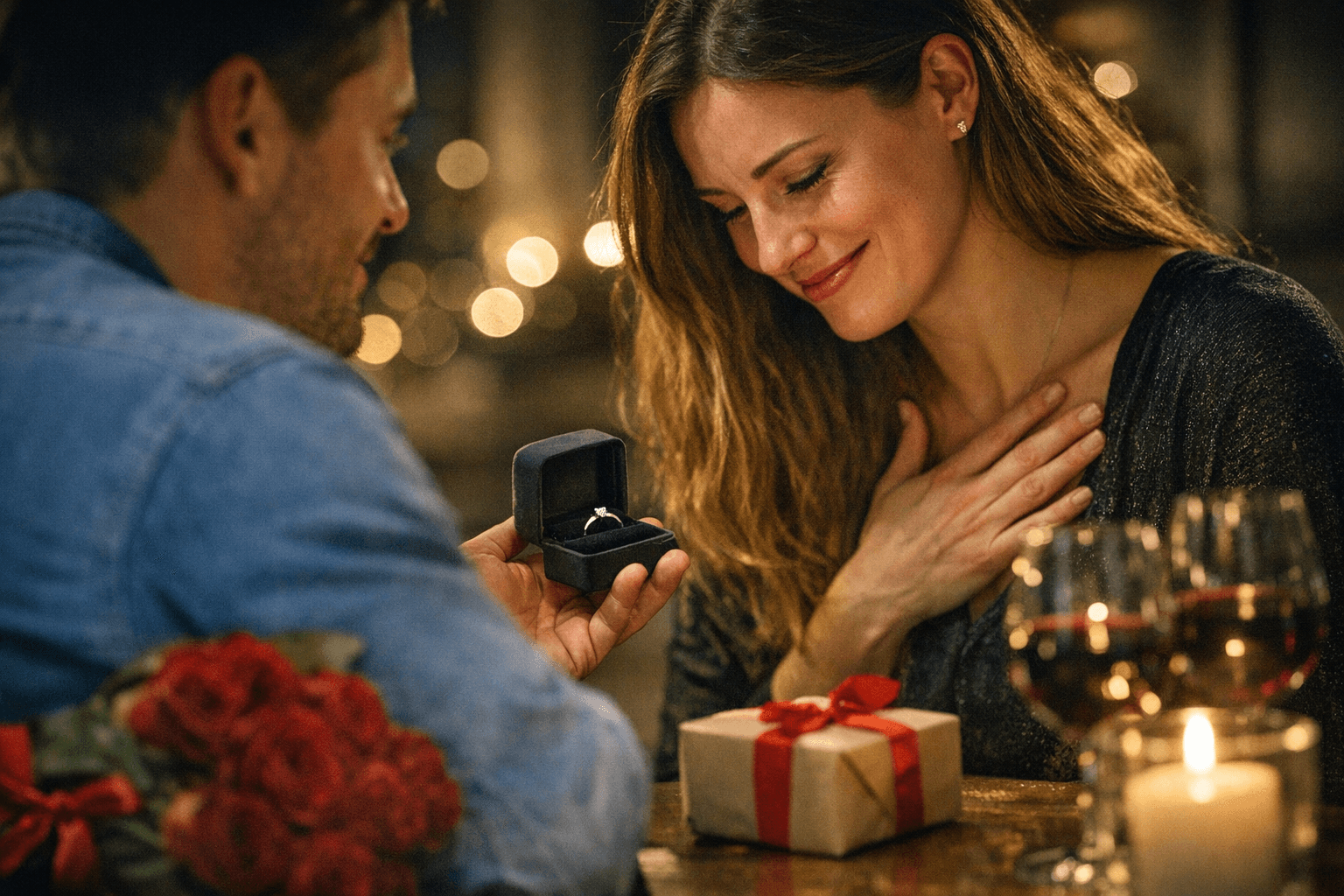
A diamond ring works because it says three things at once: I paid attention, I see a future, and I want this gift to stand inside the relationship, not outside it. That is why it has long outgrown its retail price, becoming less a purchase than a declaration. Valentine’s gifts feel most luxurious when they do the same thing, when the object becomes proof of intent rather than proof of spending.
That is the real lesson behind the diamond’s hold on the holiday. The ring is familiar, yes, but its power comes from the message it sends: visible effort, future-oriented meaning, and status within the relationship. A gift that checks those boxes can feel far more valuable than something expensive but generic.
How romance became a gift language
Valentine’s Day did not begin as a polished retail ritual. Its origins are unclear, and historians often link it to the Roman festival of Lupercalia and the martyrdom of St. Valentine. By the 14th century, though, it had become associated with romance, giving Europe a holiday that could be shaped by lovers, merchants, and eventually advertisers.
That commercial layer matters because modern Valentine’s gifting was built on it. De Beers says copywriter Frances Gerety created the line “A Diamond Is Forever” in 1947, and the company still presents diamonds as enduring symbols of love and connection. The slogan worked because it turned a gem into a shorthand for permanence, and that same logic still drives the holiday today: gifts are judged not only by what they cost, but by what they appear to promise.
What the spending numbers reveal
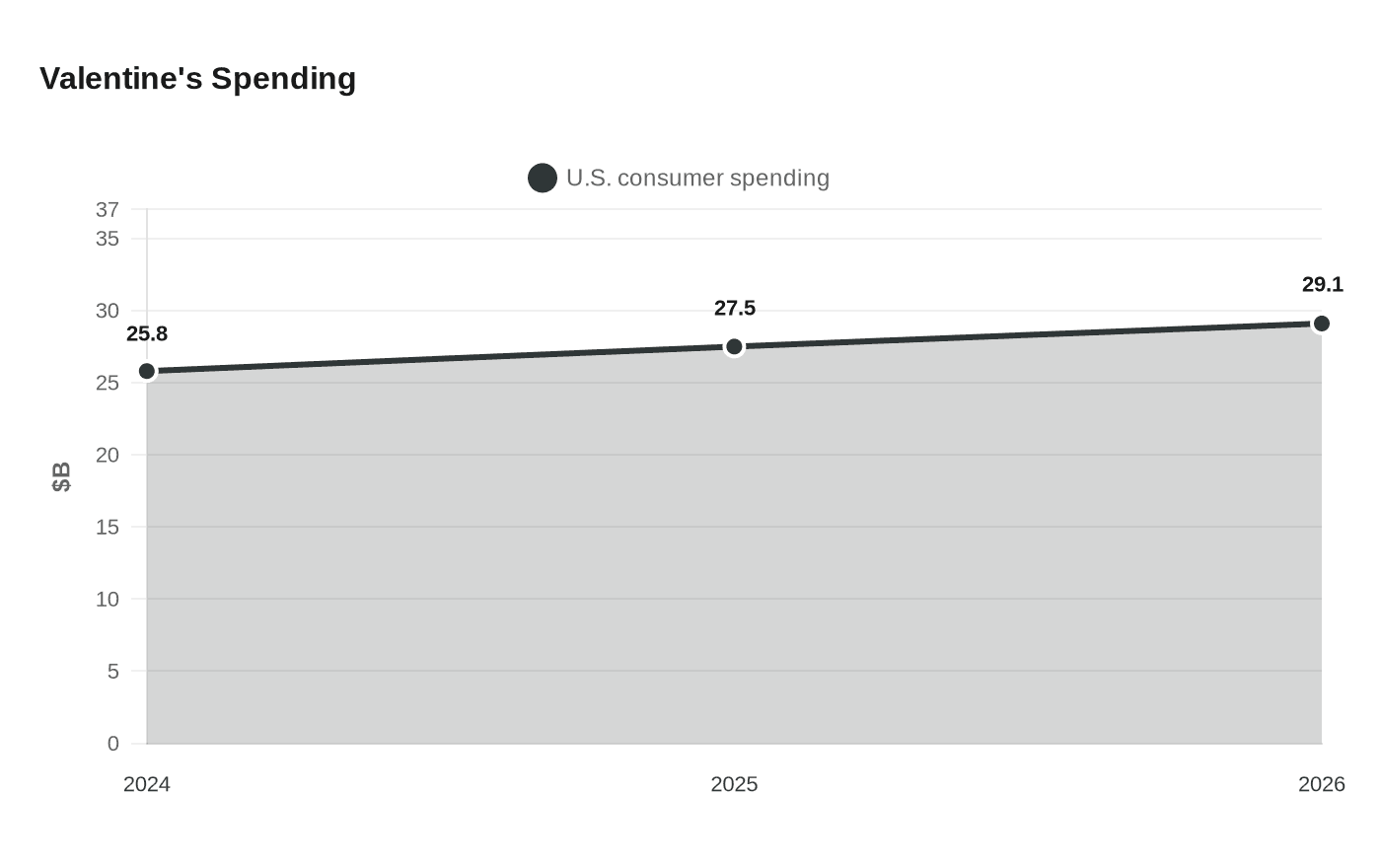
The scale of Valentine’s spending shows how deeply that promise has been absorbed into American consumer culture. The National Retail Federation said U.S. consumers expected to spend $25.8 billion on Valentine’s Day in 2024, then projected a record $27.5 billion in 2025 and $29.1 billion in 2026. Jewelry keeps landing at the top of the category list by dollars spent, and the NRF’s 2024 survey projected a record $6.4 billion in jewelry spending alone.
Those numbers say something important to anyone choosing a gift: people are not just shopping for romance, they are shopping for symbols. The holiday has become a stage where a present has to carry emotional weight quickly, which explains why jewelry, flowers, clothing, and an evening out keep setting records. Katherine Cullen, who has discussed these spending trends for the NRF, has pointed to the holiday’s consistent growth, and the pattern is clear: Valentine’s gifts are being asked to do more than delight, they are being asked to signify.
The high-value signals people actually notice
If you strip away the price tag, the gifts that feel most meaningful tend to share the same traits as that diamond ring. They show visible effort, they point forward, and they tell the recipient something about their place in your life. A gift that is obviously chosen, not grabbed, instantly feels richer.
- Visible effort: The gift reflects a specific person, not a generic occasion. Handwritten notes, custom details, and gifts tied to an inside story all register as more considered than a luxury item with no personal thread.
- Future-oriented meaning: The best gifts suggest time ahead, not just a moment completed. That can mean planning a shared experience, choosing something that will be used often, or giving an object that marks where the relationship is going.
- Status within the relationship: Some gifts feel powerful because they say, quietly but clearly, “You matter enough for me to make this special.” That does not require a diamond, only clarity of intent.
This is why some extravagant gifts fall flat. A pricey item without context can feel interchangeable, while a modest one with a story can feel intimate and rare. Valentine’s Day is one of the few occasions when people are not simply comparing products, they are reading signals.
How to borrow diamond-level meaning without a diamond budget
The smartest Valentine’s gifts borrow the same cues that make jewelry feel consequential. Start with personalization that is visible, not performative. A favorite scent, a book with a note inside, a framed photo from a place that matters to both of you, or a dinner reservation at a restaurant linked to a memory all carry a sense of intention that a last-minute purchase cannot fake.
The other trick is to make the gift useful in the relationship’s future. A set of espresso cups for the mornings you share, a travel accessory for a trip you are planning, or a small object that will live on a desk, bedside table, or kitchen counter can become part of daily life. When a gift enters routine, it gains emotional status fast.
You do not need a diamond budget to give a diamond-level signal. A $50 gift can feel more luxurious than a $500 one if it is chosen with specificity, presented beautifully, and tied to a future the two of you can actually imagine. That is the part people remember, because it says the gift was meant for them, not for the holiday.
The signal that lasts
Valentine’s Day has always been shaped by a mix of romance, ritual, and retail, and the spending data makes that impossible to ignore. But the enduring appeal of the holiday is not the price inflation or the jewelry category, it is the social meaning wrapped around the object. The best gifts, like the diamond ring, become shorthand for commitment, cherished status, and the life you expect to build together.
Know something we missed? Have a correction or additional information?
Submit a Tip