3D-Printed Biodegradable Hollows Offer Lifeline to Endangered Cavity-Nesting Birds
Oxford's Dan Parker printed biodegradable "prosthetic hollows" from mycelium and sawdust composites to replace vanishing ancient tree cavities for endangered birds at Blenheim Palace.
Marsh tit numbers in England have halved since the 1970s. That single statistic sits at the center of a project now being trialed at Blenheim Palace that asks whether a desktop FDM printer and a bag of mycelium composite can do what centuries of ancient hollow trees once did for free.
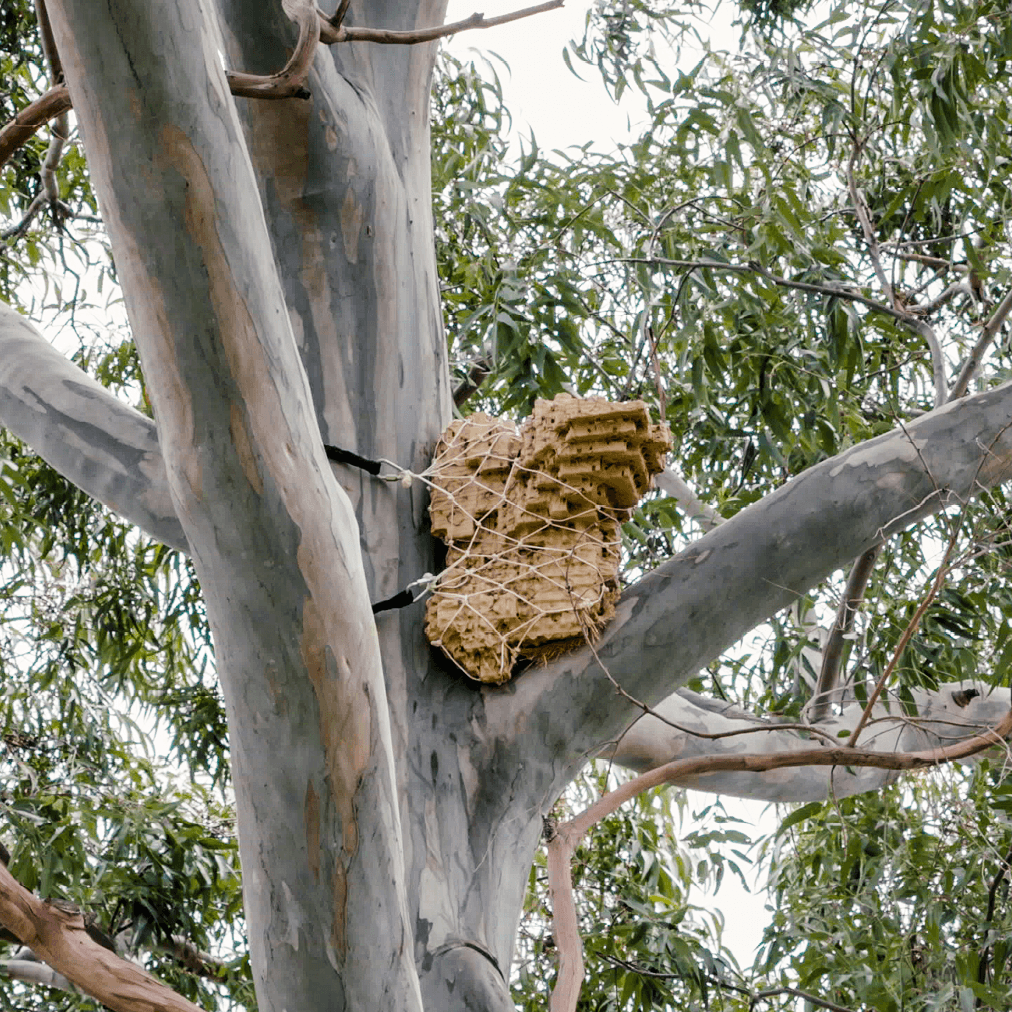
Designer and researcher Dan Parker, working across the University of Oxford and the Deep Design Lab at the University of Melbourne alongside collaborator Dr. Stanislav Roudavski, coined the term "prosthetic hollows" for the resulting structures: engineered replacements for the ancient tree cavities that cavity-nesting species depend on and are losing at an accelerating rate. The project is being tested at Blenheim Palace, a UNESCO World Heritage Site near Oxford, and at field installation sites across southern Australia.
The problem with conventional bird boxes runs deeper than aesthetics. Traditional artificial nests are frequently poor ecological matches for large or specialist species, suffering from extreme temperature swings, moisture ingress, and internal geometries that can endanger rather than protect chicks. Parker's team addressed the geometry problem at the source by 3D scanning actual natural hollows and running those scans through generative CAD workflows to reproduce the thermal buffering and microhabitat conditions that ancient trees provide passively. The design intent was not to iterate on an existing nest box but to replicate what the hollow itself does, down to the microclimate.
The material choices are the part most likely to catch the attention of anyone already running experimental filaments at home. At Blenheim Palace, the team tested mycelium-infused hollows alongside prints made from sawdust-filled bio-resin, both deposited through conventional FDM hardware. The broader research palette also includes plant-based biodegradable plastics and hempcrete. In Melbourne, the focus shifted to powerful owls, with prototypes developed from field scans of natural cavities and printed for active trials at Australian conservation sites.
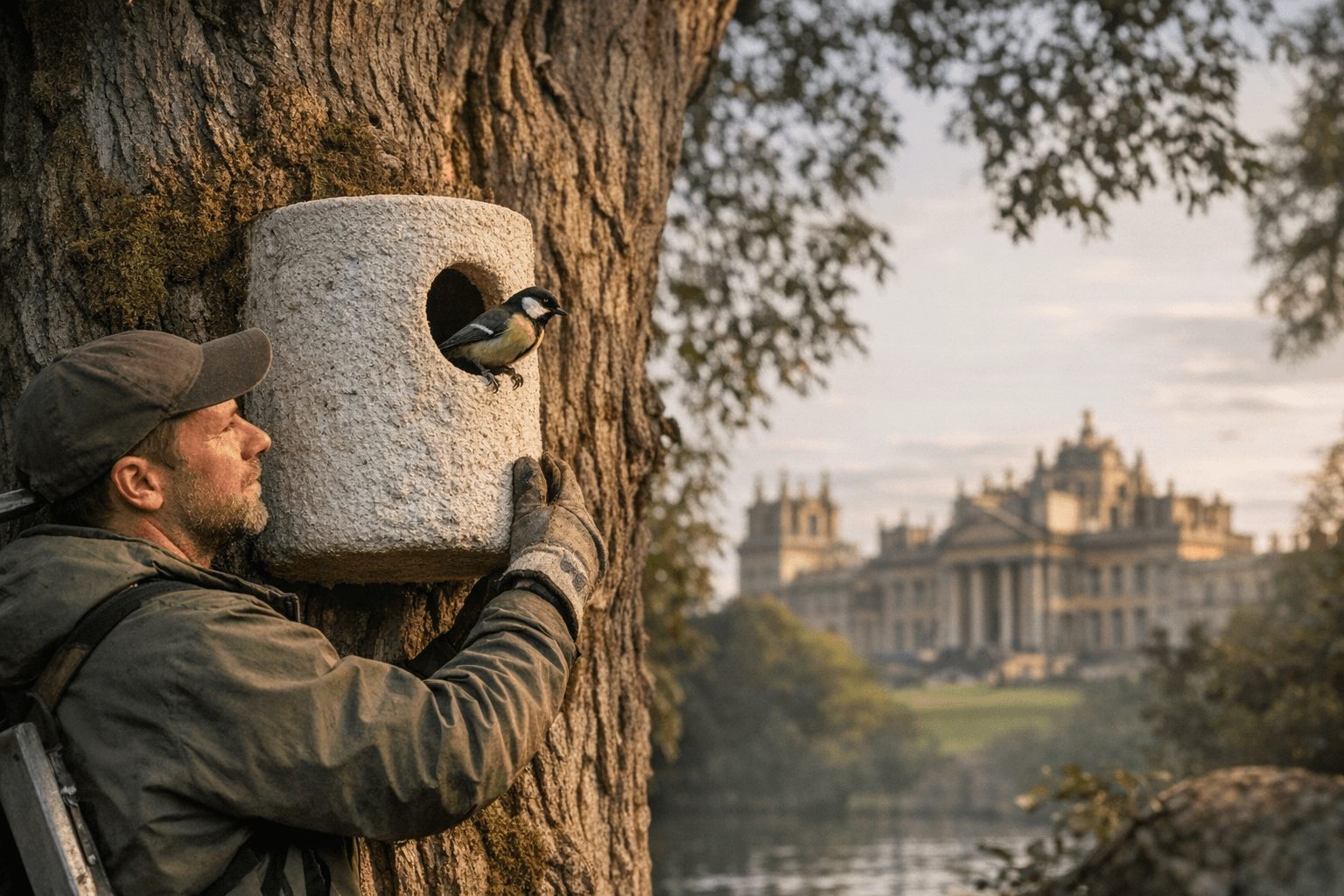
What researchers are now measuring is durability under real field conditions, microclimate performance inside the hollow, and whether target species actually accept the structures. Temperature stability and moisture resistance in outdoor environments are the stress tests that will separate a promising lab print from a viable conservation tool deployed at scale.
For anyone already experimenting with PLA alternatives, wood-fill filaments, or mycelium-based substrates, this project functions as a real-world durability benchmark that no controlled print farm can replicate. The combination of generative design workflows, biodegradable materials, and field ecology data produces the kind of feedback loop that could genuinely inform the maker community's shift toward sustainable printing, not as a philosophical position, but because chick survival rates in the English countryside are a harder performance metric than tensile strength on a calibration cube.
If the field results hold, the design and materials data from Parker and Roudavski's work could become a replicable template for conservation programs globally, putting printable hollow specifications within reach of local wildlife groups and maker spaces operating on modest budgets.
This article was produced by Prism’s automated news system from verified source data, official records, and press releases, then run through automated quality and moderation checks before publishing. The system is built and supervised by the people who set the standards it runs under. Read our full AI policy.
Did this article answer your question?