Georgetown Researchers Develop Pectin-Based 3D-Printed Scaffold for Bone Regeneration
Stella Alimperti's Georgetown lab is 3D printing bone scaffolds from fruit pectin at room temperature, embedding living cells without the toxic conditions most synthetic materials demand.
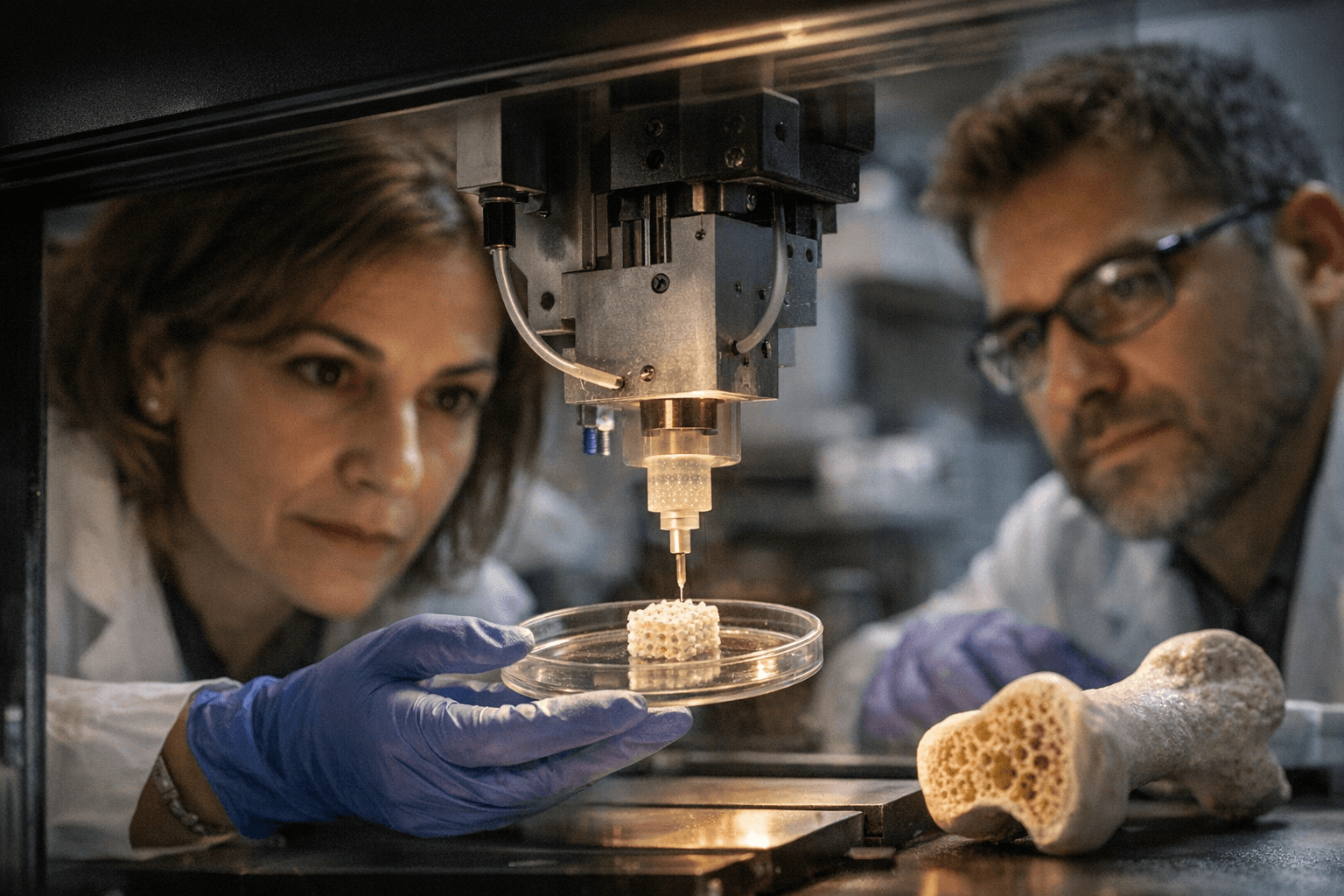
Pectin from apples and citrus peels, the same substance that thickens jam, is the base material for a 3D-printed bone graft scaffold being developed at Georgetown University in Washington, D.C., one that prints at room temperature, carries living cells inside its matrix, and is aimed at replacing implants the body was never designed to accept.
Styliani (Stella) Alimperti, PhD, an associate professor of biochemistry and molecular and cellular biology at Georgetown's School of Medicine, is leading the work. Her design places a pectin hydrogel core between two outer layers of hydroxyapatite, a bone-like material naturally made from calcium and phosphorus. That outer material adds strength and density, helping the graft behave more like natural bone.
The room-temperature printability is a practical advantage that goes beyond convenience: it simplifies the process while protecting the living cells embedded in the scaffold, which will later support healing and nutrient transport. Most synthetic bioprinting candidates require extreme thermal conditions that can damage or destroy those cells before the graft is ever implanted. Alimperti frames pectin's biocompatibility as a deliberate challenge to the status quo: "Pectin is compatible. It's something good. It doesn't harm our body," she said. "It gives us the ability to challenge other methods that use toxic materials or synthetic polymers."
Metal implants used in bone grafts carry a higher risk of infection and bodily rejection, and can cause inflammation at the implant site as well as fractures in surrounding bone. Alimperti puts the problem in biological terms: "Metal is not something we have in our system. Bones are not made out of metal, so the successful integration between bone and metal is very low and blocks the regeneration capacity of the bone." Autografts harvested from a patient's own body introduce a second surgical site and its associated pain and morbidity; donor allografts carry disease transmission risk. The pectin scaffold is designed to sidestep all three failure modes.
The lab's work is focused on facial bones and long bones, the dense bones in limbs built for strength, two categories where patient-specific geometry matters most. Additive manufacturing is central to that specificity: with 3D printing, researchers can design features more precisely, creating spaces where cells can attach, grow, and form new tissue, internal architectures that casting or machining cannot replicate.
The commercial stakes are significant. The global bone grafts and substitutes market was estimated at $3.16 billion in 2024 and is projected to reach $4.60 billion by 2030, growing at a CAGR of 6.6%, driven partly by demand for synthetic alternatives to harvested grafts.
The Georgetown scaffold remains at the preclinical research stage, with no animal or human trial timeline announced and a substantial regulatory pathway ahead. But Alimperti's broader framing captures what the work is really solving: "The process of getting the body to regenerate its own tissue is very challenging due to ageing, injury and other factors. Developing tissue parts or whole organs that are as close as possible to natural ones and have the right structures and cells will support tissue regeneration and recovery." When a polysaccharide extracted from citrus peel can carry living cells through a printhead intact, that regeneration starts with the printer.
This article was produced by Prism’s automated news system from verified source data, official records, and press releases, then run through automated quality and moderation checks before publishing. The system is built and supervised by the people who set the standards it runs under. Read our full AI policy.
Did this article answer your question?