3D-printed cryocooler prototype shows hobby fabrication can reach cryogenics
A GM cryocooler with printed parts is a wild proof that hobby gear can reach cryogenics, even if sealing and tolerances still demand real hardware.
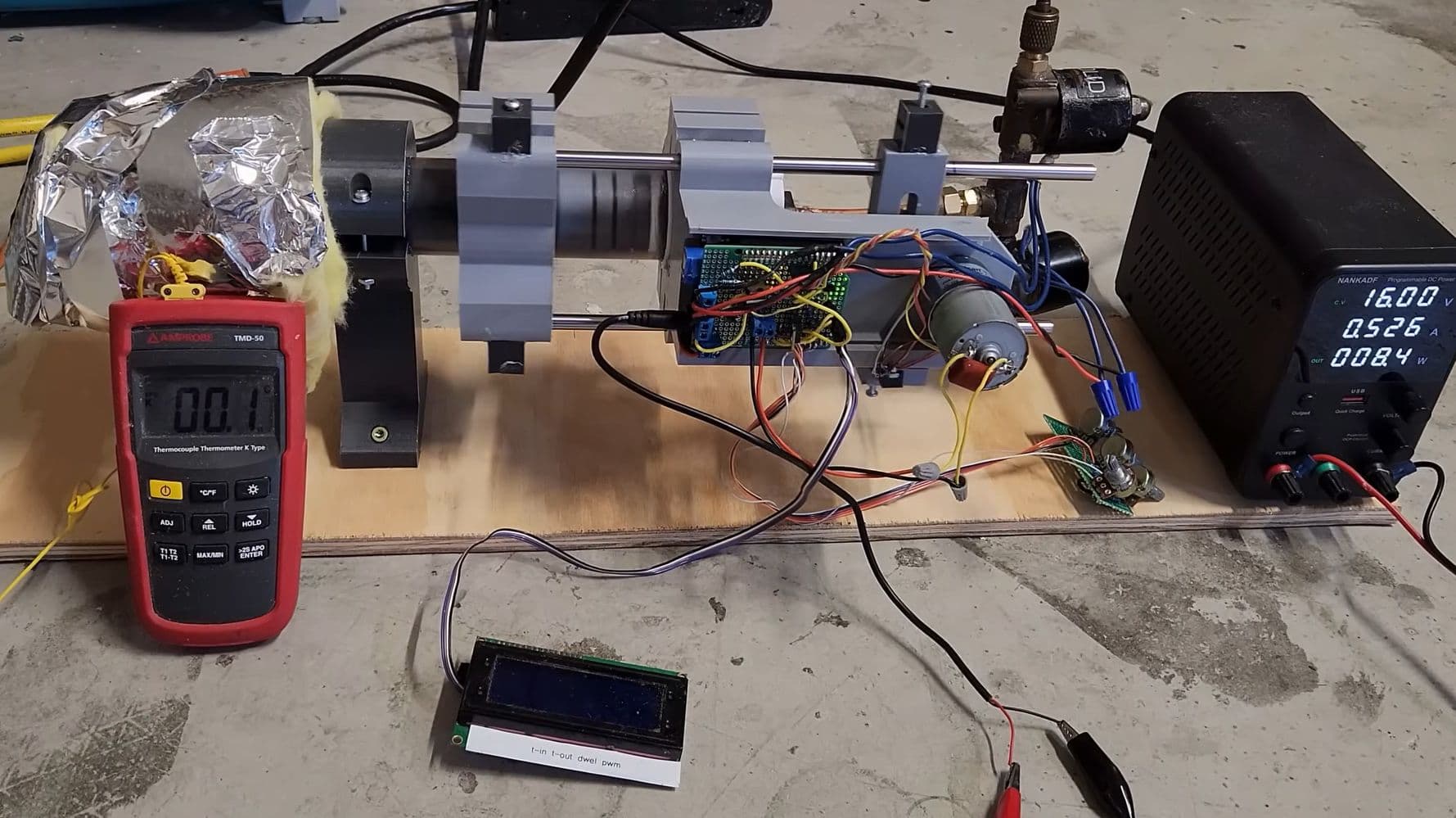
A cryocooler built with 3D-printed parts sounds like the kind of project that belongs in a rumor thread, not a workshop. Yet the prototype at the center of this story turns that shock into a practical lesson: hobby fabrication can now reach into cryogenics, as long as you respect the limits of plastic, pressure, and long-cycle mechanical reliability.
What the prototype proves
The build, shown in a video by Hyperspace Pirate, walks through two prototypes for a DIY Gifford-McMahon cryocooler. That matters because the GM design is not a novelty toy, it is a serious refrigeration architecture that uses a displacer piston and a compressor in a closed gas loop, typically with helium as the working fluid. Seeing that concept re-enter the maker world through printed parts is what gives the project its edge.
The big takeaway is not that a printer can replace a machine shop. It is that a printer can shoulder enough of the structure to make experimentation realistic. Instead of machining every bracket, piston housing, and support element from metal, the builder can print development parts, fit-check pieces, enclosure sections, support fixtures, and custom geometry, then concentrate expensive effort on the sections that truly need it.
How a GM cryocooler works
GM cryocoolers sit in a family of machines designed to reach cryogenic temperatures, generally defined as below 120 K. In a GM system, the compressor drives a gas through a regenerative cycle while the displacer piston helps move that gas through different temperature zones. The principle is simple enough to understand, but the execution is not simple at all, because the machine has to keep working smoothly over many cycles while moving gas reliably and without leaks.
That is where the challenge begins. Cryogenic machinery lives and dies by sealing, tolerances, pressure handling, thermal management, and dependable motion. A printed prototype can demonstrate geometry and workflow, but it cannot magically erase the demands of low-temperature operation. The fact that the core concept can be prototyped with printed parts is impressive; the fact that it still has to survive the realities of cryogenic hardware is what keeps the build grounded.
What you can print, and what still needs conventional hardware
The most useful lesson in this build is the division of labor between additive manufacturing and traditional hardware. Printed parts are ideal for the pieces that benefit from iteration: brackets, housings, supports, enclosures, fixtures, and unusual shapes that would be slow or costly to machine. Those are exactly the parts where 3D printing shines, because design changes can happen quickly and cheaply.
The parts that remain unforgiving are the ones tied to sealing, pressure, and repeated motion under load. That means the printed side of the build helps create the frame and interfaces, while the nonprinted side still has to handle the serious engineering work. In a project like this, that split is the point: use the printer where it saves time, and use conventional materials where failure would end the experiment.
That approach also explains why the prototype is meaningful for hobbyists. It lowers the barrier to entry without pretending the whole system is easy. A cryocooler is not a casual weekend print, but the use of printed components means a serious home lab can start exploring a domain that used to sit far outside ordinary maker reach.
Why the history matters
The GM design is not new. William E. Gifford and Howard O. McMahon developed it in the 1950s at Arthur D. Little Inc., and by the 1960s it was commercially available. That history is important because it shows the technology was mature long before desktop printers existed. What has changed is not the physics, but the accessibility of prototyping.
By the 1970s, GM cryocoolers were being used in cryopumps by Helix Technology Corporation and its subsidiary Cryogenic Technology Inc. Cryopumps then reached a major industrial milestone when IBM began using them in integrated-circuit manufacturing in 1976. That industrial pedigree explains why a home-built version feels audacious. This is not a fringe concept invented for internet points. It is a well-established refrigeration method being pulled back into the hobby space with maker tools.
How GM fits into the broader cryocooler family
GM machines are one part of a broader cryocooler landscape that also includes Stirling and pulse tube designs. GM coolers have found widespread use in MRI systems and cryopumps, which tells you how practical they are once engineered properly. Pulse tube cryocoolers emerged largely in the early 1980s and stand out because they have no moving parts in the low-temperature section.
That comparison helps explain why the GM build is so compelling for makers. GM is demanding, but the principle is still approachable enough to study, prototype, and iterate on. It sits in a sweet spot where the design is old and proven, yet still just strange enough to feel like forbidden territory when you see it come together on a hobby bench.
What this says about hobby fabrication now
This project is exciting because it shows how far home fabrication has moved beyond visible consumer gadgets, cosplay props, and desk toys. A printer can now participate in systems that touch the edge of specialist lab equipment. That does not make cryogenics easy, but it does mean the first steps no longer require a fully equipped machine shop.
The practical lesson is simple: the upper edge of hobby fabrication is no longer defined by the printer alone, but by how intelligently you combine printed parts with real mechanical discipline. When a builder can prototype a cryocooler with printed brackets, housings, and support structures, the line between “maker project” and “specialist instrument” starts to blur. That blur is exactly where the next generation of ambitious home-lab builds is going to happen.
This article was produced by Prism’s automated news system from verified source data, official records, and press releases, then run through automated quality and moderation checks before publishing. The system is built and supervised by the people who set the standards it runs under. Read our full AI policy.
Did this article answer your question?