3D-printed masks help burn patients heal at Haiti’s Tabarre hospital
At Tabarre hospital, a scan-to-print mask is giving Haiti’s only burn unit a custom tool for pressure therapy when plaster molds and supply lines fall short.
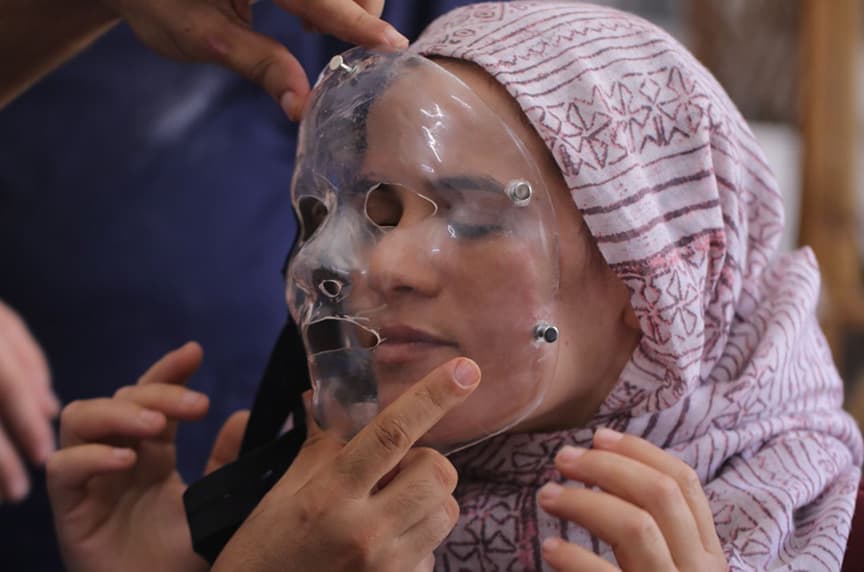
In Port-au-Prince, Médecins Sans Frontières is using 3D-printed compression masks to help burn patients heal at Tabarre hospital, the only facility in Haiti that specializes in treating burn victims. The hospital’s 30-bed burn unit is built around patient-specific care, with masks made to fit the face and neck after a scan, then used to deliver pressure therapy during recovery.
The masks sit inside a wider burn-care workflow that includes reconstructive surgery, skin grafts, post-operative care, physiotherapy, and mental health support. MSF moved its burn service from Drouillard Hospital to Tabarre in 2021 because of safety concerns tied to insecurity, and the pressure on the unit has only grown as violence, road blockages, and supply disruptions make it harder to move medicines, medical equipment, and fuel into the capital. Haiti’s shortage of health workers, especially specialists, has deepened because many professionals have left the country.
For deep facial burns, transparent facial orthoses are used to apply pressure therapy, reduce hypertrophic scarring, improve appearance, and lessen psychosocial impact. The conventional method relies on a plaster mould over the face, a process that can be uncomfortable for patients. At Tabarre, the 3D-printed version gives clinicians a more exact fit for injuries that can change as swelling drops and healing begins.

The 3D work at Tabarre is part of a broader MSF program that began as a pilot in Amman, Jordan, in 2017. It now supports burn patients with facial and neck injuries in Haiti, Jordan, Gaza, and Syria, and nearly 500 patients have benefited overall. In Haiti, the approach has already shown its value in individual recoveries: Marie Harolde, injured in a gas explosion in October 2025, received a custom compression mask and had significant improvement by April 2026.
The same system has also been used after mass-casualty burns. On September 14, 2024, a tanker truck explosion in Miragoâne killed more than 15 people and injured about 40. Jordan, who suffered burns over 60 percent of his body, was among the survivors treated at Tabarre.
This article was produced by Prism’s automated news system from verified source data, official records, and press releases, then run through automated quality and moderation checks before publishing. The system is built and supervised by the people who set the standards it runs under. Read our full AI policy.
Did this article answer your question?