Adidas unveils Project R.A.P. football boot with 3D-printed lattice fit
Adidas’ Project R.A.P. boot packs size-specific cushioning and ventilation into one 3D-printed lattice part, and Adidas says it’s about 15% lighter than its 2025 boots.
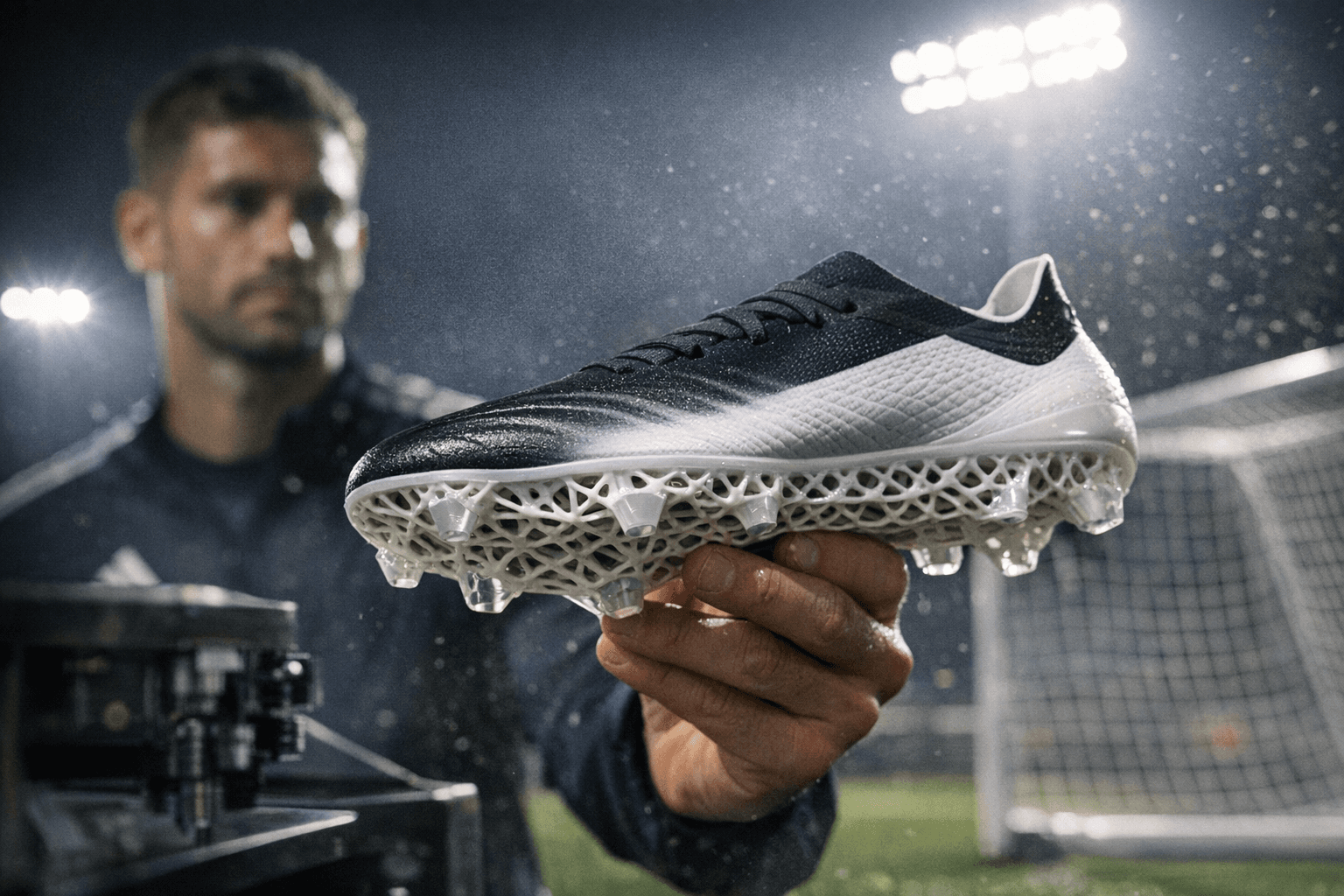
The newest signal that 3D printing is graduating from “cool prototype” to “game-day hardware” came in the form of a football boot: Adidas’ first on-pitch release under Project R.A.P., a program built around high-resolution 3D printing of lattice structures that change by size and performance need.
Adidas publicly revealed the Project R.A.P. boot on April 9, 2026, positioning it as an early real-world implementation of individualized, additively manufactured footwear. The core idea is straightforward and very maker-brain in its execution: instead of treating the midsole-like geometry as a uniform part, the boot uses lattice geometries and ventilation zones that can be tuned within a single printed component.
The company said the printed component is about 15% lighter than its 2025 models, while also improving breathability and delivering tailored underfoot cushioning. Where this gets especially interesting, and where traditional mass manufacturing starts to choke, is Adidas’ claim of “size-specific cushioning.” Rather than scaling the same internal structure up and down, each size gets a slightly different lattice tuned for expected player weight and performance metrics.
Adidas also framed the boot as athlete-influenced equipment rather than a lab demo. Khvicha Kvaratskhelia and Ademola Lookman were cited as contributors whose testing helped shape the design, and the first pairs are intended for use by top-level players on the pitch, putting the printed lattice in the same category as any other performance-critical component that has to survive real minutes and real impacts.
For the 3D printing community, the detail worth lingering on is not the look of the lattice, but the workflow argument embedded in it: additive as the manufacturing method that makes economically unrealistic variability suddenly practical. Infill is no longer just “how do I save filament,” it is the product, with stiffness, cushioning response, and airflow all co-designed into geometry.
Project R.A.P. also adds fuel to the conversations that tend to follow any high-profile printed consumer good, including manufacturability, certification expectations, and sustainability claims. Adidas’ move puts a familiar challenge on a bigger stage: bridging print success and field performance when the part is no longer a prototype, but the thing an athlete’s season depends on.
This article was produced by Prism’s automated news system from verified source data, official records, and press releases, then run through automated quality and moderation checks before publishing. The system is built and supervised by the people who set the standards it runs under. Read our full AI policy.
Did this article answer your question?