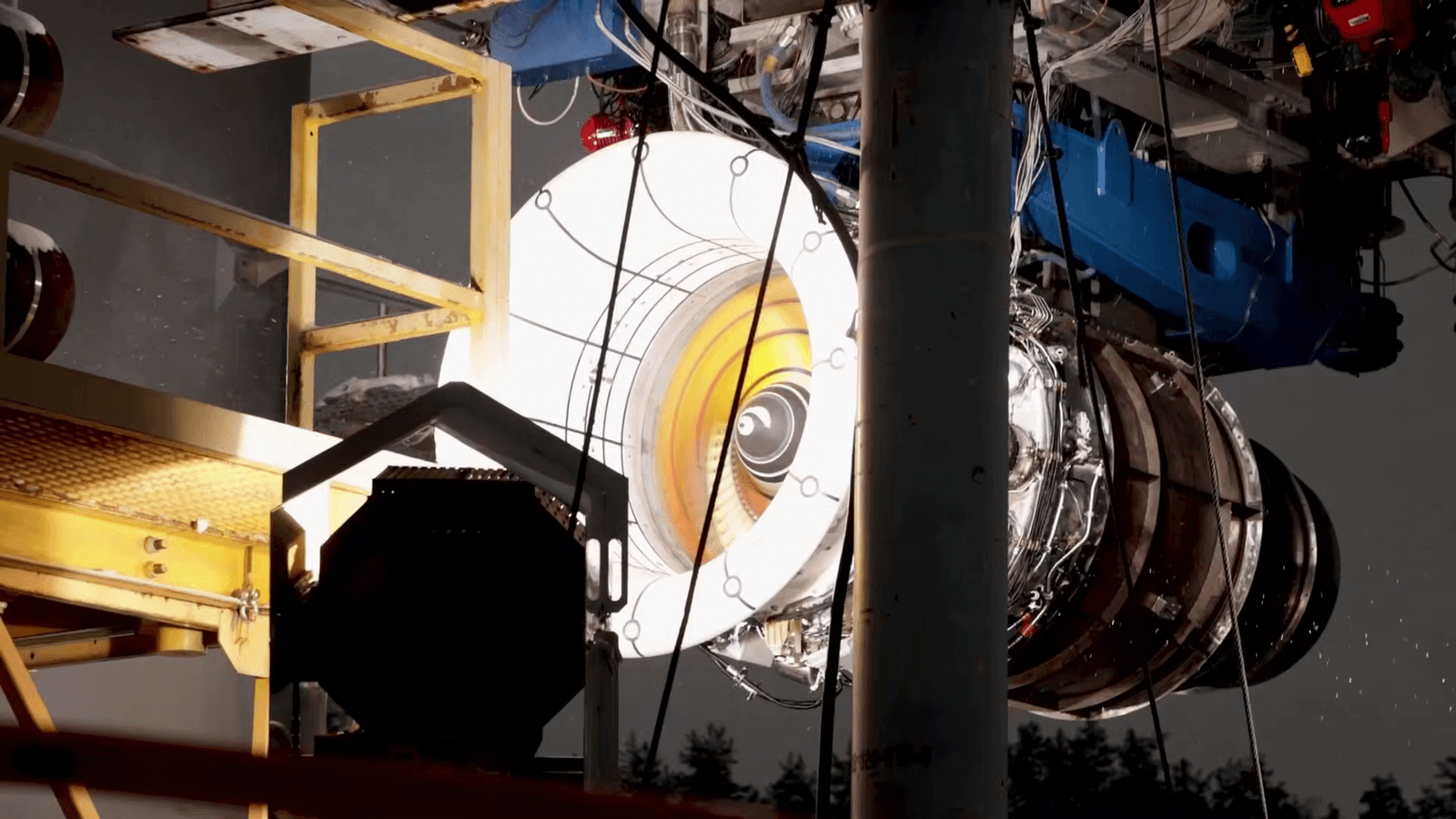
Agnikul Cosmos fires four 3D-printed rocket engines in cluster test
Four 3D-printed semi-cryogenic engines fired together, pushing Agnikul beyond single-engine demos and into the harder test of repeatable clustered propulsion.
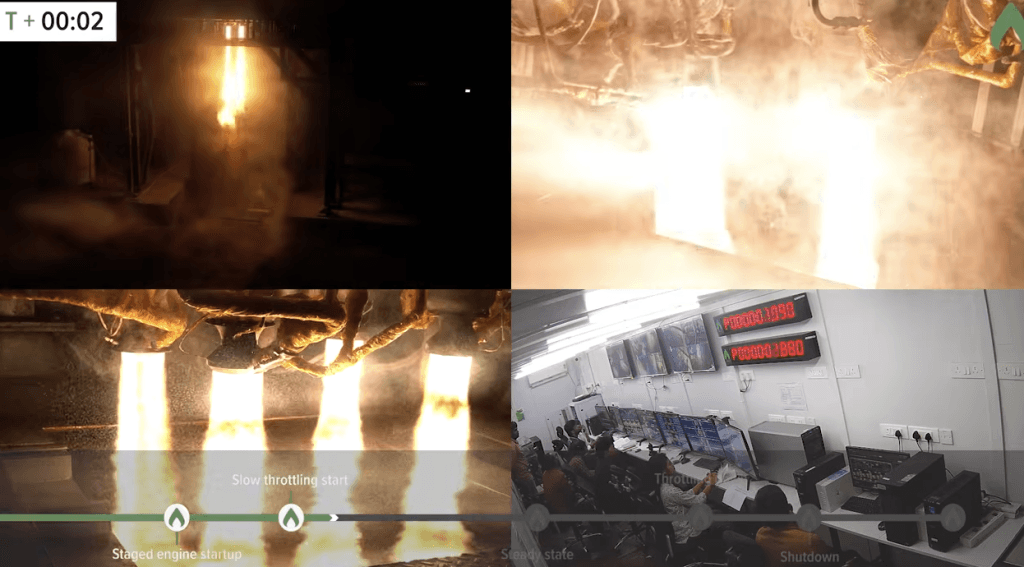
Four 3D-printed semi-cryogenic rocket engines fired together in Chennai, and the real milestone was not just the ignition itself. For Agnikul Cosmos, the harder question was repeatability: whether four separately printed, in-house-built engines could behave like a matched set when the vehicle design starts depending on clustered propulsion instead of a single hot-fire demo.
That matters because Agnikul says its Agnilet and Agnite engines are printed in one piece, with no separate parts or assembly, then CT-scanned, heat-treated, ground and cleaned before flight. The company says the engines are manufactured entirely in-house in inconel at Agnikul Rocket Factory-01, its dedicated facility for 3D-printed rocket engines in Chennai. The test puts that manufacturing chain under a much tougher lens than a one-engine firing ever could, because clustering raises the bar on synchronization, integration and control.
Agnikul has been building toward this kind of validation for a while. The company says Agnibaan is a fully indigenous orbital-class launch vehicle for small satellites to low Earth orbit on demand, and that clustering is part of its launch-vehicle design philosophy because different payloads need different engine counts. It also says Launchpad-01 at SDSC SHAR in Sriharikota is India’s first private launchpad established by the company, tying the engine program to a broader attempt to control more of the launch stack in-house.

The pace of that stack has been a selling point all along. Agnikul has said its printed engines can be turned around in seven days at roughly one-tenth the cost of conventional manufacturing, a sharp contrast to the seven months COO Moin SPM has said traditional engines can take to build. Earlier milestones show the same progression: Agnikul says it test-fired an Agnibaan engine on May 23, 2025, and carried out a sub-orbital launch of Agnibaan on May 30, 2024. Fortune India also reported a three-engine cluster test in February 2026, making the four-engine firing the next step in a deliberate climb.
For 3D-printing readers, that is the story here. A clustered engine test says far more about a process than a one-off print ever can. It is a proof point for part consistency, thermal behavior and assembly discipline, and it shows Agnikul trying to turn additive manufacturing from a fast prototyping tool into a repeatable production method for flight hardware.
This article was produced by Prism’s automated news system from verified source data, official records, and press releases, then run through automated quality and moderation checks before publishing. The system is built and supervised by the people who set the standards it runs under. Read our full AI policy.
Did this article answer your question?