AI-Designed 3D-Printed Rocket Engine Hot-Fires in Under Two Weeks
A Dubai company says its AI model designed a copper rocket engine, 3D printed it, and hot-fired it in less than two weeks.
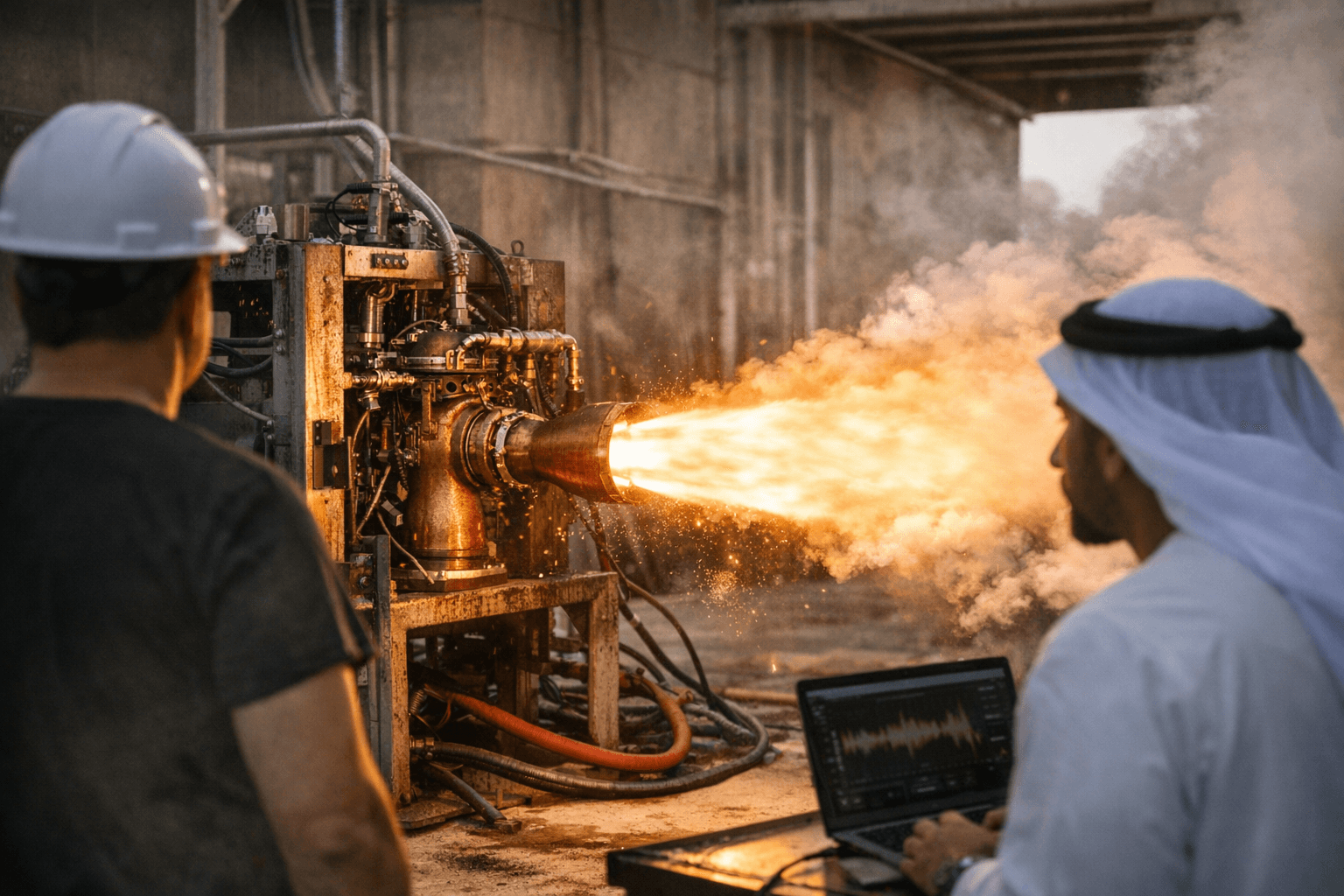
A rocket engine went from final specification to manufacturing and test in less than two weeks, and that is the part 3D printing people will notice. LEAP 71, the Dubai-based AI engineering company, said its Noyron model designed the 5 kN kerolox liquid rocket thruster autonomously, without human intervention, before sending the geometry to metal printing in copper.
The engine was 3D printed by AMCM in Germany and then prepared for testing with help from University of Sheffield researchers. LEAP 71 said the engine was successfully hot-fired on June 18, 2024. The propellant pairing was classic rocket talk, kerosene and cryogenic liquid oxygen, but the workflow around it felt newly compressed: generative design, additive manufacturing, post-processing, and test prep packed into a schedule that would normally stretch far longer in propulsion development.
That speed is what makes the story relevant beyond aerospace. The leap is not that a desktop machine can suddenly print a rocket motor chamber. It cannot. The useful lesson is that AI-assisted geometry generation can shorten the most expensive part of engineering, the back-and-forth between concept, revision, and a first physical prototype. For hobby designers, that points to faster iterations on parts that are actually in reach: airflow ducts, lightweight brackets, machine enclosures, functional test pieces, and complex forms that would take days to model by hand. The real trickle-down is not the engine itself, but the workflow.
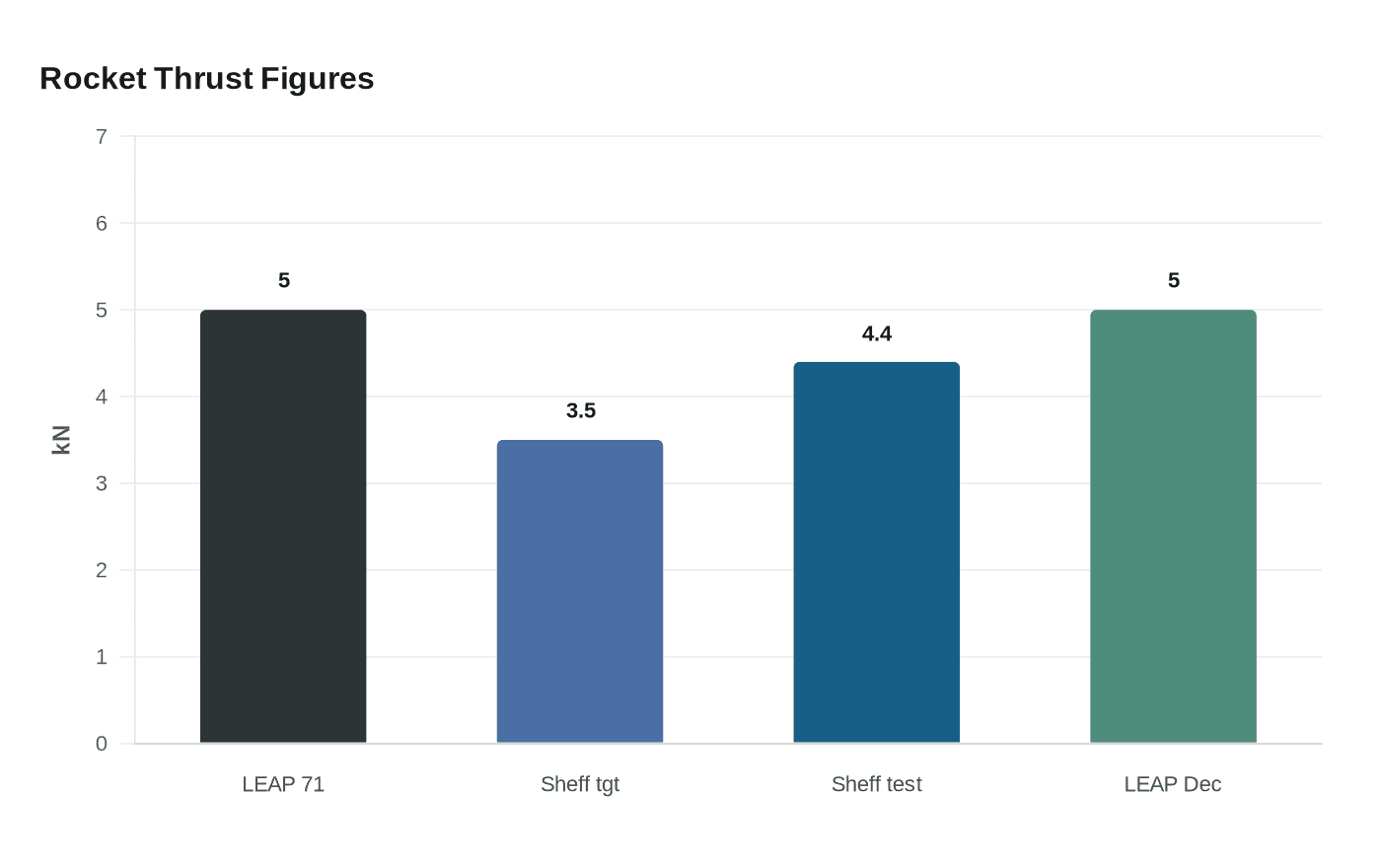
Sheffield’s broader rocket work gives the milestone another layer. In 2023, the university reported that students built and successfully tested a metallic 3D-printed liquid rocket engine, described as the first student 3D-printed engine in the UK and the most powerful student-built liquid rocket engine. That earlier project reached a design target of 3.5 kN and produced 4.4 kN of thrust, showing that additive manufacturing was already moving from classroom demo to serious propulsion hardware before LEAP 71’s AI-designed thruster.
LEAP 71 later said it hot-fired another 5 kN engine, this time an aerospike design, in December 2024. Taken together, the two tests suggest the company is not chasing a one-off stunt but building a repeatable computational engineering pipeline for multiple engine architectures. For the 3D printing world, the takeaway is sharper than a headline about rockets: AI is starting to squeeze the design cycle itself, and that may matter as much as the metal coming off the machine.
This article was produced by Prism’s automated news system from verified source data, official records, and press releases, then run through automated quality and moderation checks before publishing. The system is built and supervised by the people who set the standards it runs under. Read our full AI policy.
Did this article answer your question?