Axtra3D links polymer 3D printing into one digital thread
Axtra3D is stitching prep, printing, washing, curing, and validation into one traceable workflow, betting that polymer users want fewer handoffs, not just faster prints.
The real bottleneck is not always the printer
In polymer printing, the hardest part is often everything around the printer. Files get prepped in one tool, supports are tuned in another, wash timing lives somewhere else, cure settings get copied by hand, and when a part fails, the trail goes cold fast. Axtra3D is betting that the next big leap in photopolymer production is not another isolated machine, but a workflow that keeps every step tied together.
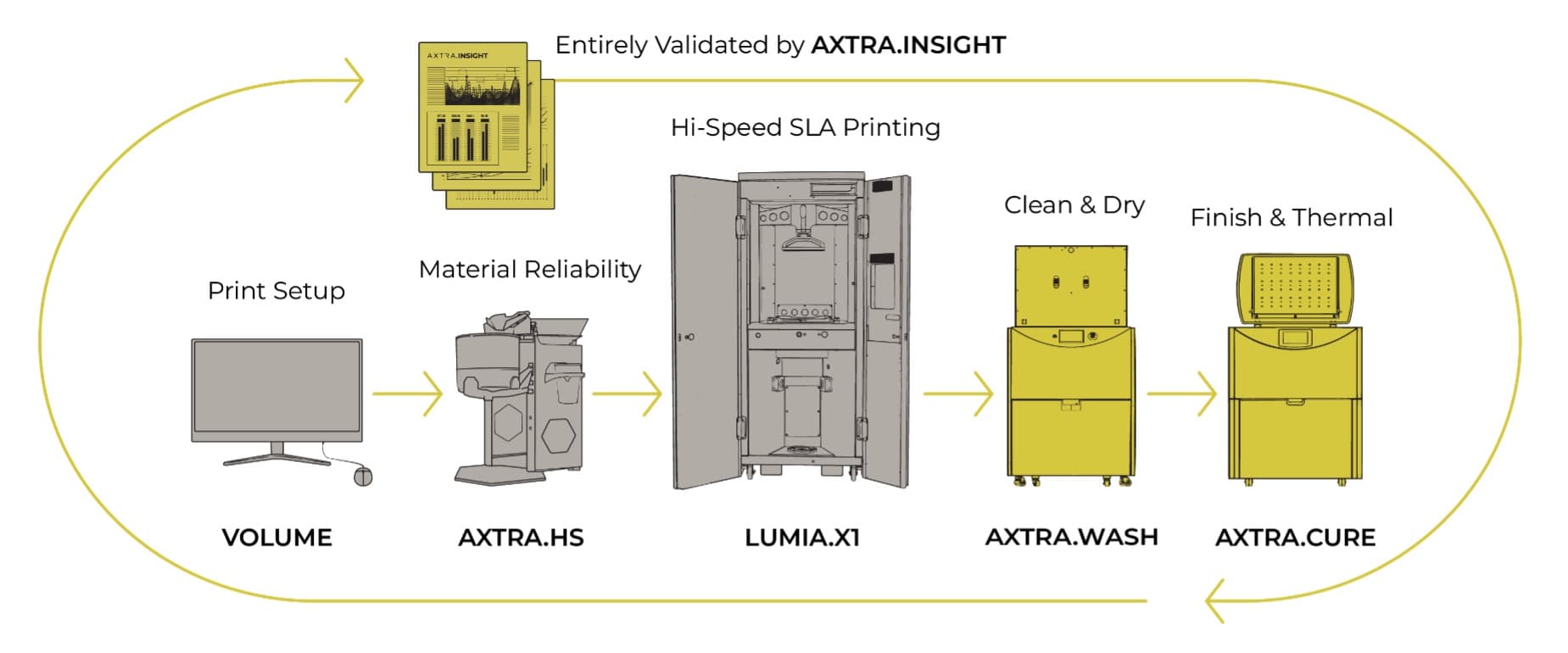
That is the pitch behind Axtra Workflow, the company’s connected production stack. Instead of treating slicing, printing, post-processing, and validation as separate jobs, Axtra3D wants them to behave like one digital thread. For dental teams, prototyping shops, and short-run production users, that kind of traceability can matter as much as raw speed.
What Axtra3D is actually connecting
Axtra3D branded its system Axtra Workflow in late 2025, and the structure is broader than a printer plus accessories. The company describes it as a fully connected and validated process that links build setup, HPS printing, automated wash and dry, UV and thermal cure, and per-layer analytics.
At the center is Volume, Axtra3D’s build-preparation software. It handles model import, automatic orientation, intelligent support generation, print-file management across printer networks, and now includes an integrated HPS slicer. The practical promise is simple: slicing parameters, material profiles, exposure choices, wash recipes, and cure cycles can be inherited and verified instead of re-entered by hand. That cuts down on process drift and makes repeat jobs far more likely to behave the same way twice.
Axtra.Insight extends that logic into monitoring and records. Axtra3D says it provides real-time process data, analytics, full traceability, and monitoring across 155+ sensors. In a production setting, that is the difference between hoping a job was run correctly and being able to trace how it was run, layer by layer.
Why Hybrid PhotoSynthesis is more than a speed claim
Axtra3D’s hardware story starts with Hybrid PhotoSynthesis, or HPS, a process that blends strengths from SLA and DLP. The company says HPS can print up to 20 times faster than traditional SLA in some applications, and its customer-facing materials for the Lumia X1 describe throughput gains in the 2x to 20x range depending on use case.
That speed matters, but the more interesting piece is how Axtra3D frames it. The company is not presenting HPS as a standalone machine trick. It is presenting HPS as one part of a production system where the software, the printer, and the finishing steps are validated together. That is a different conversation from the usual race to quote layer speed or headline throughput alone.
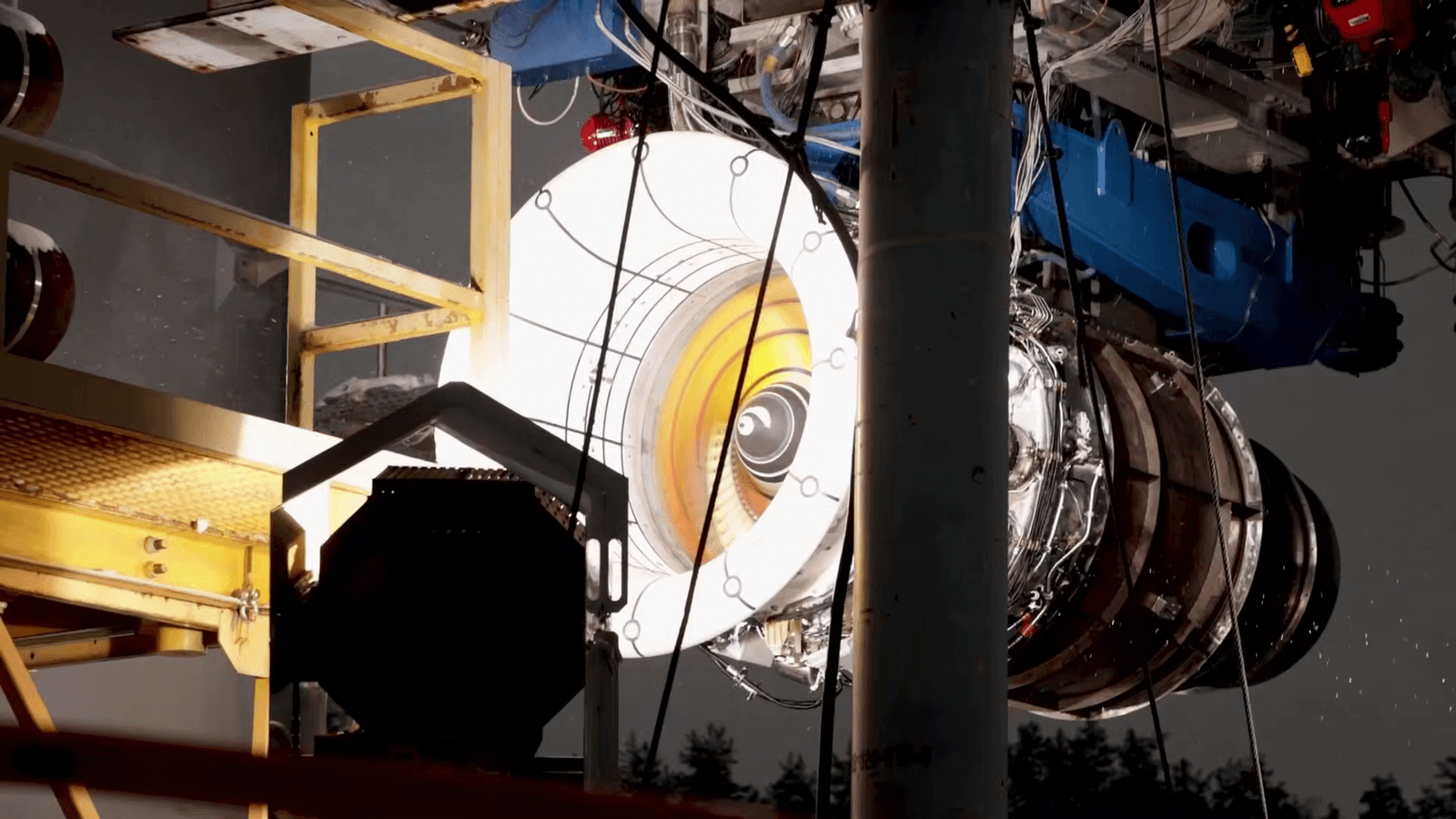
Axtra3D launched the Lumia X1 line at Formnext 2022 after proving HPS on alpha machines, and later described the printer as combining HPS and TruLayer technology for 24/7 lights-out production. That positioning makes the machine feel less like a lab curiosity and more like infrastructure for repeat work.
Why traceability is the bigger story
Independent additive manufacturing coverage has long treated post-processing and handoffs as a major bottleneck in scaling polymer AM. Axtra3D is leaning straight into that pain point. Its argument is that end-use parts often fail because of the chain around the printer, not because of the printer alone.
That framing is what makes the workflow pitch feel relevant beyond a single hardware release. If the setup is validated, the wash and cure steps are tied in, and the print record stays intact, then a failure becomes something you can diagnose instead of something you have to guess at. For teams chasing production repeatability, that is where the real labor savings live.
It also hints at where desktop and prosumer ecosystems may be headed. Users already expect cleaner slicers, better support generation, and fewer manual handoffs. Axtra3D is pushing the idea that the same expectation should extend through washing, curing, and quality control, not stop at the print button.
The company is building the commercial case around the stack
Axtra3D says it was founded in 2020, and its Series A round brought in $9.75 million led by HZG Group. The company says that funding helped it expand beyond North America and Europe, which matters because the workflow story only gets stronger if the channel and installed base grow with it.
The commercial signals have been encouraging. Axtra3D said its first half of 2025 included revenue growth, a 40% expansion of its global reseller network, and repeat machine purchases. The company also said it was on track to double 2024 revenue by the end of 2025. That is the kind of momentum that suggests customers are not only testing the hardware once, but bringing it back into production.
Protolabs is one of the clearest examples of that pattern. It installed its first Lumia X1 in September 2024 and a third unit in January 2026, a strong sign that the platform has moved beyond a one-off pilot. Axtra3D has also added channel momentum through reseller relationships with Hartwig Inc. and Dynamism, which tells you the company is trying to scale distribution alongside the product story.
Materials are part of the same play
The workflow narrative does not stop at hardware and software. In May 2026, Axtra3D expanded its dental materials ecosystem with KeyPrint and Keystone Industries through KeyModel Ultra Ivory for next-generation dental and orthodontic models. That is a smart fit for a company selling repeatability, since dental work rewards consistency, speed, and clean handoffs more than flashy one-off prints.
Axtra3D’s technical data sheet lists KeyModel Ultra properties at 50 MPa tensile strength, 1700 MPa tensile modulus, and 1940 MPa flexural modulus. Those numbers help explain why the company keeps emphasizing production use cases. The materials are being positioned not as generic resin options, but as part of a controlled system for repeatable parts.
A future where the workflow is the product
Axtra3D’s bigger message is easy to miss if you only look at the printer. The company is trying to sell a production environment where build prep, HPS printing, washing, curing, and validation all move as one connected record. That is a sharper bet than simply promising faster layers.
If polymer printing keeps moving in that direction, the next ecosystem feature users expect may not be another slicer setting or a hotter resin. It may be the quieter thing Axtra3D is chasing now, a digital thread that makes every failed print easier to trace and every good one easier to repeat.
This article was produced by Prism’s automated news system from verified source data, official records, and press releases, then run through automated quality and moderation checks before publishing. The system is built and supervised by the people who set the standards it runs under. Read our full AI policy.
Did this article answer your question?