Boldobjects’ Flow Chair Shows 3D Printing as Collectible Furniture
Boldobjects’ Flow Chair turns layer lines, recycled PETG, and a one-piece rocking form into furniture that reads as collectible, not experimental.
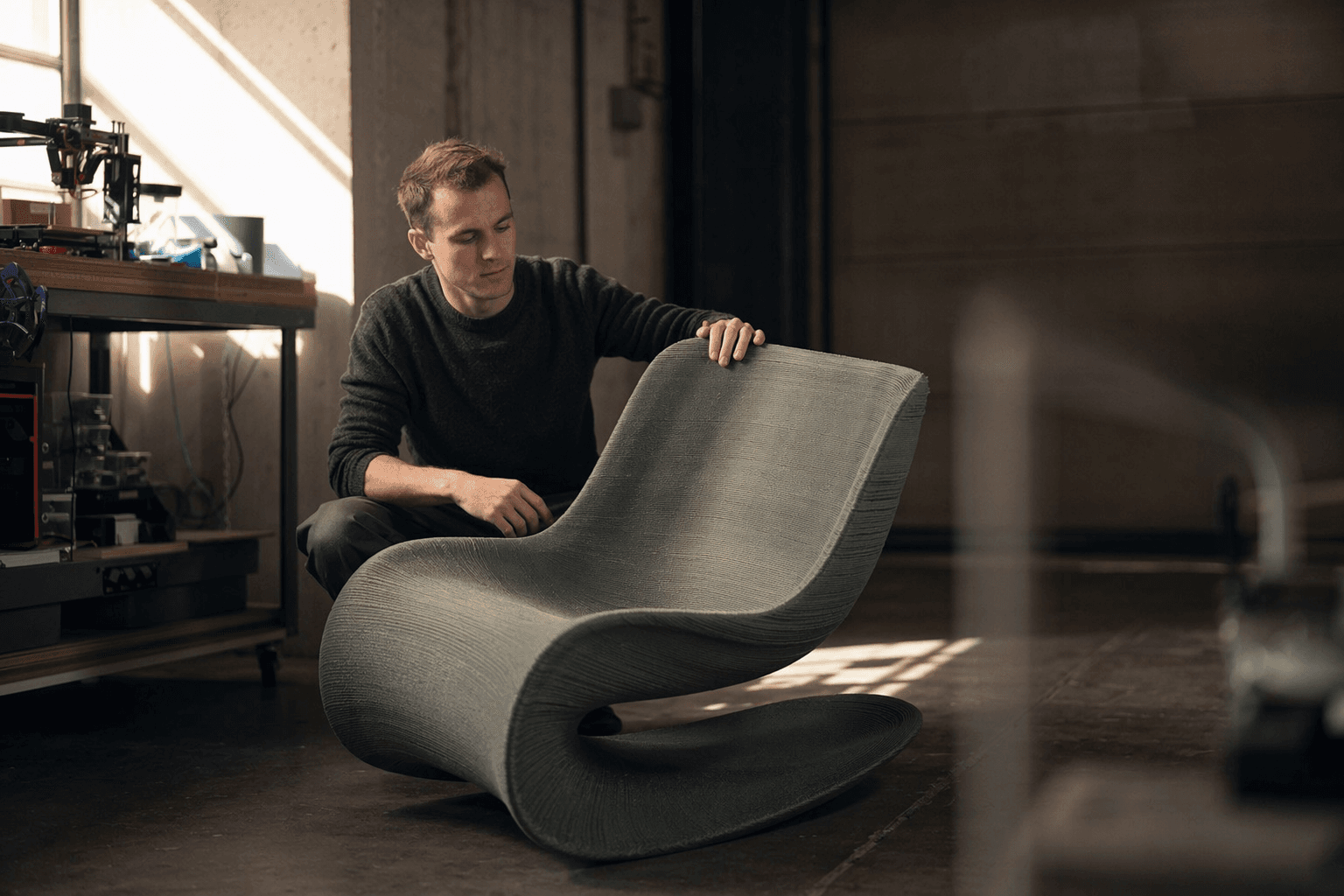
Boldobjects’ Flow Chair feels finished, not merely printed. The German studio has taken one of 3D printing’s oldest promises, freedom from standard furniture construction, and turned it into a chair that looks ready for a gallery floor, not a prototype bench.
A printed chair that behaves like furniture, not a demo
The most striking part of the Flow Chair is what it does not have: no joints, no screws, no padding, and no traditional legs. It is built as a single continuous form, and that choice gives the chair its identity as both object and mechanism. When the sitter leans forward or settles back, the geometry itself responds, creating the kind of subtle motion the brand describes as “dynamic sitting.”
That matters because it shifts the conversation away from novelty. The chair is not interesting just because it can be printed. It is interesting because the print path, the shape, and the motion all depend on one another, which is exactly where additive manufacturing starts to feel like a design language rather than a fabrication trick.
Why the Flow Chair reads as product-grade
A lot of printed furniture still looks like it is waiting for a finishing pass that never comes. The Flow Chair avoids that problem by making its surface and structure part of the same visual system. Boldobjects treats the visible thick-layer extrusion as a defining feature, so the layer lines do not read as roughness to be corrected. They become the texture of the piece, almost like a signature.
The form helps too. Boldobjects shows the chair in deep forest green, powder blue, sage, and near-black, and those finishes push it firmly into design-object territory. Instead of looking like a one-off test print, the chair has the controlled palette and clean silhouette of a retail product, the kind of object that belongs in a curated interior rather than a workshop corner.
Large-scale printing is doing the heavy lifting
The Flow Chair is produced with large-format 3D printers, and that is central to what makes the chair possible. Boldobjects says the process gives it room to create curves and shapes that would be difficult or expensive with conventional molding or casting. In other words, the machine is not just making the chair bigger; it is expanding the form vocabulary available to the designer.
That is the crossover moment hobby readers should pay attention to. Large-format printing is no longer only about oversized functional parts, cosplay props, or shop fixtures. In this case, the process is being used to pursue sculptural control, repeatability, and a finished surface identity that can compete with contemporary furniture design.
The materials story is part of the appeal
The Flow Chair is made from recycled PETG, and Boldobjects says it is produced in Hamburg. The material choice gives the piece a sustainability angle, but the larger point is that the chair is built without adhesives, hardware, or secondary components. That makes it easier to imagine the object re-entering a production cycle later, instead of being locked into a complex mixed-material assembly.
This is where the chair feels especially relevant to the broader 3D printing world. It is not simply a matter of using recycled filament and calling it green. The design itself is stripped down to one material family and one manufacturing logic, which keeps the object legible, repairable in theory, and closer to circular thinking than conventional upholstered furniture.
Hamburg is not just a label, it is the production model
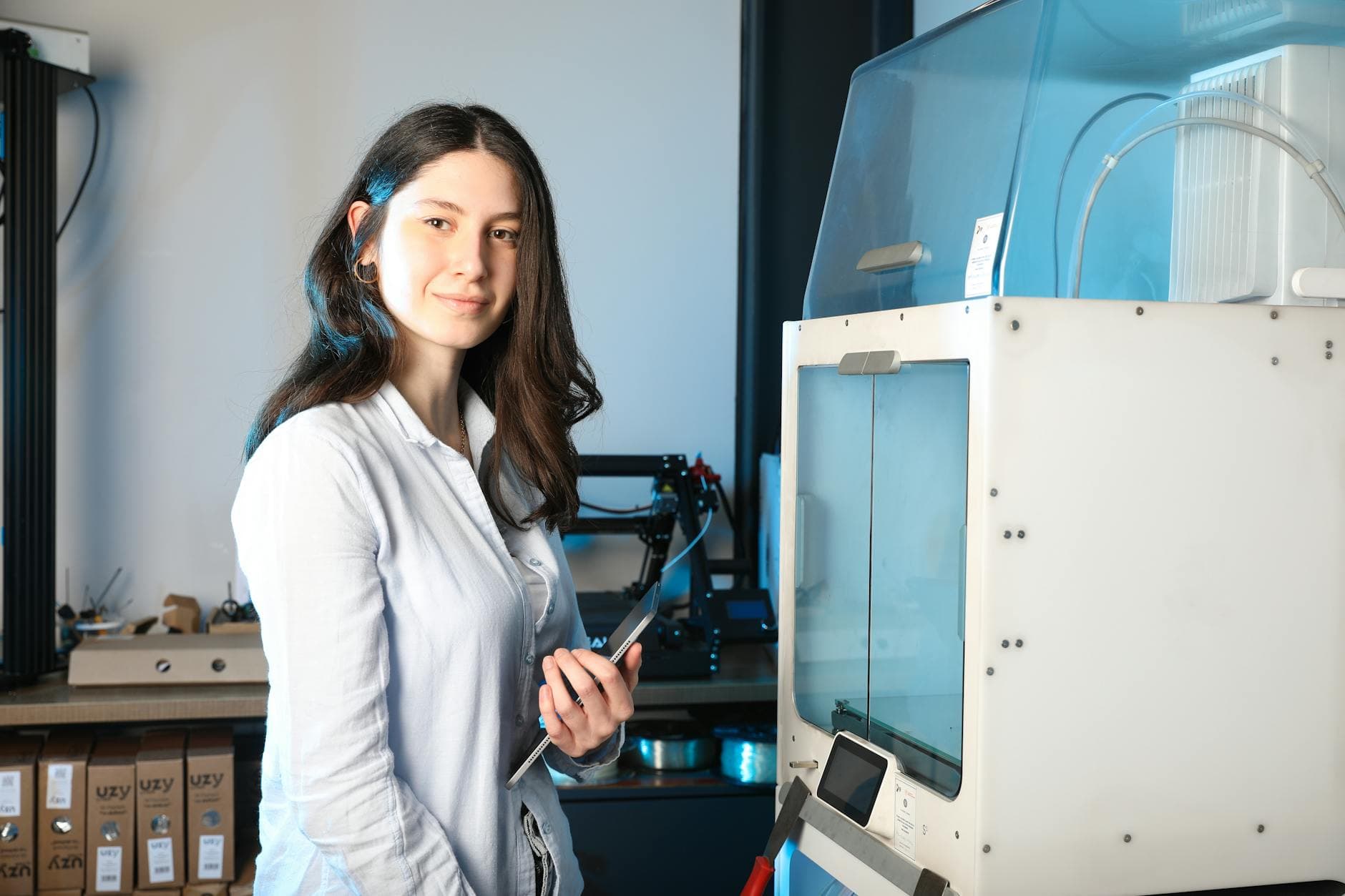
Boldobjects presents itself as a Hamburg-based label for 3D-printed furniture founded by Daniel Streilein and Henry Boy, and says all of its products are developed and manufactured in Hamburg in its own production studio. The company’s imprint names the business as Boldextrusion Ventures GmbH in Hamburg, with Streilein and Boy listed as the authorized managing directors.
That local setup matters because it shows how additive manufacturing can support smaller-batch production without handing the whole pipeline to distant mass manufacturing. A chair like this does not need to move through a sprawling factory chain to exist as a finished object. It can be designed, printed, finished, and sold in the same city, which is exactly the kind of production model that gives printed furniture cultural credibility.
Price, trial period, and customization make it feel retail-ready
The Flow Chair is listed at €420, with a 30-day trial sitting period and free returns. Those details do a lot of heavy lifting. They tell you this is not just a concept chair for design fairs; it is being offered with the kinds of customer protections and purchase terms that belong to a real product.
Boldobjects also says custom colors and project-based adaptations are possible for interior and B2B use. That gives the chair a second life beyond consumer décor. It can function as a statement piece for hospitality, office, or architectural projects, where a printed object’s material language and limited-run character can become part of the space itself.
What hobby makers can borrow from it
The Flow Chair is a useful case study for anyone printing beyond bench-top objects, especially if you are trying to make something that feels intentional rather than improvised. The lesson is not “print a chair.” The lesson is to design for the process from the start and let the printing method shape the final aesthetic.
A few takeaways stand out:
- Let the layer lines work for you when the surface language supports the form.
- Use one-piece geometry when a separate assembly would dilute the concept.
- Choose materials and colors that help the object read as finished, not temporary.
- Think about local production and short runs if the piece is meant to live as a design object.
- Accept that desktop printing still has limits, especially when you want scale, structural confidence, and a truly polished surface.
That last point is important. Desktop machines can experiment with the same ideas, but the Flow Chair shows where the bar moves once you scale up: cleaner forms, more confident material expression, and a better shot at making something people would actually put in their home.
Boldobjects’ chair works because it understands that 3D printing is no longer proving it can make things. It is proving it can make things people want to keep.
This article was produced by Prism’s automated news system from verified source data, official records, and press releases, then run through automated quality and moderation checks before publishing. The system is built and supervised by the people who set the standards it runs under. Read our full AI policy.
Did this article answer your question?